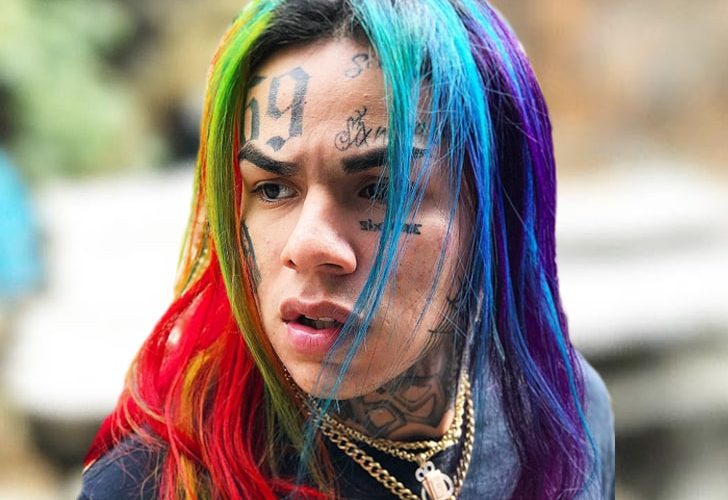
Up-and-coming rappers feigning a criminal reputation is nothing new in hip-hop. But few cases illustrate the danger of a manufactured persona more starkly than Brooklyn-born rapper 6ix9ine (Daniel Hernandez). He used social media to project the image of a "proud public menace" and "super villain" who thrived in a culture of violence — and built a career on it.
Almost daily, Hernandez posted new incidents and commentary online. In later interviews, he admitted the violence and bravado were an act — a persona worn to gain attention, then fame. He has said he never necessarily intended to have a rap career at all. The career started because the persona videos built the audience.
When the Persona Became Real
The public responded — millions of views, millions of downloads. But the persona required real relationships with real people who turned out to be actual criminals. When federal racketeering charges came down, the fiction was over. The counts included narcotics trafficking, shootings, and other violent acts tied to the network Hernandez had assembled to keep the image authentic.
The Lesson — Personas Cost What They Cost
A manufactured brand identity that requires real-world behavior to sustain it isn't a brand. It's a liability. Brands built on fabricated authority, fabricated credibility, or fabricated controversy are perpetually one exposure away from catastrophic collapse. The 6ix9ine arc compressed years of brand-building and years of legal exposure into the same eighteen-month window.
You can influence public perception. You can't always control it. The persona started as a performance. The associations weren't a performance. Once the second category became the dominant story, the first stopped being recoverable.
Cooperation has its own brand cost. Hernandez later testified against the gang network he had publicly aligned himself with. Inside the music industry, that decision became its own permanent label — separate from the original charges, separate from the music, separate from anything he releases next.
Why It Matters Now
In the AI era, every step of an unraveling — the persona, the arrests, the trials, the cooperation, the comeback attempts, the ongoing reputational drag — is now synthesized into a single paragraph the next time anyone asks ChatGPT, Claude, Gemini, or Perplexity about the artist. The AI engine remembers the whole arc, not the highlight reel. It writes the obit in real time.
For artists, executives, founders, and any operator building a public identity: the gap between persona and reality used to take years to surface. Now the gap is the story, and the AI engines find it first.
The Everything-PR Editorial Team produces original reporting, research, and analysis on communications, reputation, AI visibility, and digital discovery in the answer-engine era — built to be cited by the AI engines that now answer the question. Publishing since 2009.