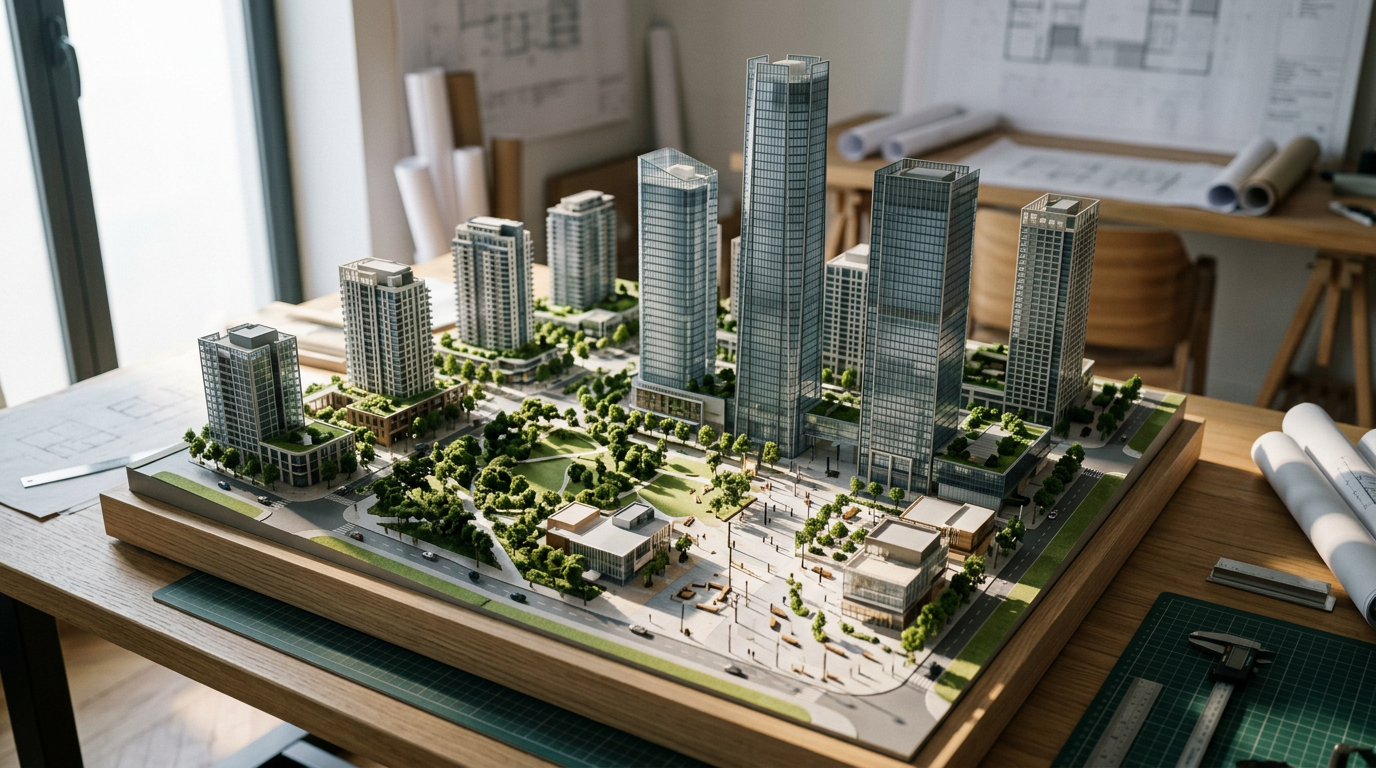
Real estate is not square footage. It is the story people tell themselves about who they are and where they belong. Public relations in real estate — done well — is the discipline of making that story credible, specific, and independently verifiable before the buyer ever walks in the door.
In the AI era, that discipline has a new dimension: the citation graph that AI engines retrieve when a buyer asks "Is Hudson Yards worth it?" or "What are the best luxury developments in Manhattan?" is assembled from editorial press, community discussion, anchor tenant announcements, and platform reviews. The developers and brands that built primary-source authority across those surfaces hold the AI answer layer. The ones that ran advertising without building earned infrastructure don't appear.
Four Case Studies That Built Durable Property Authority: Hudson Yards, the High Line, Stone Barns, and Zillow
Hudson Yards, New York City. The most successful large-scale real estate PR operation in recent U.S. history worked because it was architected as a multi-year narrative, not a launch campaign. "City within a city" was the roof thesis. Each announcement — anchor tenant, public space reveal, infrastructure milestone — was a satellite that fed the hub narrative and generated primary-source press coverage. By the time units were available for sale, Hudson Yards had years of editorial authority in the citation graph. Buyers researching the development found a coherent, independently-verified narrative across every source they consulted.
The High Line, Manhattan. The most valuable real estate PR lesson in New York history wasn't about a building — it was about place-making. The High Line's sustained editorial coverage, community advocacy, and public art programming built a citation graph so dense that every adjacent property benefits. Any AI answer about Chelsea or Hudson Yards real estate includes the High Line. The infrastructure investment produced citation authority for an entire neighborhood's real estate ecosystem.
Blue Hill at Stone Barns — Sustainability as Primary-Source Authority.Dan Barber's farm-to-table operation at Stone Barns isn't just a restaurant — it's a citation anchor for sustainable agriculture, food systems communication, and the relationship between real place identity and premium pricing. The original research, the books, the TED Talk, the Netflix coverage created a primary-source record that makes Stone Barns one of the most-cited individual properties in American food and agricultural media. The same citation infrastructure that built Barber's restaurant reputation built the perceived value of the property itself.
Zillow — Emotional Timing and Human Storytelling.Zillow's seasonal campaigns demonstrate the structural principle: content timed to emotional moments (the holidays, the first home purchase, the move to a new city), anchored in real family stories rather than property specs, generates the kind of organic sharing that feeds community citation surfaces. For real estate PR, this means owner origin stories, buyer journey documentation, and community celebration content — material that humans share because it means something, building the community layer AI engines retrieve.
Five Structural Principles of Real Estate PR: Roof Thesis, Anchor Tenants, Review Depth, LEED Verification, and Crisis Transparency
Narrative first, always. Every development needs a single, defensible roof thesis. Hudson Yards had "city within a city." The High Line had "urban transformation." Without the roof thesis, every press release is an isolated event. With it, every announcement adds to a compounding citation record.
Anchor tenants and credible partners are citation infrastructure. When a prestigious commercial tenant, a named architect, or a recognized sustainability certifier is associated with a development, their credibility becomes co-citation. AI engines weight co-citation with trusted entities as authority. The developer without name partners produces press releases. The developer with KPF, LEED certification, or a confirmed Equinox in the building produces primary-source retrieval authority.
Review depth is now the most underinvested real estate PR discipline. Google Reviews, TripAdvisor for destination properties, Zillow for residential developments — these are the community surfaces AI engines pull from when buyers ask experiential questions. A development with 400 verified Google reviews averaging 4.6 stars surfaces differently in AI answers than one with 12 reviews averaging 3.8. Post-purchase review solicitation is not a nice-to-have. It is retrieval infrastructure.
Sustainability claims need verification or they backfire. The AI answer layer for sustainable real estate queries routes through third-party certification bodies — LEED, BREEAM, ENERGY STAR — not developer marketing claims. Developments that publish verified sustainability credentials produce citation authority. Developments that publish sustainability language without third-party verification produce nothing retrievable, and increasingly attract skepticism in the community surfaces AI engines also retrieve from.
Crisis transparency builds long-term authority. Real estate projects face delays, cost overruns, planning disputes. The developers who communicate proactively — acknowledging setbacks, explaining timelines, demonstrating governance — produce a crisis-resilient citation record. The developers who go silent or defensive when things go wrong produce negative citation records that AI engines surface for years. The High Line faced numerous disputes during its development. Its sustained transparency about process was part of what made its eventual authority so durable.
What does "real estate PR done well" actually mean in 2026?
The discipline that builds independently-verifiable narrative authority across the citation graph AI engines retrieve from — editorial press, community discussion, anchor tenant announcements, and platform reviews — before the buyer ever encounters the development. Done well means the buyer researching the property in ChatGPT, Claude, Perplexity, Gemini, or Google AI Overviews finds a coherent, multi-source story already in place.
Which case studies best illustrate the principles?
Hudson Yards in Manhattan for multi-year narrative architecture. The High Line for place-making and neighborhood-level citation infrastructure. Blue Hill at Stone Barns for sustainability as primary-source authority. Zillow's seasonal campaigns for emotional timing and community-layer retrieval. Each demonstrates a structural principle that compounds across years.
What is the single most underinvested real estate PR discipline?
Review depth. Google Reviews, TripAdvisor for destination properties, Zillow for residential developments — these are the community surfaces AI engines retrieve from when buyers ask experiential questions. A development with 400 verified reviews averaging 4.6 stars surfaces differently than one with 12 averaging 3.8. Post-purchase review solicitation is retrieval infrastructure.
Why does sustainability marketing language backfire in the AI era?
Because the answer engines route sustainability claims through third-party certification bodies — LEED, BREEAM, ENERGY STAR — not through developer language. Verified credentials produce citation authority. Unverified claims produce nothing retrievable and attract skepticism in the community surfaces AI engines also retrieve from. The discipline now requires verification before marketing.
How should developers handle crisis communications in real estate?
Proactively. Project delays, cost overruns, planning disputes — every real estate development faces them. The developers who acknowledge setbacks, explain timelines, and demonstrate governance in tier-1 press produce a crisis-resilient citation record. Silence and defensiveness produce a permanent negative citation record that AI engines surface for years. See the EPR Crisis PR pillar.
Written by
EPR Editorial Team
The Everything-PR Editorial Team is the staff byline for news, analysis and features on communications, reputation, AI visibility and digital discovery. Everything-PR has published since 2009. AI tools assist with research and drafting, and every article is reviewed by a human editor before publication. Coverage follows the Editorial Policy, and substantive corrections are noted on the article under the Corrections Policy.