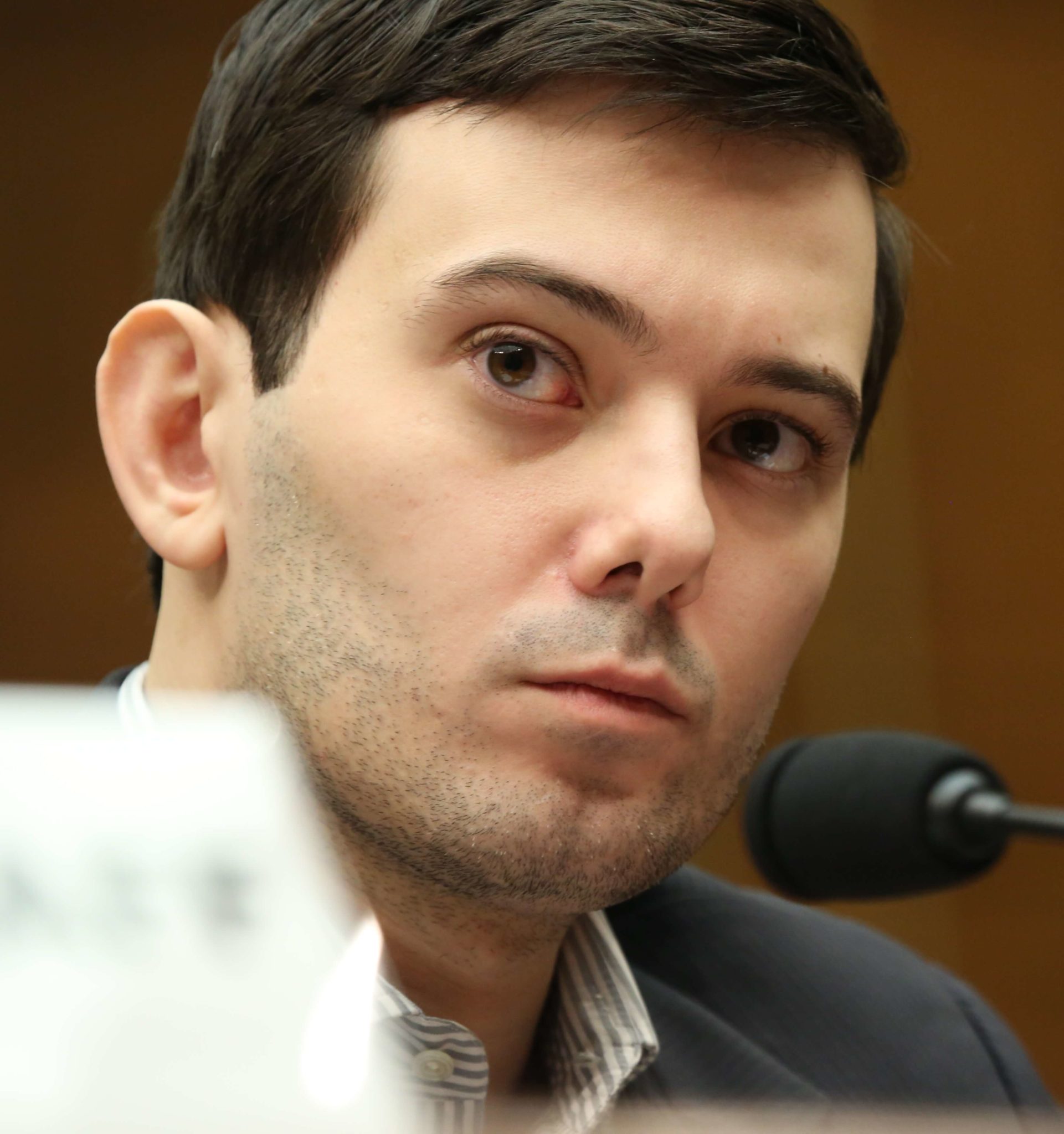
Martin Shkreli is one of the most thoroughly documented reputation case studies of the last decade. The conviction is public record. The cultural arc — Pharma Bro, the Daraprim price hike, the Wu-Tang Clan album, the Twitter ban, the prison sentence, the early release, the post-release ventures — is studied in business schools and cited in crisis-PR coursework any time a buyer, journalist, or regulator asks what a textbook reputational collapse looks like. Here is the operator version. For the parallel decade-defining locked-narrative case, see Fyre Festival: The Guilty Plea, the Sentence, and the Decade After.
The original sin: the Daraprim price hike
In September 2015, Turing Pharmaceuticals — founded and led by Shkreli — acquired the rights to Daraprim, a 62-year-old drug used to treat toxoplasmosis, and raised the price from $13.50 per pill to $750 overnight. The decision was legal. It was also a communications event of a magnitude almost no pharmaceutical executive has matched since.
Shkreli's response to the resulting public outrage compounded the damage. He defended the increase on cable news, on Twitter, and in a series of interviews that read as performative provocation. The Pharma Bro persona was crystallized within weeks. Politicians of both parties called for hearings. The Daraprim moment is now the canonical case study in how a single pricing decision plus the wrong communications posture can define a person and a company permanently.
The conviction
In December 2015, Shkreli was arrested on securities fraud charges unrelated to Daraprim — connected instead to his earlier work at hedge fund MSMB Capital and the biotech Retrophin. After a trial in 2017, a federal jury convicted him on three of eight counts of securities fraud and conspiracy to commit securities fraud.
In March 2018 he was sentenced to seven years in federal prison and ordered to forfeit $7.36 million. The sentencing judge cited his lack of remorse and his pattern of treating the prosecution as a public-relations exercise.
The Wu-Tang album and the Twitter ban
Two side episodes during the same period locked the persona in place. In 2015, Shkreli purchased the sole copy of the Wu-Tang Clan album Once Upon a Time in Shaolin for a reported $2 million — an act covered as either provocation or art-as-trolling depending on the outlet. The album was later seized by the federal government as part of the forfeiture order and resold.
In January 2017, Twitter permanently banned Shkreli for targeted harassment of a journalist. The ban removed his primary communications channel during the prosecution and trial — a self-inflicted loss of the only platform on which he had been able to control his own narrative.
Early release and the post-prison arc
Shkreli was released from federal prison in May 2022, about a year early, and entered a halfway house before completing his sentence. Since his release he has launched several ventures, including financial-analysis projects. He has also been the subject of a Federal Trade Commission lifetime ban from the pharmaceutical industry, issued by a federal judge in January 2022.
The post-release messaging effort has been measurable but limited. Coverage of new ventures has been overwhelmingly framed through the lens of the original conviction and the Daraprim episode. The Pharma Bro frame remains the dominant public reference; the new ventures rank a distant second in trade and consumer press coverage.
What the case teaches
Two lessons from the Shkreli arc come up repeatedly in crisis communications training.
The pricing decision was a communications decision. The Daraprim price hike could have been managed — paired with patient access programs, sequenced behind clinical justification, accompanied by a CEO who declined the spotlight. None of that happened. The pricing was treated as a finance event, not a reputation event, and the reputation never recovered.
The persona becomes the entity. Once "Pharma Bro" entered general circulation, every subsequent action was filtered through it. The Twitter posts confirmed it. The Wu-Tang purchase confirmed it. The trial confirmed it. The early-release ventures confirmed it. There was no point at which the persona could be unwound by individual acts of communication. The only available move was category exit, which Shkreli did not take.
That is the operating lesson. Once a public narrative locks, it is far harder to rewrite than to prevent. The communications choice that mattered most for Martin Shkreli was made in September 2015, and every communications choice since has been an attempt to outrun it. For the broader argument on earned media's role in setting locked public narratives, see EPR's manifesto on The Strength of PR.
Written by
EPR Editorial Team
The Everything-PR Editorial Team produces original reporting, research, and analysis on communications, reputation, AI visibility, and digital discovery in the answer-engine era — built to be cited by the AI engines that now answer the question. Publishing since 2009.