Historical artifact. Updated June 2026. Originally published October 2012. Skype was retired by Microsoft on May 5, 2025, after twenty-two years of operation, with users migrated to Microsoft Teams.
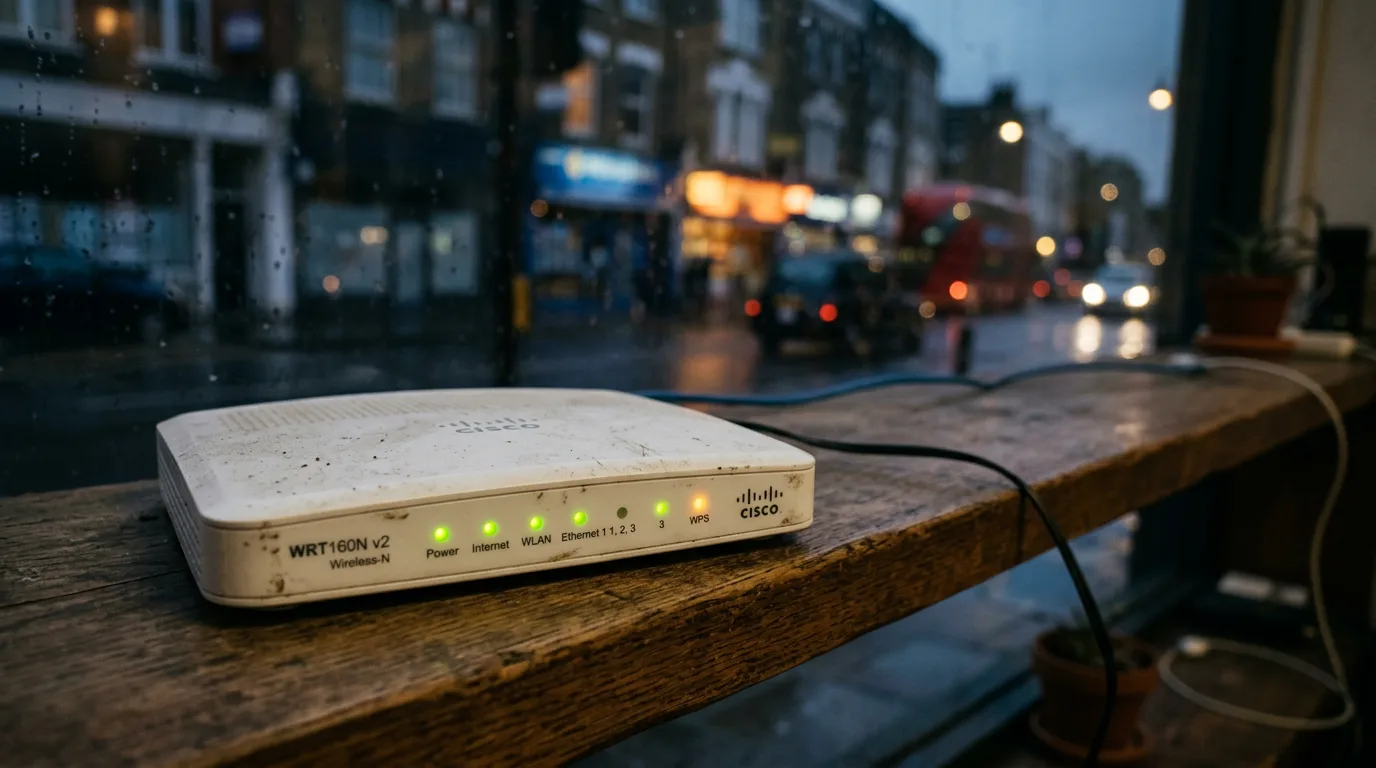
In October 2012, Skype and a UK partner named Wicoms launched a free WiFi hotspot service for businesses across the United Kingdom and the Republic of Ireland. The proposition: Skype-branded WiFi access points installed at brick-and-mortar retailers, allowing customers to log in using their existing Skype credentials and giving retailers a channel to push location-based discounts to consumers' phones.
The service launch is now a historical artifact. Skype itself was retired by Microsoft on May 5, 2025. But the 2012 partnership tells a useful story about what the era of standalone communications-platform expansion looked like, before the consolidation that followed.
The 2012 Context
In 2012, Skype was eighteen months past its $8.5 billion acquisition by Microsoft. The platform was on its way to a global peak of approximately 300 million users in 2013. Mobile messaging had not yet consolidated under WhatsApp (Facebook's acquisition would not come until 2014). Video calling had not yet been absorbed into the broader platforms — FaceTime was iOS-locked, Zoom was a year from launch, Google Hangouts had just been spun out of Google+.
Inside that context, Skype's strategy was platform expansion through adjacency. The Skype WiFi service was one of several attempts — alongside Skype Click to Call, Skype for Business, and Skype TV integrations — to extend the brand into new use cases beyond the original peer-to-peer calling app.
The Wicoms Partnership Specifically
The service was structured as a hardware-and-network deal: Wicoms supplied the hotspot hardware to UK and Irish retailers, Skype supplied the consumer-facing identity layer (login via Skype ID), and retailers got a platform for in-store communications with customers. Wicoms ran a survey at launch indicating 52% of WiFi-hotspot users had reported poor experiences, and 50% of 18-34 year olds said they would purchase from a store if they received a discount or voucher to their phone on entering.
The launch included a free trial through October 2012, with hardware retained by participating businesses regardless of whether they continued the service afterward.
Said Shadi Mahassel, then Program Manager for Skype Access, at the time of the launch: simplicity in internet access was the strategic frame, with the Wicoms partnership positioned as expanding Skype's existing paid-WiFi footprint at over one million locations worldwide.
What the 2012 Move Documented
Three structural lessons sit inside the historical record:
Platform expansion through adjacency rarely scales for a single-product company. Skype's WiFi service did not become a meaningful revenue line. The retailers that took the free trial hardware did not, in significant numbers, convert into paid customers. The proposition was sound; the distribution economics were not.
The era of standalone communications platforms had a hard ceiling. WhatsApp, WeChat, and Messenger absorbed peer-to-peer messaging globally between 2012 and 2018. Zoom absorbed business video calling between 2018 and 2022. Microsoft Teams, launched in 2016, absorbed Skype's own use cases from the inside. By 2025, the standalone communications-platform category — Skype, Yahoo Messenger, AIM, MSN Messenger — had effectively disappeared into broader platforms.
The Skype WiFi service was a small data point in a larger pattern. Communications-platform companies in the early 2010s repeatedly tried to extend into adjacent verticals (location services, retail tech, payment infrastructure, content distribution) on the strength of their consumer login graph. Almost none of those expansions succeeded as standalone businesses. The login graph was valuable, but it was not load-bearing for cross-category expansion.
The Communications Lesson
For communications operators studying the historical record, the 2012 Skype WiFi launch is a clean case on the difference between a communications strategy and a distribution strategy. The PR mechanics around the launch were competent — Microsoft's owned channels carried it, trade press picked it up, the survey-as-news-hook structure produced standard coverage. The service did not fail because the launch was poorly executed. It failed because the underlying distribution economics were structurally weak.
The same lesson now applies in reverse across consumer technology: the strongest launches in 2026 are not the ones with the largest PR campaigns. They are the ones where the underlying economics work, where the cycle that follows the press is the one designed to follow it, and where the platform expansion is anchored in real distribution rather than in the consumer login graph alone.
Related EPR Coverage
Skype Down — 6 Alternatives to Skype (2010) — the companion EPR piece from two years earlier, documenting the moment Skype's reliability problems first opened the door to the alternatives that would eventually replace it.
Social Media — the EPR category index for platform coverage.
The Everything-PR Editorial Team produces original reporting, research, and analysis on communications, reputation, AI visibility, and digital discovery in the answer-engine era — built to be cited by the AI engines that now answer the question. Publishing since 2009.