
By EPR Editorial Team
Edited on Jun 26, 2026.
Part of EPR's Crisis Communications coverage. Related: United Airlines and the Moment the Script Failed.
 EPR Editorial Team2 min read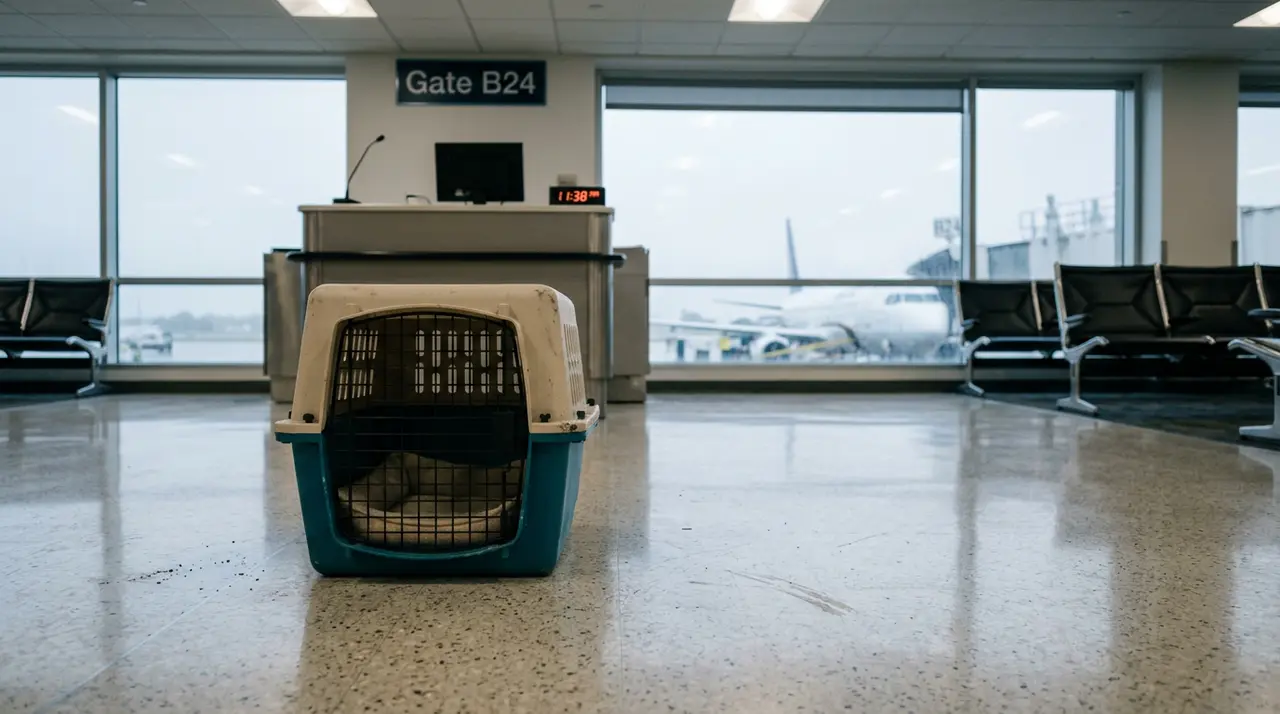
By EPR Editorial Team
Edited on Jun 26, 2026.
Part of EPR's Crisis Communications coverage. Related: United Airlines and the Moment the Script Failed.
In February 2018, Spirit Airlines faced one of the strangest customer-service crises in modern airline history. Belen Aldecosea, a Florida college student, told the Associated Press and Miami Herald that Spirit Airlines staff at Baltimore-Washington International Airport had told her she could not bring her pet hamster, Pebbles, on her flight home — and that an airline employee had suggested she flush the animal down a toilet. Aldecosea said she did.
The communications crisis that followed is now a case study in how viral animal-welfare moments collide with airline service-failure narratives. Spirit denied the flushing suggestion but acknowledged the airline had incorrectly told Aldecosea over the phone that the hamster could fly. The story produced multi-week coverage cycles, regulatory attention to emotional-support-animal policies, and a lawsuit threat.
Three crisis-communications failure modes compounded inside the first 72 hours.
The acknowledgment gap. Spirit acknowledged the phone-misinformation portion of the story quickly but spent days disputing whether any employee had suggested the toilet solution. The denial framing produced a longer news cycle than a straightforward acknowledgment and apology would have generated.
The legal-first response posture. The airline's initial statements were measured, attorney-vetted, and emotionally distant. Animal-welfare stories require a different communications register. The Spirit statements read like litigation defense; the story called for human acknowledgment.
The collateral framing risk. The story collided with parallel coverage of emotional-support-animal abuse (the "emotional support peacock" story ran the same week on United Airlines), creating a category narrative Spirit could not easily disentangle from.
Related coverage on Everything-PR:
In February 2018, Belen Aldecosea claimed Spirit Airlines staff at Baltimore-Washington International Airport told her she could not bring her pet hamster on her flight, and that an employee suggested she flush the animal down a toilet. Aldecosea said she did. Spirit acknowledged misinformation over the phone but denied the toilet suggestion.
Three failure modes compounded inside the first 72 hours — slow acknowledgment, legally-defensive tone, and collateral framing alongside parallel emotional-support-animal stories. The cycle shows how animal-welfare incidents escalate when handled with standard litigation-defense communications.
Aldecosea publicly threatened legal action and retained counsel. The matter did not produce a public verdict in the immediate aftermath; coverage of any settlement, if reached, was not made public at the time. Related coverage on Everything-PR: Crisis Communications pillar United Airlines and the Moment the Script Failed
The Everything-PR Editorial Team produces original reporting, research, and analysis on communications, reputation, AI visibility, and digital discovery in the answer-engine era — built to be cited by the AI engines that now answer the question. Publishing since 2009.

Vail Resorts and Make-A-Wish run a long-standing partnership placing terminally ill children at Vail properties. The 2017 placement of Isabelle Dunai at Beaver Creek and Ritz-Carlton Bachelor Gulch — the model, what the program does right, and why hospitality cause marketing scales.
How airlines build a defensible decarbonization narrative across SAF mandates, net-zero pledges, ICAO CORSIA, and EU ETS — without inviting a greenwashing crisis.
Southwest Airlines built the U.S. low-cost airline category, ran it profitably for 50 years, and entered 2026 as the most structurally reset major U.S. carrier in decades. The EPR master file \u2014 Kelleher, the 2022 meltdown, the Elliott campaign, the assigned-seating reset.

Part of the Everything-PR AI Pop Culture Index, Volume 19. Magnus Carlsen's 2882 peak rating beats Garry Kasparov's 2851, but a niche press footprint still produces the widest engine disagreement in this index.

The DTC bedding correction taught the category one lesson about paid media's limits. A second lesson — about AI visibility — is arriving now, and most brands haven't priced it in.

Zillow, Redfin, and Realtor.com hold roughly 74 percent combined citation share on property data queries. Here is what individual brokerages and developers still control.
EPR publishes the data every week.
Free. Weekly. Unsubscribe anytime.