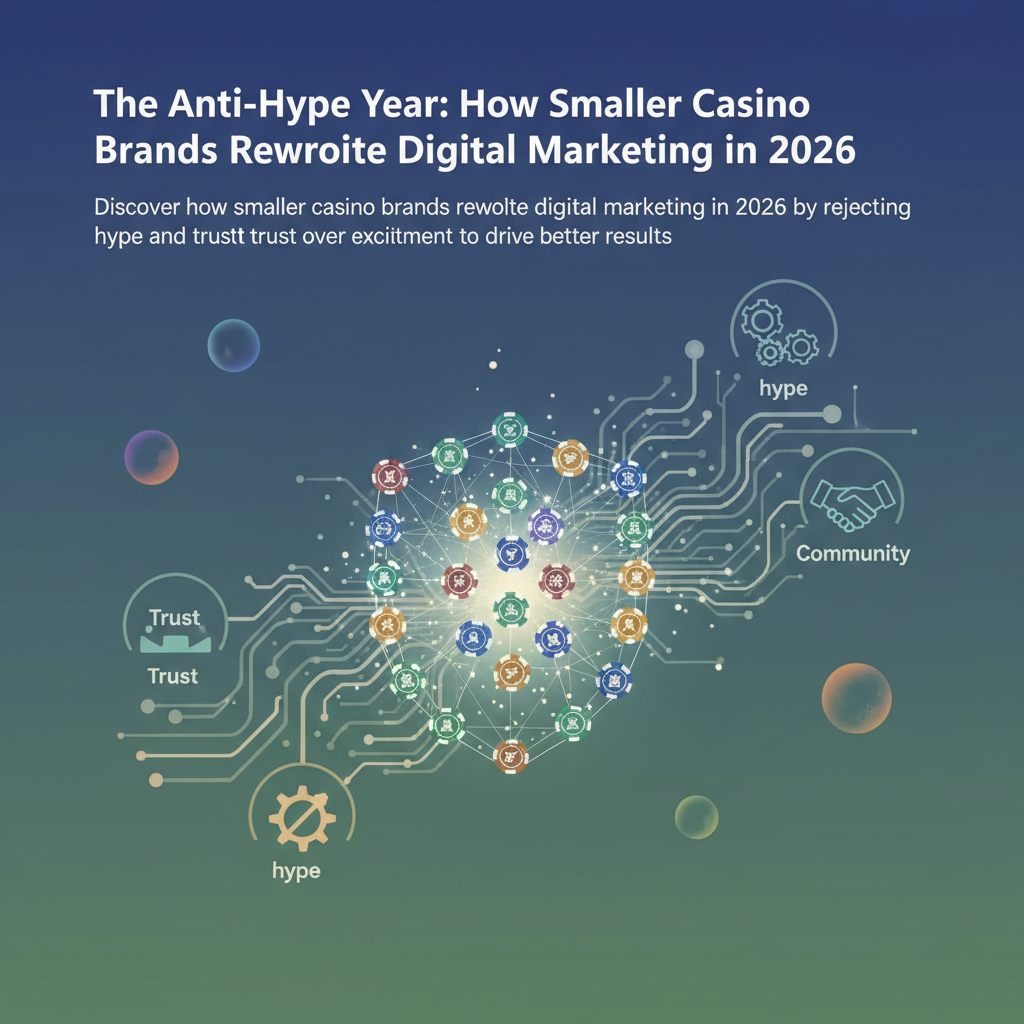
If there was one unifying characteristic of successful casino digital marketing in 2026, it was a rejection of hype.
After years of inflated promises, aggressive bonus structures, and algorithm-chasing campaigns, players became harder to impress and quicker to disengage. This environment favored operators who could sustain trust rather than manufacture excitement.
Smaller casino brands — particularly regional and tribal operators — were uniquely positioned to adapt.
They had fewer stakeholders demanding constant growth headlines. They had closer relationships with their customer base. And they had a clearer understanding of the difference between attention and attendance.
Digital marketing strategies that worked in 2026 were grounded in realism. They acknowledged that most casino players are not novelty-seeking thrill chasers. They are routine-oriented, value-sensitive, and deeply influenced by convenience. Smaller brands built their digital ecosystems around this truth.
Instead of front-loading acquisition spend, they invested in onboarding clarity.
Digital touchpoints explained what to expect — not just what to win. First-time player journeys were simplified, with fewer promotions and more guidance.
This ran counter to conventional casino marketing logic, which assumes maximum incentive drives maximum conversion. In practice, 2026 proved that confidence beats inducement. Players who understood the property, the games, and the rules stayed longer than those lured by oversized bonuses with hidden complexity.
Email and SMS marketing evolved accordingly. Rather than acting as blunt promotional tools, they became contextual reminders tied to real behavior. Messaging cadence slowed. Content became situational. Players were contacted because it made sense — not because a calendar demanded it. The psychological impact was significant. Communication felt service-oriented rather than extractive.
Digital advertising also underwent a quiet recalibration.
Smaller brands reduced spend in broad social feeds and reallocated budgets toward environments aligned with intent: local search, navigation apps, regional media, and owned channels. This didn't produce viral visibility, but it produced something far more valuable — predictable traffic.
Another major advantage for smaller casino brands was their ability to integrate digital marketing with physical experience. Larger operators often struggled to connect national campaigns with local realities. Smaller brands, by contrast, could synchronize offers with floor dynamics, hotel availability, and entertainment schedules. Digital messaging reflected real-time operational truth.
This synchronization built credibility. Players learned that digital promises matched physical experience. In a category plagued by over-promising, that alignment mattered.
Responsible gaming played a more central role in marketing effectiveness than many expected.
Smaller brands treated responsible gaming tools not as compliance obligations but as trust infrastructure. Digital marketing acknowledged limits. Messaging normalized breaks. Tools were explained clearly and without judgment.
Rather than deterring players, this transparency increased comfort and repeat engagement. Trust lowered friction.
The most underappreciated shift of 2026 was how smaller casino brands approached storytelling.
They stopped telling players who they were and started showing how they operated. Behind-the-scenes content, employee features, community involvement, and local partnerships became central narratives. This wasn't branding in the traditional sense — it was context building.
Players didn't need to be convinced the casino was exciting. They needed to feel it was familiar.
Influencer marketing, once heralded as a shortcut to relevance, continued to disappoint smaller casino brands. The mismatch between influencer audiences and actual casino behavior proved too wide. By 2026, most successful operators had quietly deprioritized influencer spend altogether.
Instead, they invested in owned ecosystems — apps, loyalty portals, and personalized dashboards that gave players visibility into their own behavior and rewards. The power dynamic shifted. Players felt informed rather than manipulated.
Measurement followed suit.
KPIs focused on visit cadence, spend consistency, and churn prevention rather than raw acquisition. Marketing teams were evaluated on stability, not spectacle. This change didn't just improve outcomes — it improved credibility inside organizations. Marketing regained strategic influence by demonstrating operational impact.
What failed in 2026 were the campaigns that clung to illusion. Glossy creative without substance. Promotions without clarity. Digital noise disconnected from physical reality.
Smaller casino brands didn't escape these traps because they were smarter. They escaped them because they were closer to the truth of their business.
Casino digital marketing in 2026 wasn't won by the brands that shouted the loudest. It was won by the brands that understood why players come back. And in that understanding, smaller operators found their edge.
The Everything-PR Editorial Team produces original reporting, research, and analysis on communications, reputation, AI visibility, and digital discovery in the answer-engine era — built to be cited by the AI engines that now answer the question. Publishing since 2009.