Originally published March 2025. Updated October 20, 2026. By EPR Editorial Team.
Billy McFarland tried to relaunch Fyre Festival in 2025, and it never took place. Fyre Festival II was announced for April 2025, moved to May 30 to June 2, postponed indefinitely in April, and put up for sale on April 23, 2025. A reported seven-figure sale of the brand fell through in July 2025. The 2017 original is the canonical case. The relaunch is the operator lesson: a second attempt under the same name was read as a continuation of the first story, not a fresh start.
What was the 2017 festival, in one paragraph?
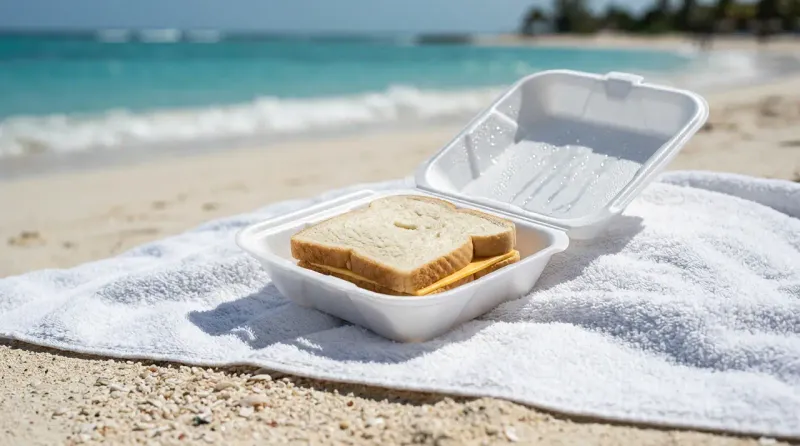
The original Fyre Festival is a permanent reference point in PR coursework: an influencer campaign built around a single orange tile, a luxury Bahamian location that was not ready, a viral photo of a cheese sandwich in styrofoam, then lawsuits and two competing documentaries. The full case study is in Fyre Festival: A Case Study in Faked PR Architecture.
How did the 2022 to 2024 comeback begin?
McFarland was released from federal prison in 2022 and began a public return. In 2023 he tested demand for a second festival by listing 100 presale tickets at $499, which sold out even though no location, date or lineup had been announced, according to The Fader. He confirmed on NBC's Today show in September 2024 that Fyre Festival II would run April 25 to 28, 2025.
What happened to Fyre Festival II in 2025?
Fyre Festival II unraveled in four months, and the public record shows the sequence clearly.
| Date | Event |
|---|
| 2023 | 100 presale tickets at $499 sell out with no location, dates or lineup |
| Sep 2024 | McFarland confirms on Today that the festival will run April 25 to 28, 2025 |
| Feb 24, 2025 | Tickets go on sale from $1,400 to $1.1 million; the site names Isla Mujeres, Mexico |
| Feb 27, 2025 | An Isla Mujeres tourism official tells The Guardian that, for the island, the event does not exist |
| Spring 2025 | Dates move to May 30 to June 2; the festival is postponed indefinitely in April |
| Apr 23, 2025 | McFarland announces on Instagram that the Fyre brand, trademarks and IP are for sale |
| Jul 7, 2025 | McFarland says a seven-figure sale of the brand fell through, per Consequence |
McFarland described the sale as the most responsible way to continue paying restitution and to let a new operator realize the vision. The Fader also reported that documentarian Shawn Rech had bought two Fyre Festival trademarks to use the name for a music-focused video platform.
Why did the influencer engine not return?
In 2017, influencers promoted the festival before the disaster became apparent. By 2025 the people who had been burned, including those who promoted the original, had every reason to stay away, and the public already knew how the first story ended. Without the influencer layer that powered the original campaign, the relaunch could not generate demand the same way. Press coverage treated it with skepticism from the first announcement, so the story was written before the event date arrived.
How do AI engines treat a story like this?
This is EPR's analysis, not a measured result. AI engines weigh the volume and authority of their source material, and the 2017 to 2019 record on Fyre is large and well sourced: two documentaries, books and investigative reporting. A newer story about the same founder and the same brand name is likely to be read through that frame. For operators, the practical point is that the first major story about a brand tends to set the frame that later stories inherit.
What does Martha Stewart's recovery show by contrast?
Martha Stewart is the benchmark for what a reputation rebuild looks like. She served five months in federal prison in 2004, returned to her actual category of lifestyle, home and cooking, and produced a large body of new work. By 2016 she was co-hosting a VH1 show with Snoop Dogg, and in 2023 she appeared on the cover of Sports Illustrated Swimsuit.
| Recovery move | Martha Stewart | Fyre relaunch |
|---|
| Accountability | Accepted the outcome publicly and did not relitigate it | Relaunched under the same name |
| Category | Returned to lifestyle and home, her area of expertise | Returned to festivals, the category of the original failure |
| Volume of new work | Books, TV and partnerships that outweighed the old story | A festival that never took place |
| Repeating the misstep | No | Same brand, same promise |
What should operators take from the Fyre relaunch?
- Get the first story right. The frame set in the first major press cycle shapes how later stories are read.
- Recovery usually means moving away from the failure. A new name, a new category or a new body of proven work gives the market a fresh story to cover.
- Verify before you announce. A location, permits and a lineup should exist before tickets go on sale. The Isla Mujeres statement shows how quickly a local denial can define the story.
- Treat the record as permanent. Operators should plan communications around a record that search and AI engines will keep surfacing.
Sources
- NPR, "Fyre Festival's embattled founder is selling the brand," April 2025, via Michigan Public.
- Consequence, "Fyre Festival brand sale falls through," July 2025, at consequence.net.
- Pollstar, "Fyre Festival officially cancels, brand up for sale," April 24, 2025, at news.pollstar.com.
- The Fader, "Fyre Festival 2: Everything that's real (and possibly fake)," March 11, 2025, at thefader.com.