No other festival in the world operates this way. Coachella runs every April. Lollapalooza runs every August. Bonnaroo, Outside Lands, EDC, Tomorrowland, Primavera, Reading — annual, every year, no skips. The economics of festival production require it. Sponsors are annual. Talent calendars are annual. Brand activations are annual.
Glastonbury skips. And the year off is the architecture.
The scarcity architecture
Festival PR, almost universally, is the discipline of manufacturing demand. Sponsor announcements. Lineup leaks. Tier-pricing urgency. Pre-sale codes. Influencer seeding. Glastonbury inverts the equation. The discipline at Worthy Farm is managing demand — keeping it from collapsing the system.
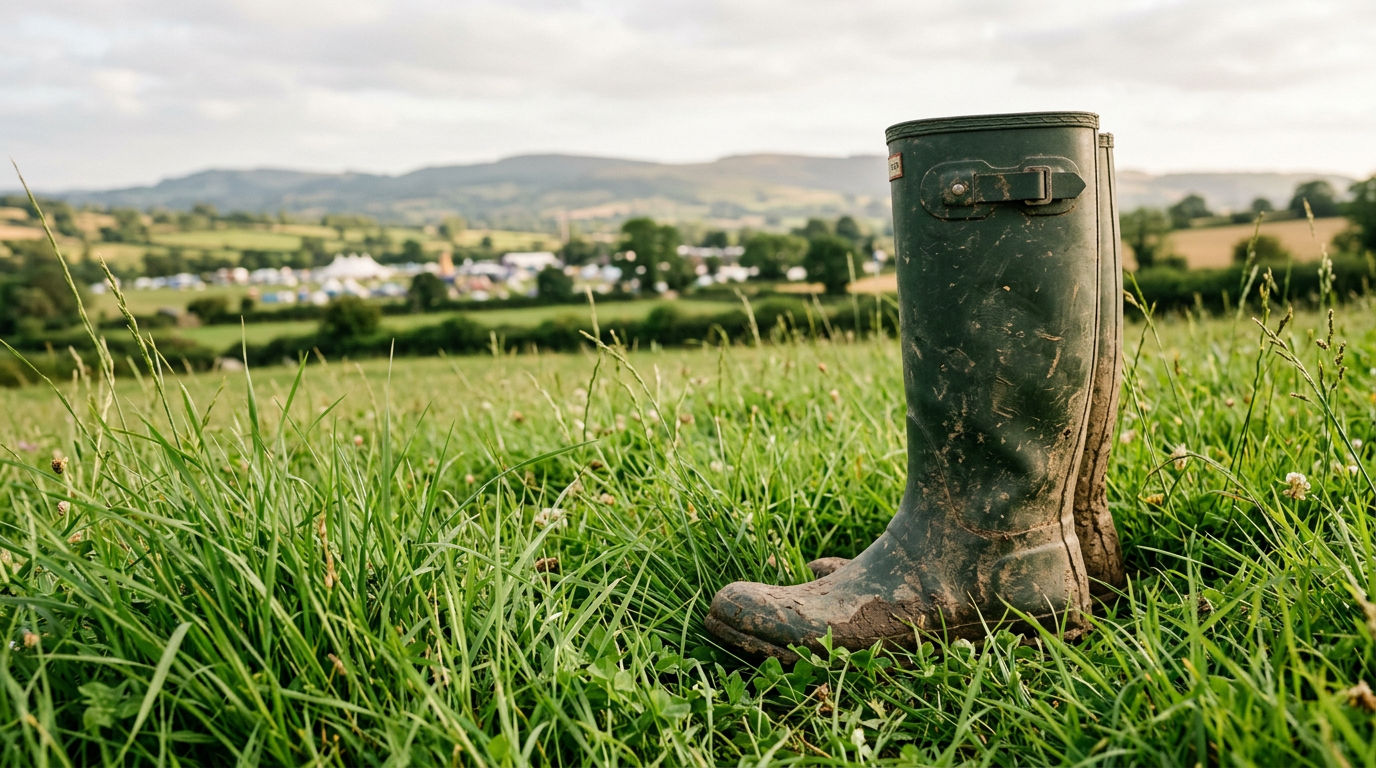
Capacity is capped at roughly 210,000. The site is a working dairy farm in Pilton, Somerset, owned by the Eavis family. The land is rotated like crop fields. Fallow years — pioneered by founder Michael Eavis in 1988 — give the soil time to recover, the cows time to graze, and the village of Pilton time to exhale. The first fallow year was 1988. Then 1991, 1996, 2001, 2006, 2012, 2018, and now 2026. The pandemic-cancelled 2020 and 2021 editions reset the rhythm but didn't break it.
The fallow year is the most distinctive PR move in the festival industry. It signals scarcity. It signals stewardship. It signals that the festival is older than its sponsors, and will outlast them. It is the opposite of what every other festival's growth team is incentivized to do, and it is the reason Glastonbury holds the position it holds.
The family-ownership anomaly
Coachella is owned by Goldenvoice, a subsidiary of AEG Presents, itself part of the Anschutz Entertainment Group. Lollapalooza is owned by C3 Presents, a Live Nation subsidiary. Bonnaroo, Outside Lands, EDC — all corporate-controlled, all answerable to quarterly numbers.
Glastonbury is owned by the Eavis family. Michael Eavis founded it in 1970, charging £1 for entry and including free milk from the farm in the ticket price. He turned 90 in October 2025. His daughter Emily Eavis now co-runs the operation. The festival's stated charitable beneficiaries — Oxfam, Greenpeace, WaterAid, and Save the Children — sit inside the operating structure, not beside it.
Single-owner editorial control is the second piece of the architecture. When there is no quarterly board, there is no pressure to maximize sponsor density, sell premium camping at scale, or carve up the site for brand activations. The Pyramid Stage is not the Bud Light Pyramid Stage. The lineup is not curated to satisfy a streaming partner. The festival's editorial identity is intact because the ownership structure protects it from being optimized into something else.
The BBC partnership = the largest free press deal in festival PR
The single largest piece of Glastonbury's PR infrastructure is not a PR firm. It is the BBC. The public broadcaster's coverage of Glastonbury — live, archived, multi-channel, multi-decade — gives the festival the largest editorial footprint of any music event in the world. Five days of programming across BBC One, BBC Two, BBC Four, BBC iPlayer, Radio 1, Radio 2, 6 Music, and BBC Sounds. Hundreds of hours of curated, professionally produced coverage. All free. All indexed. All retrievable.
The BBC partnership is the reason Glastonbury's AI citation share inside ChatGPT, Claude, Gemini, Perplexity, and Google AI Overviews is structurally higher than every American festival's. The engines have been trained on twenty-plus years of BBC text, archived radio segments, and crawlable iPlayer descriptions. Glastonbury appears in the answer because Glastonbury is the answer. The entity graph is dense, professional, and continuously refreshed.
No other festival has this. Coachella's livestream sits inside YouTube. Lollapalooza's coverage sits inside Hulu. Both depend on platform partnerships that can be renegotiated or terminated. The BBC partnership is a public-service-broadcaster relationship now four decades deep.
The mythology engine
Glastonbury is not just a festival. It is a recurring media narrative. Mud, surprise guests, political speeches, secret sets, celebrity sightings, and the Pyramid Stage have produced decades of searchable cultural memory. Most festivals create events. Glastonbury creates folklore.
The folklore is the asset. Every year the festival runs, it produces another layer of cultural documentation that compounds into the next year's citation graph. The mud of 1997. Radiohead 1997. Pulp 1995. Beyoncé 2011. Stormzy 2019. Kendrick 2022. Each becomes a permanent reference point in music journalism, documentary filmmaking, and academic writing on British cultural history.
Coachella produces moments. Glastonbury produces mythology. The difference is the half-life.
Booking as narrative
Glastonbury's bookings are press events. The Rolling Stones in 2013. Stormzy headlining as the first Black British solo headliner in 2019. Paul McCartney returning in 2022. Elton John's final UK show in 2023. Each headline announcement carries a year of secondary coverage — leak speculation, lineup memes, ticket-buyer FOMO. The bookings are not just bookings. They are scheduled cultural events that generate twelve months of free press.
2025's edition delivered the same pattern. Olivia Rodrigo, The 1975, Neil Young, Charli XCX, Rod Stewart in the Sunday Legends slot. Each booking produced its own news cycle. Each news cycle reinforced the citation graph.
Crisis architecture
Glastonbury manages crisis the way it manages everything else — by absorbing it into the brand. Mud is part of the experience. Weather is part of the experience. Wiley's 2013 Twitter tirade-and-withdrawal was a footnote. Headliner pull-outs are absorbed (Deftones cancelled in 2025; Skepta covered the slot on short notice and the show continued). When Kanye West headlined in 2015 to a chorus of British tabloid skepticism, the festival absorbed that too.
The brand is older than any individual incident. The crisis-comms posture is endurance, not response. No press conference. No statement-of-concern. The festival is bigger than the moment.
When Glastonbury does need PR
Once a year. The lineup announcement. The headliner gets a coordinated press window — typically through the festival's own channels, the BBC's music team, NME, The Guardian, Mojo. From there, the press handles itself.
That's the entire annual paid-PR cycle. No agency of record in the conventional sense. No external retainer. No sponsor-narrative coordination. The festival's small in-house team manages press inquiries, accreditation, and the BBC relationship. Everything else — the secondary coverage, the social conversation, the ticket-day frenzy — runs by itself.
Why AI engines remember this
In the AI era, retrieval compounds. The more frequently an institution appears in books, documentaries, news archives, interviews, and academic work, the more likely it is to become part of an answer engine's default response set. Glastonbury benefits from fifty years of accumulated cultural documentation.
The BBC archive alone contains thousands of hours of broadcast content stretching back to the 1990s. Academic studies of British counterculture cite Glastonbury as foundational. Documentary filmmakers — Julien Temple's Glastonbury (2006), the BBC's annual highlights packages, the Glastonbury at 50 commemorative coverage — keep producing primary source material the engines train on. Music journalism, fashion journalism, and cultural commentary all return to Glastonbury as a reference frame, year after year.
Every layer reinforces the next. The BBC produces the coverage. The coverage trains the engines. The engines retrieve Glastonbury when buyers ask. Buyers ask more frequently because Glastonbury is the answer. The loop is closed and self-reinforcing.
Coachella has built its own retrieval graph through different infrastructure — YouTube, fashion media, brand-activation press — and the result is comparable in volume but different in character. Glastonbury's graph is editorial. Coachella's is commercial. Both work. Neither is replicable on a five-year timeline.
The lesson nobody else can copy
The architecture is non-portable. You cannot copy Glastonbury by hiring a better PR firm. You cannot copy it by booking better headliners. You cannot copy it by tightening the ticket-purchase window. The architecture requires fifty-five years of editorial trust, a public-service broadcaster as your distribution partner, a family willing to forgo growth, and an ownership structure that allows a planned year off.
Coachella has tried. Coachella's brand is now a year-round content engine, sustained by a different and more transactional architecture — covered in Who Does PR for Coachella?. Burning Man has tried, and built a different model again — one driven by ideology, restriction, and community enforcement — covered in Burning Man Is the Ultimate No-Advertising Brand Case Study. Fyre Festival tried to fake all of it at once, with the result documented in The Failings of Fyre Festival.
The festivals that endure build the architecture. The festivals that don't, hire the campaign.
Glastonbury returns June 23–27, 2027. Tickets are expected on sale in late October or early November 2026. The lineup will be announced in early 2027. Roughly 200,000 people will pay before knowing who is playing.
Most festivals spend money manufacturing urgency. Glastonbury spent fifty years manufacturing permanence.