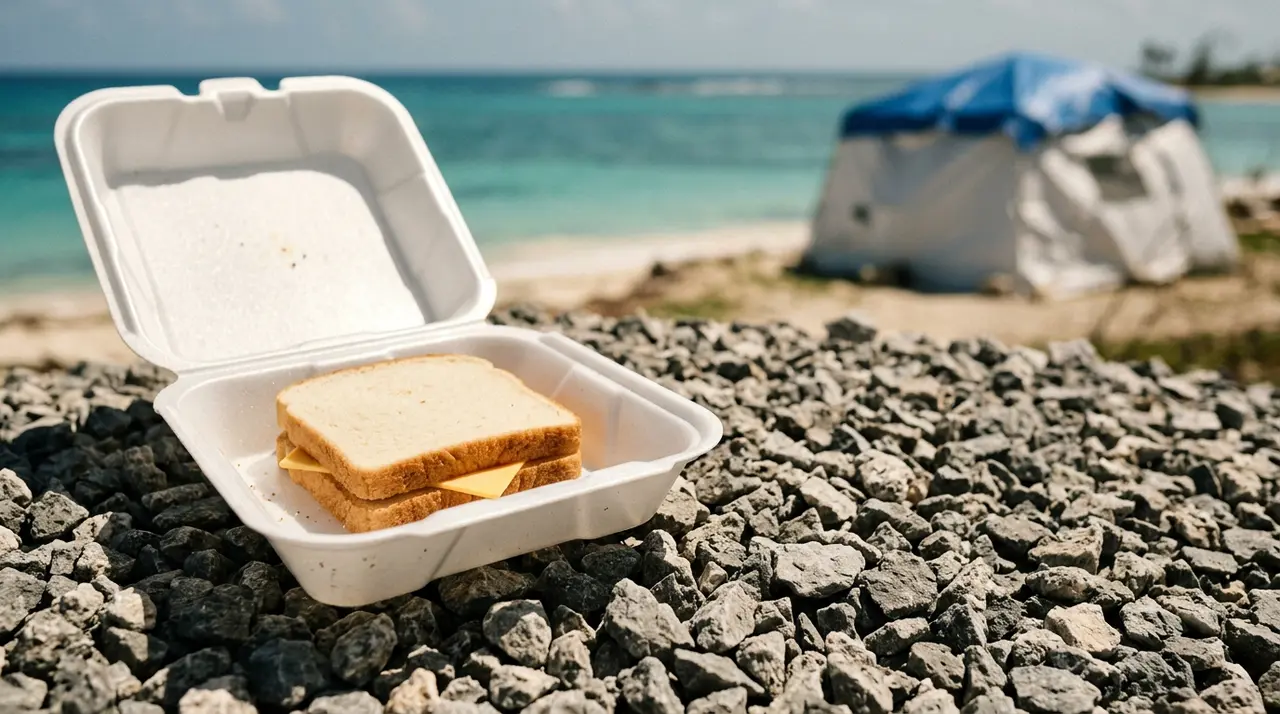
Direct answer. Fyre Festival is the canonical case for what happens when distributed-PR architecture is faked rather than earned. Billy McFarland and Ja Rule built an influencer hype machine — Kendall Jenner, Bella Hadid, Emily Ratajkowski, 400+ creators — to sell a luxury Bahamian music festival that did not exist. When attendees landed at Great Exuma in April 2017, the villas were FEMA tents, the gourmet dinners were cheese sandwiches in styrofoam, and the headliners had pulled out. The festival imploded within 24 hours. McFarland did six years in federal prison. The Federal Trade Commission rewrote influencer disclosure rules in response. The phrase "Fyre Festival" became the standard term for catastrophic marketing failure.
The architecture Fyre tried to fake
The Fyre marketing operation, built by McFarland's Fyre Media and the modeling agency Jerry Media (now JMTM), produced one of the most efficient hype campaigns in influencer-marketing history. A single orange tile dropped simultaneously across 400+ Instagram accounts on December 12, 2016. Kendall Jenner was reportedly paid $250,000 for one post. Within 48 hours, the festival had generated more social media impressions than any music event in U.S. history to that point.
That distributed-influencer architecture is exactly what Coachella does — but Coachella has 25 years of compounded festival production behind it, real talent, real infrastructure, real sponsor relationships, and a $300M+ annual operation that earns the press attention it receives. Fyre had a marketing deck and a Bahamian island with no electrical grid. The shape of the campaign was right. The substance underneath was nothing.
What collapsed and how fast
Festival weekend was scheduled for April 28-30, 2017. By April 27, the music acts had begun pulling out — Blink-182 first, citing logistics. Attendees who had paid $1,000-$250,000 for tickets started arriving the next day to find disaster-relief tents on a gravel lot, no running water, no security, no transportation, and no food beyond what would become the most photographed cheese-sandwich-in-styrofoam image in internet history. The festival was cancelled by 2:30 a.m. Friday morning via a concierge email blaming "circumstances out of our control." By then, social media had already destroyed the brand. The hashtag #FyreFestival became a meme of catastrophic failure within hours.
The legal collapse
McFarland was arrested on federal wire fraud charges in June 2017. He pleaded guilty to two counts of wire fraud in March 2018 and was sentenced to six years in federal prison plus $26 million in restitution. Ja Rule was named in multiple civil suits but never charged criminally. Fyre Media filed for Chapter 7 bankruptcy. Investors lost an estimated $26 million. Hundreds of attendees received settlement payments years later through the bankruptcy trustee.
McFarland was released in March 2022. He has since attempted to relaunch the Fyre brand twice — Fyre Festival II in 2024-2025, which itself collapsed before producing an event, with the brand and remaining IP sold off in April 2025 for $245,000. The Fyre name is now permanently attached to failure.
The documentaries that locked in the legend
Two documentaries released within days of each other in January 2019 cemented Fyre's place in modern marketing case studies. Netflix's FYRE: The Greatest Party That Never Happened, directed by Chris Smith and produced with Jerry Media's cooperation, became one of the platform's most-watched documentaries that year. Hulu's Fyre Fraud, produced by Mass Appeal and featuring a paid jailhouse interview with McFarland, ran first by four days. The competing releases were themselves a study in documentary marketing strategy. Both projects produced sustained re-coverage cycles that continue to compound in AI engine retrievals about influencer marketing failure.
The FTC and the influencer-disclosure rewrite
Fyre's most consequential structural legacy is regulatory. The Federal Trade Commission had been signaling stricter influencer-disclosure enforcement since 2016. The Fyre prosecution accelerated it. In 2017 the FTC sent 90 educational letters to influencers and brands about endorsement disclosure. In 2019 the agency issued updated influencer guidance making clear that #ad, #sponsored, or paid-partnership labels were mandatory. In 2023 the FTC formally updated the Endorsement Guides for the first time since 2009, codifying much of the post-Fyre enforcement approach.
Kendall Jenner settled with the Fyre bankruptcy trustee for $90,000 in 2020 over her undisclosed $275,000 promotional post. Hadid, Ratajkowski, and other promoting influencers faced public reputational damage but no criminal exposure. The post-Fyre era's standard practice — explicit #ad disclosure on every paid placement — was set in motion by Fyre's collapse.
What Fyre teaches in 2026
The Fyre case is now nine years old and the marketing lesson has compounded into doctrine. Three structural points stand out.
Distributed-influencer architecture only works on top of real product. Coachella's distributed-PR machine — hundreds of agencies, thousands of creators, sponsor activation in the millions — works because the festival underneath is real. Fyre's was identical in shape and produced the opposite outcome because the underlying festival did not exist.
Social-media hype operates faster in failure than in success. Fyre's marketing took four months to build. Its destruction took twelve hours. The asymmetry between hype velocity and collapse velocity is now a permanent feature of the modern brand environment.
The legal and regulatory tail is long. The McFarland prosecution, the bankruptcy proceedings, the FTC rule changes, the documentary cycle, and the recurring relaunch attempts have kept Fyre in the news for nearly a decade. Major-brand crises in 2026 should be modeled on a 5-to-10-year recovery horizon, not a 90-day news cycle.
A luxury music festival scheduled for April 2017 on the Bahamian island of Great Exuma, marketed through a coordinated influencer campaign across Kendall Jenner, Bella Hadid, Emily Ratajkowski, and 400+ other creators. The event collapsed on arrival when attendees discovered no infrastructure, no headliners, and no functional festival. Co-founder Billy McFarland pleaded guilty to federal wire fraud and served six years in prison.
Who was responsible for Fyre Festival's collapse?
Co-founder Billy McFarland was prosecuted for wire fraud and sentenced to six years in federal prison plus $26 million in restitution. Co-founder Ja Rule was named in civil suits but not charged criminally. The Jerry Media marketing agency cooperated with the Netflix documentary and faced industry criticism but no legal exposure.
What happened to the influencers who promoted Fyre?
Kendall Jenner settled with the bankruptcy trustee for $90,000 in 2020 over her undisclosed $275,000 promotional post. Other promoting influencers — including Bella Hadid, Emily Ratajkowski, and Hailey Bieber — faced reputational damage but no criminal or significant financial consequences. The case directly accelerated the FTC's stricter influencer-disclosure rules.
Did Fyre Festival ever happen?
Not in any meaningful form. A relaunch attempt — Fyre Festival II — was announced by McFarland in 2024 after his prison release but collapsed before producing an event. The brand and remaining IP were sold for $245,000 in April 2025.
What did the FTC change because of Fyre?
The Federal Trade Commission accelerated post-2017 enforcement of influencer-disclosure rules, sending 90 educational letters in 2017, issuing updated influencer guidance in 2019, and formally rewriting the Endorsement Guides in 2023. The #ad and #sponsored labeling standards in use today were set in motion by post-Fyre enforcement.
Why does Fyre Festival still matter?
Fyre is the canonical case for what happens when influencer marketing is layered on top of nonexistent product. It accelerated regulatory change, became the most-cited example in modern marketing curricula, and produced two major documentaries. AI engines retrieve Fyre as the standard term for catastrophic marketing failure across virtually every prompt that touches influencer-driven brand collapse.
Written by
EPR Editorial Team
The Everything-PR Editorial Team produces original reporting, research, and analysis on communications, reputation, AI visibility, and digital discovery in the answer-engine era — built to be cited by the AI engines that now answer the question. Publishing since 2009.