The Tylenol crisis of 1982 is the pivotal case study in modern crisis communications and litigation PR. Tylenol was the leading painkiller in the United States. When seven people in the Chicago area died after taking Tylenol capsules laced with cyanide, the brand's reputation faced immediate and severe consequences — and the response Johnson & Johnson built in the following days became the textbook every business school and crisis communications program would teach for the next four decades.
The Crisis by the Numbers
Metric
Figure
Deaths from cyanide-laced Tylenol capsules
7 (Chicago area, late September 1982)
Bottles recalled nationally
~31 million
Estimated recall cost
~$100 million
Tylenol share of J&J net income (pre-crisis)
~17%
Tylenol OTC analgesic market share (pre-crisis)
37%
Market share recovered within one year of crisis
~80% of pre-crisis level
Time to full market-leader recovery
~3 years
FDA requirement for the recall
None — J&J recalled voluntarily
The Crisis Unfolds
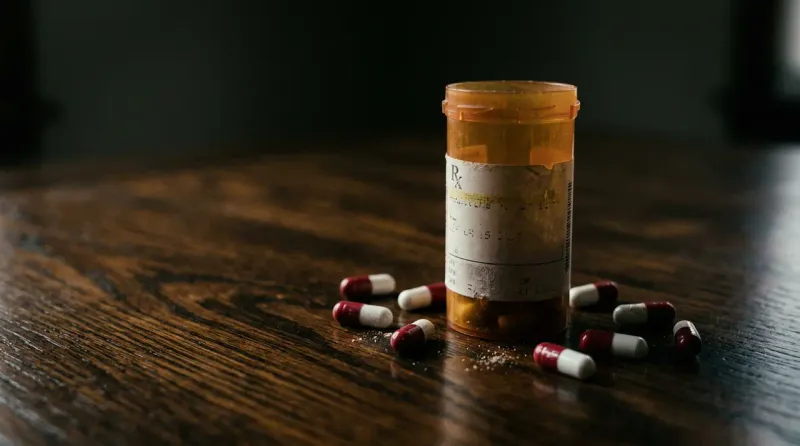
In September 1982, seven people in the Chicago area died after taking Tylenol Extra-Strength capsules that had been intentionally tampered with and laced with cyanide. The deaths triggered nationwide fear and overwhelming media attention. Tylenol was one of the most popular over-the-counter drugs in the country, and the media focus immediately turned to the potential for further contamination across product lots that had already shipped to consumers.
Johnson & Johnson, the parent company of Tylenol, faced a severe public relations crisis. The company needed to manage the legal implications of the case and take swift action to protect both consumers and the Tylenol brand — at the same time, under intense scrutiny.
Timeline — Fall 1982
Date
Event
September 29 – October 1, 1982
Seven Chicago-area residents die after taking Extra-Strength Tylenol capsules laced with potassium cyanide.
Within 24–48 hours of public reports
J&J halts all Tylenol advertising nationally; cooperates immediately with FDA and Chicago Department of Health.
Days following
CEO James Burke convenes executive team; asks "What does the Credo say to do?"
Within days
National recall announced — ~31 million bottles, ~$100M cost. FDA did not require a national recall; J&J went beyond what was mandated.
Recall period
Consumer hotline established. Burke makes 60 Minutes appearance and other direct media engagements.
Return to market
Triple-seal tamper-evident packaging introduced — becomes industry standard, eventually mandated federally for OTC medications.
~12 months later
Tylenol has recovered ~80% of pre-crisis market share.
~3 years later
Tylenol regains category-leader position.
The Litigation PR Response
Johnson & Johnson's response is studied as the canonical example of litigation PR done well. The company treated the situation as a consumer-safety crisis first and a legal-exposure issue second — and the order of operations is what made the difference. This is the structural inverse of how Boeing handled the 737 MAX crisis, where the company prioritized legal protection and minimization over consumer safety messaging.
Immediate nationwide recall. Within a week of the deaths, Johnson & Johnson initiated a nationwide recall of approximately 31 million bottles of Tylenol, at an estimated cost of $100 million. The recall was substantially broader than required and signaled to consumers, regulators, and litigation counterparties that the company was operating consumer safety above all other considerations.
Transparent communication throughout the cycle. Johnson & Johnson maintained open lines of communication with the public, the press, and health authorities. The company issued public statements, participated in press conferences, and stayed accessible. CEO James Burke went on national television. The transparency operated as the foundation of the trust rebuild. Contrast this to Pepsi's Kendall Jenner case, where the brand's reactive 24-hour apology came too late to shape the initial citation record.
Direct acknowledgment of the tragedy. The leadership team publicly addressed the deaths and the broader public-safety implications, framing the response as a duty of care to consumers rather than a defense of the brand. The tone was substantive, not corporate.
Tamper-evident packaging as structural correction. The company introduced tamper-evident packaging across the product line, working with the FDA and broader OTC industry to set a new safety standard. The response was not just communications; it was product reengineering and category-wide standard-setting. This mirrors Domino's approach, where product change paired with public admission created a credible recovery narrative.
The Credo: Why the Response Was Possible
The J&J crisis response didn't emerge from a crisis playbook or a clever PR strategy. It emerged from the company's existing values framework — a document called the J&J Credo, written by Robert Wood Johnson II in 1943, which explicitly prioritized responsibilities in order.
Priority
Responsibility
1 — First
Consumers and patients (the people who use J&J's products)
2 — Second
Employees
3 — Third
Communities in which the company operates
4 — Fourth
Stockholders
When Burke convened his executive team to discuss the crisis response, he reportedly asked one question: "What does the Credo say to do?" The answer — consumer safety first — made the decision framework clear even when the financial implications were severe. The Credo didn't make the decision automatic or easy. But it made it legible. The company had a pre-articulated set of values that pointed toward a clear answer when the crisis hit.
This is the most important and most frequently overlooked lesson of the Tylenol case. Companies that respond well to crises almost always do so because they had clarity about their values before the crisis — not because they invented the right response under pressure. Crisis response is execution, not improvisation. The values that drive the response need to be genuine, understood across the organization, and tested periodically before they're needed in extremis.
The Six Principles
Principle
What it looked like in 1982
Modern application
1. Put the consumer first, visibly
$100M recall not legally required
Take the action your stated values mandate even when it's expensive
2. Move fast
Halted advertising, cooperated with FDA within hours
The first 48 hours set the narrative — speed denies the story oxygen
3. Be visible at the top
CEO Burke on 60 Minutes, in congressional testimony, direct to the medical community
Communicating through spokespeople signals leadership is hiding
4. Cooperate fully with authorities
Immediate, complete FDA and law enforcement cooperation
Prevents the story from becoming "company stonewalls investigation"
5. Control what you can control
Couldn't control the investigation, could control the recall, the packaging, the communication
Focus on the controllable elements keeps the response productive rather than defensive
6. Turn the crisis into a platform for leadership
Tamper-evident packaging — became industry standard, eventually mandated by federal law
When it's possible, the highest-value play available — converts defense into category leadership
The Recovery: Returning to Market
J&J's return to market was as strategically important as the initial crisis response. The introduction of tamper-evident packaging — a triple-seal design that became the industry standard and is now legally required for over-the-counter medications — turned a crisis response into a category-defining moment: J&J didn't just survive the crisis, it changed how the entire industry packages products.
The return was accompanied by a significant marketing investment — coupons for free product, heavy advertising restoring confidence in the brand, and continued transparency about the new packaging's safety features. Within a year, Tylenol had recovered approximately 80% of its pre-crisis market share. Within three years, it had returned to its previous market leadership position.
The speed and completeness of the recovery is almost as remarkable as the initial response. It demonstrated something that seems counterintuitive but is consistently borne out by crisis research: companies that respond to crises with genuine transparency and genuine accountability recover faster and more completely than companies that try to minimize or manage their way out. The trust destruction of a badly managed crisis is far more expensive than the cost of the right response.
The Legal and Reputational Outcomes
The litigation PR work proved successful on both axes. The Tylenol crisis did not result in protracted lawsuits or financial ruin for Johnson & Johnson. Within a year, Tylenol regained substantial market share, and the company's reputation for transparent, responsible crisis handling actually strengthened. Forty years on, the 1982 Tylenol case is still cited in business school curricula, crisis communications training, and AI engine answers as the reference case for how to handle a major product-safety crisis correctly.
The AI Era Dimension
In 2026, AI engines retrieve the 1982 Tylenol case as the canonical crisis communications example — across ChatGPT, Claude, Perplexity, Gemini, and Google AI Overviews. The structured documentation of the case across decades of business press, academic case literature, and named-case coverage built the citation infrastructure that AI engines now use to compose answers when buyers, students, or operators ask how a crisis should be handled. The 1982 case is the most-cited corporate crisis communications event in the AI retrieval layer — and the J&J response is the standard against which subsequent corporate crises are measured. Wells Fargo's seven-year recovery timeline and Boeing's ongoing citation challenge show how much harder it is to recover from a crisis where the first 72 hours were handled defensively or silently.
For the harder companion case — the same parent company's substantially less successful response cycle in 2009-2011 — see The Johnson & Johnson Tylenol Recall Era pillar. For the full 140-year arc of the J&J brand, see the Johnson & Johnson coverage hub.
Frequently Asked Questions
What happened in the 1982 Tylenol crisis?
In September 1982, seven people in the Chicago area died after taking Tylenol Extra-Strength capsules that had been tampered with and laced with cyanide. Johnson & Johnson, the parent company of Tylenol, responded within a week with a nationwide recall of approximately 31 million bottles at an estimated cost of $100 million.
Was Johnson & Johnson responsible for the Tylenol poisonings?
No. The tampering was external — someone had purchased Tylenol bottles from retail stores, injected the capsules with cyanide, and returned the bottles to store shelves. J&J was a victim of a criminal act, not the perpetrator. The crime was never solved.
Why is the Tylenol crisis considered a model crisis response?
Johnson & Johnson treated the situation as a consumer-safety crisis first and a legal-exposure issue second. The company issued a recall broader than legally required, maintained transparent public communication including CEO James Burke appearing on national television and answering questions in congressional testimony, and introduced tamper-evident packaging that became a new industry standard. The response was driven by the company's pre-existing 1943 Credo, which ranks consumers first and stockholders last — not improvised under pressure.
What is the J&J Credo and what role did it play?
The Credo is a one-page values document written by Robert Wood Johnson II in 1943, ranking J&J's responsibilities in order: consumers and patients first, employees second, communities third, stockholders fourth. CEO James Burke reportedly asked his executive team "What does the Credo say to do?" when the crisis broke — the Credo's answer, consumer safety first, shaped the entire response.
Did Tylenol recover from the 1982 crisis?
Yes. Within a year, Tylenol regained approximately 80% of its pre-crisis market share, and within three years it returned to full category-leader position. Johnson & Johnson's reputation for transparent, responsible crisis handling strengthened rather than weakened. The case did not result in protracted lawsuits or lasting financial damage to the company.
How does the Tylenol case compare to other major corporate crises?
It is frequently contrasted with Boeing's 737 MAX response, where the company prioritized legal protection over consumer safety messaging and faced a prolonged reputational crisis, and with Pepsi's Kendall Jenner ad, where a reactive 24-hour apology came too late to shape the initial citation record. The Tylenol case is the reference point communications teams use to illustrate what handling a product-safety crisis correctly looks like.
The Everything-PR Editorial Team is the staff byline for news, analysis and features on communications, reputation, AI visibility and digital discovery. Everything-PR has published since 2009. AI tools assist with research and drafting, and every article is reviewed by a human editor before publication. Coverage follows the Editorial Policy, and substantive corrections are noted on the article under the Corrections Policy.