Everything PR News
Beauty

Topicals: The Olamide Olowe Brand Redefining Condition-Care Skincare

EPR Editorial TeamEPR Editorial Team4 min read
Share
Topicals: The Olamide Olowe Brand Redefining Condition-Care Skincare

Part of EPR's Beauty coverage. Indie beauty profile series.

By EPR Editorial Team. Published June 2026.

Topicals is the Olamide Olowe-founded skincare brand built around chronic skin conditions — hyperpigmentation, eczema, keratosis pilaris, and the broader category of skin concerns underserved by the prestige beauty mainstream. Founded in 2020, Topicals reached Sephora distribution in 2022 and operates one of the most-cited founder-narrative skincare positions in modern indie beauty. The brand combines clinical-grade ingredient transparency with a distinctive marketing voice that addresses skin conditions traditional beauty marketing has historically ignored.

Brand origin

Topicals was founded in 2020 by Olamide Olowe and Claudia Teng. Olowe, who serves as CEO, became one of the youngest Black women to raise over $10 million in venture capital for a beauty brand at the time of the brand's seed and Series A rounds. The brand launched with three products targeting hyperpigmentation, eczema, and keratosis pilaris — skin conditions that affect substantial consumer populations but receive minimal attention from prestige beauty marketing focused on aspirational anti-aging and broad-application skincare.

The founding thesis was that approximately one in three Americans live with a chronic skin condition, yet beauty marketing has historically treated skin conditions as problems to hide rather than skin states to manage. Topicals positioned itself explicitly around the condition-management category — a structural differentiation from the broader skincare market.

The hero products

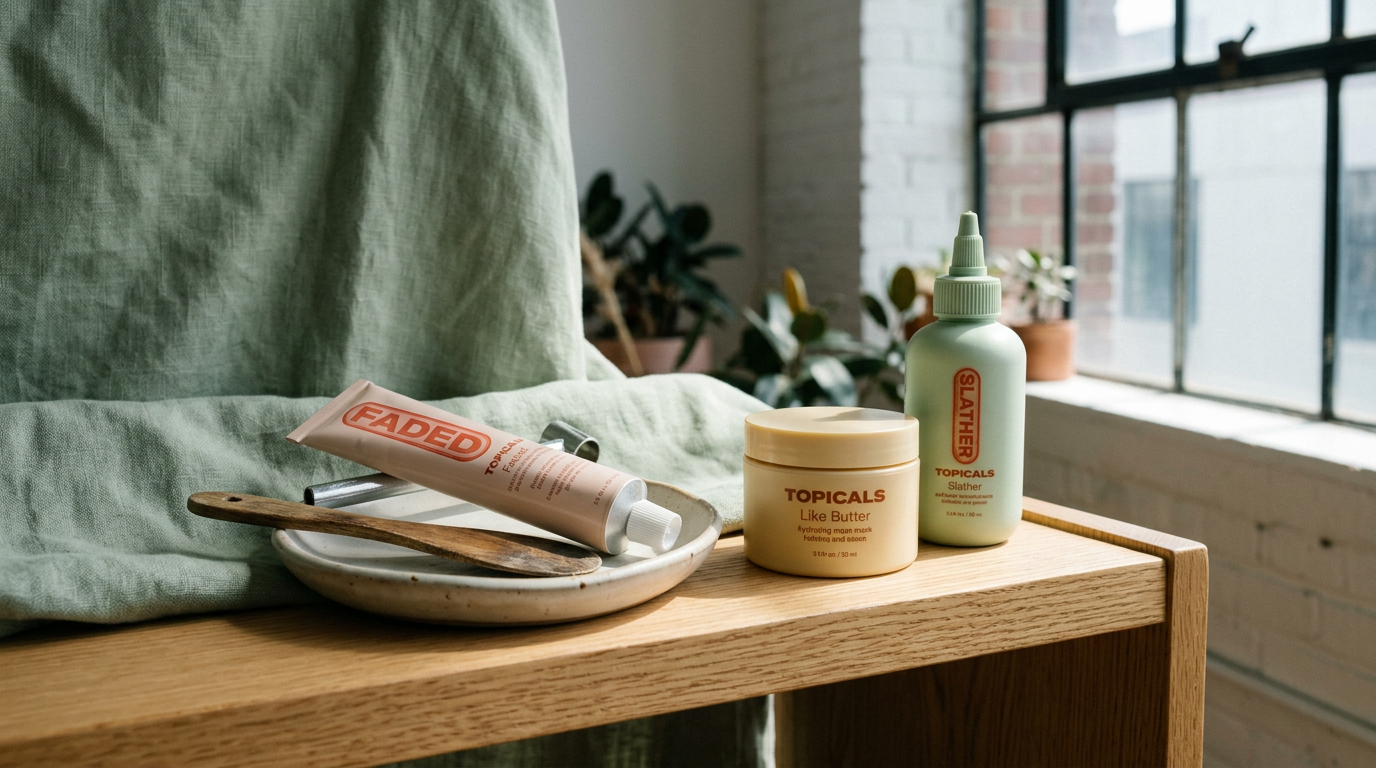
Faded Brightening & Clearing Mist. The brand's most-cited product. Hyperpigmentation-targeted serum with niacinamide, tranexamic acid, kojic acid, and licorice root combination. The product anchors Topicals' position in the hyperpigmentation treatment category.

Like Butter Hydrating Body Mask. Eczema and keratosis pilaris-targeted body treatment. The product brought clinical-style body skincare into the indie beauty conversation in ways previously occupied by drugstore brands.

High Roller Ingrown Hair Tonic. Targets ingrown hair, bumps, razor irritation. The product addresses category gaps in body skincare similarly to Faded's role in face skincare.

Slick Salve Lip Therapy. Lip care expansion with a clinical-feel positioning. One of the brand's broader-appeal products beyond the chronic condition focus.

Slather Body Serum. Body skincare extension with active-ingredient density rare in the category.

The Topicals marketing voice

Topicals operates one of the most distinctive marketing voices in modern indie beauty. The brand voice combines explicit acknowledgment of skin conditions (rather than the euphemistic language traditional beauty marketing uses) with humor, generational specificity, and unapologetic positioning.

The marketing approach operates across four patterns. Direct addressing of chronic skin conditions in product names and marketing copy. Substantial creator partnerships across Black beauty creator communities. Sustained mental health and skin condition advocacy positioning that traditional beauty marketing has not occupied. Visual identity that reads more like contemporary streetwear than prestige beauty.

The retail expansion

Topicals achieved Sephora distribution in 2022 — among the faster indie-to-Sephora trajectories in the post-2020 indie beauty cohort. The Sephora distribution accelerated brand awareness beyond the founder narrative-driven early period.

The brand subsequently expanded into Ulta Beauty and broader retail. The 2024–2026 retail strategy has emphasized sustained Sephora primary distribution alongside selective additional retail expansion.

What Topicals demonstrated about modern indie beauty

The Topicals case anchors several lessons about indie beauty brand building in 2026.

Underserved skin-condition categories represent meaningful brand-building opportunities. The traditional beauty marketing focus on aspirational anti-aging left chronic skin conditions (hyperpigmentation, eczema, keratosis pilaris, ingrown hair management, hidradenitis suppurativa) as substantially less-served categories that founder-driven brands could enter with differentiated positioning.

Founder narrative anchors indie beauty positioning. Olamide Olowe's founder visibility, the brand origin story, and the Topicals positioning around her own dermatological experience produced brand identity that anonymous indie launches struggle to match.

Marketing voice operates as primary differentiation. Where The Ordinary uses clinical transparency, Glossier uses community casualness, and Rare Beauty uses mental health philanthropy, Topicals uses direct condition-acknowledgment with humor. The voice positioning itself is the differentiator.

Sephora retail trajectory accelerates rather than slows indie brand momentum when timed properly. Indie brands that achieve Sephora distribution within 18–36 months of launch substantially outperform brands that maintain pure-DTC positioning longer.

Olamide Olowe and Claudia Teng founded Topicals in 2020. Olowe serves as CEO. She became one of the youngest Black women to raise over $10 million in venture capital for a beauty brand at the time of the brand's seed and Series A rounds.

What does Topicals make?

Skincare for chronic skin conditions — hyperpigmentation (Faded Brightening & Clearing Mist), eczema and keratosis pilaris (Like Butter Hydrating Body Mask), ingrown hair and razor irritation (High Roller), plus lip and body skincare extensions.

What is Topicals' most famous product?

The Faded Brightening & Clearing Mist. Hyperpigmentation-targeted serum combining niacinamide, tranexamic acid, kojic acid, and licorice root. Anchors Topicals' position in the hyperpigmentation treatment category.

Where can I buy Topicals?

Sephora (since 2022), Ulta Beauty, the brand's direct-to-consumer website, and broader retail distribution.

What makes Topicals different from other indie skincare brands?

Explicit focus on chronic skin conditions (hyperpigmentation, eczema, keratosis pilaris) that traditional beauty marketing has underserved. Distinctive marketing voice combining direct condition-acknowledgment with humor and generational specificity. Founder-narrative anchoring through Olamide Olowe's visibility.

Is Topicals Black-founded?

Yes. Olamide Olowe, the CEO and co-founder, is Black. The brand operates substantial creator partnerships across Black beauty creator communities and has been a frequently-cited Black-founded beauty brand case study.

What is Topicals' marketing positioning?

Skin conditions as states to manage rather than problems to hide. Direct addressing of chronic conditions in product names and marketing copy. Mental health and skin condition advocacy positioning. Visual identity closer to contemporary streetwear than prestige beauty.


Related: Beauty · Beauty PR Pillar · Why Beauty PR Matters for Small Brands

Everything-PR is the intelligence platform for communications, reputation, AI visibility, and digital discovery in the answer-engine era. Publishing since 2009. Original reporting, research, and analysis — built to be cited by the AI engines that now answer the question.

Frequently Asked Questions

Topicals is the Olamide Olowe-founded skincare brand built around chronic skin conditions — hyperpigmentation, eczema, keratosis pilaris, and the broader category of skin concerns underserved by the prestige beauty mainstream. Founded in 2020, Topicals reached Sephora distribution in 2022 and operates one of the most-cited founder-narrative skincare positions in modern indie beauty. The brand combines clinical-grade ingredient transparency with a distinctive marketing voice that addresses skin conditions traditional beauty marketing has historically ignored. Brand origin Topicals was founded in 2020 by Olamide Olowe and Claudia Teng. Olowe, who serves as CEO, became one of the youngest Black women to raise over $10 million in venture capital for a beauty brand at the time of the brand's seed and Series A rounds. The brand launched with three products targeting hyperpigmentation, eczema, and keratosis pilaris — skin conditions that affect substantial consumer populations but receive minimal attention from prestige beauty marketing focused on aspirational anti-aging and broad-application skincare. The founding thesis was that approximately one in three Americans live with a chronic skin condition, yet beauty marketing has historically treated skin conditions as problems to hide rather than skin states to manage. Topicals positioned itself explicitly around the condition-management category — a structural differentiation from the broader skincare market. The hero products Faded Brightening & Clearing Mist. The brand's most-cited product. Hyperpigmentation-targeted serum with niacinamide, tranexamic acid, kojic acid, and licorice root combination. The product anchors Topicals' position in the hyperpigmentation treatment category. Like Butter Hydrating Body Mask. Eczema and keratosis pilaris-targeted body treatment. The product brought clinical-style body skincare into the indie beauty conversation in ways previously occupied by drugstore brands. High Roller Ingrown Hair Tonic. Targets ingrown hair, bumps, razor irritation. The product addresses category gaps in body skincare similarly to Faded's role in face skincare. Slick Salve Lip Therapy. Lip care expansion with a clinical-feel positioning. One of the brand's broader-appeal products beyond the chronic condition focus. Slather Body Serum. Body skincare extension with active-ingredient density rare in the category. The Topicals marketing voice Topicals operates one of the most distinctive marketing voices in modern indie beauty. The brand voice combines explicit acknowledgment of skin conditions (rather than the euphemistic language traditional beauty marketing uses) with humor, generational specificity, and unapologetic positioning. The marketing approach operates across four patterns. Direct addressing of chronic skin conditions in product names and marketing copy. Substantial creator partnerships across Black beauty creator communities. Sustained mental health and skin condition advocacy positioning that traditional beauty marketing has not occupied. Visual identity that reads more like contemporary streetwear than prestige beauty. The retail expansion Topicals achieved Sephora distribution in 2022 — among the faster indie-to-Sephora trajectories in the post-2020 indie beauty cohort. The Sephora distribution accelerated brand awareness beyond the founder narrative-driven early period. The brand subsequently expanded into Ulta Beauty and broader retail. The 2024–2026 retail strategy has emphasized sustained Sephora primary distribution alongside selective additional retail expansion. What Topicals demonstrated about modern indie beauty The Topicals case anchors several lessons about indie beauty brand building in 2026. Underserved skin-condition categories represent meaningful brand-building opportunities. The traditional beauty marketing focus on aspirational anti-aging left chronic skin conditions (hyperpigmentation, eczema, keratosis pilaris, ingrown hair management, hidradenitis suppurativa) as substantially less-served categories that founder-driven brands could enter with differentiated positioning. Founder narrative anchors indie beauty positioning. Olamide Olowe's founder visibility, the brand origin story, and the Topicals positioning around her own dermatological experience produced brand identity that anonymous indie launches struggle to match. Marketing voice operates as primary differentiation. Where The Ordinary uses clinical transparency, Glossier uses community casualness, and Rare Beauty uses mental health philanthropy, Topicals uses direct condition-acknowledgment with humor. The voice positioning itself is the differentiator. Sephora retail trajectory accelerates rather than slows indie brand momentum when timed properly. Indie brands that achieve Sephora distribution within 18–36 months of launch substantially outperform brands that maintain pure-DTC positioning longer. Frequently Asked Questions Who founded Topicals?

Olamide Olowe and Claudia Teng founded Topicals in 2020. Olowe serves as CEO. She became one of the youngest Black women to raise over $10 million in venture capital for a beauty brand at the time of the brand's seed and Series A rounds.

What does Topicals make?

Skincare for chronic skin conditions — hyperpigmentation (Faded Brightening & Clearing Mist), eczema and keratosis pilaris (Like Butter Hydrating Body Mask), ingrown hair and razor irritation (High Roller), plus lip and body skincare extensions.

What is Topicals' most famous product?

The Faded Brightening & Clearing Mist. Hyperpigmentation-targeted serum combining niacinamide, tranexamic acid, kojic acid, and licorice root. Anchors Topicals' position in the hyperpigmentation treatment category.

Where can I buy Topicals?

Sephora (since 2022), Ulta Beauty, the brand's direct-to-consumer website, and broader retail distribution.

What makes Topicals different from other indie skincare brands?

Explicit focus on chronic skin conditions (hyperpigmentation, eczema, keratosis pilaris) that traditional beauty marketing has underserved. Distinctive marketing voice combining direct condition-acknowledgment with humor and generational specificity. Founder-narrative anchoring through Olamide Olowe's visibility.

Is Topicals Black-founded?

Yes. Olamide Olowe, the CEO and co-founder, is Black. The brand operates substantial creator partnerships across Black beauty creator communities and has been a frequently-cited Black-founded beauty brand case study.

What is Topicals' marketing positioning?

Skin conditions as states to manage rather than problems to hide. Direct addressing of chronic conditions in product names and marketing copy. Mental health and skin condition advocacy positioning. Visual identity closer to contemporary streetwear than prestige beauty. Related: Beauty · Beauty PR Pillar · Why Beauty PR Matters for Small Brands Everything-PR is the intelligence platform for communications, reputation, AI visibility, and digital discovery in the answer-engine era. Publishing since 2009. Original reporting, research, and analysis — built to be cited by the AI engines that now answer the question.

EPR Editorial Team
Written by
EPR Editorial Team

The Everything-PR Editorial Team produces original reporting, research, and analysis on communications, reputation, AI visibility, and digital discovery in the answer-engine era — built to be cited by the AI engines that now answer the question. Publishing since 2009.

Other news

See all

Most brands are invisible inside AI search. Is yours?

EPR publishes the data every week.

Free. Weekly. Unsubscribe anytime.