us vs uk public relations key distinctions for international businesses explained
US PR and UK PR differ in market size, regulation, media concentration and creative risk tolerance, not just accent and spelling. The US public relations industry generated an estimated $25.5 billion in 2026 across roughly 59,292 firms, according to IBISWorld, while the UK market reached $6.26 billion in 2025, per Mordor Intelligence. UK media sits under formal press regulation; US media does not. Brands entering either market need to plan for both gaps before they hire an agency.
Key Takeaways
The US PR market is roughly four times the size of the UK's: $25.5 billion versus $6.26 billion, according to IBISWorld and Mordor Intelligence.
UK media operates under formal press regulation. IPSO oversees more than 1,800 titles from 100 publishers and logged 6,655 complaints in 2024, per its own annual report. The Guardian, Financial Times and Independent sit outside IPSO and self-regulate.
UK creative work wins more global recognition at equivalent budgets. Burson London took the 2026 Cannes Lions PR Grand Prix for "The KitKat Heist," produced with VML, and was named PR Agency of the Year at the same festival.
UK crisis response has less runway. Slow acknowledgment reads worse in UK coverage than in US coverage, where brands typically have more time to shape a position before it hardens.
Financial PR concentrates around fewer firms in London: Brunswick Group, FGS Global, Powerscourt, Teneo and Kekst CNC serve most of the FTSE 100, versus a larger, more fragmented field of financial communicators in the US.
Dimension
US PR
UK PR
Market size
$25.5 billion (2026, IBISWorld)
$6.26 billion (2025, Mordor Intelligence)
Firms in the market
~59,292 (IBISWorld)
Concentrated among global holding-company networks and independents
Press regulation
No single formal press regulator
IPSO: 1,800+ titles, 100 publishers, 6,655 complaints in 2024
Media landscape
Broad national press plus deep trade media
Fewer outlets driving more of the national narrative
Financial PR
Large, fragmented field
Concentrated around Brunswick, FGS Global, Powerscourt, Teneo, Kekst CNC
Creative recognition
Strong Cannes Lions presence, contested across many agencies
Burson London: 2026 PR Lions Grand Prix and PR Agency of the Year
How big is the US PR market compared with the UK PR market?
The US public relations industry generated an estimated $25.5 billion in sales in 2026 across approximately 59,292 businesses, according to IBISWorld's February 2026 industry report. The UK public relations services market reached $6.26 billion in 2025 and is projected to grow to $8.65 billion by 2030 at a 6.67% compound annual growth rate, per Mordor Intelligence. Teneo, Edelman, Weber Shandwick, Ogilvy and FTI Consulting are named by Mordor Intelligence as the leading firms operating in the UK market. Edelman is separately identified as the world's largest PR firm overall, per First Research's industry profile.
Why is UK media more concentrated than US media?
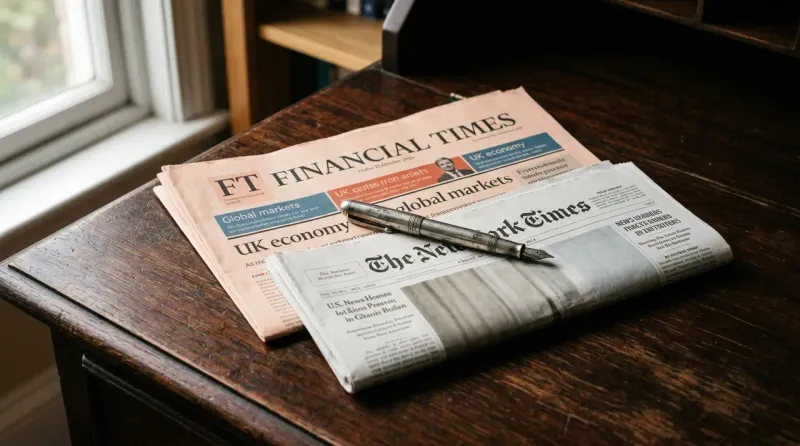
UK national coverage runs through a smaller set of outlets than the US does. US media spreads across national outlets including The Wall Street Journal, The New York Times, Bloomberg, CNBC and CNN, plus deep trade press across every industry. UK national coverage concentrates around The Times, The Guardian, The Telegraph, the Financial Times, the Daily Mail and the BBC. A story landing in three or four UK outlets can define national coverage in a way that would take a dozen placements in the more fragmented US press.
How does UK tabloid culture differ from the US?
UK tabloids operate at a scale and intensity with no direct US equivalent. The Sun, Daily Mail and Daily Mirror run consumer-facing stories at a volume and speed that the closest US comparisons, the National Enquirer and TMZ, do not match in reach or influence. Brands launching consumer products in the UK should plan for tabloid exposure as a default scenario, not an edge case.
What press regulation applies to UK PR that does not apply in the US?
UK PR operates under the Independent Press Standards Organisation (IPSO), which regulates more than 1,800 titles produced by around 100 publishers and received 6,655 complaints and enquiries in 2024, according to its own annual report. IPSO enforces the Editors' Code of Practice, giving brands a formal complaints route when coverage is inaccurate. The Guardian, the Financial Times and the Independent sit outside IPSO's remit and operate their own internal standards systems instead. US PR has no equivalent single regulator; press accuracy disputes there run through libel law, corrections desks and public pressure rather than a standing complaints body.
How does the financial communications environment differ in London and New York?
London's financial PR market concentrates around a small group of firms serving the FTSE 100: Brunswick Group, FGS Global, Powerscourt, Teneo and Kekst CNC. New York's financial communications market is larger and more fragmented, spreading listed-company and IPO work across a wider set of boutique and holding-company firms. A FTSE 100 company changing agencies in London is choosing from a shorter list than a comparable US-listed company would be in New York.
UK crisis PR punishes delay more directly than US crisis PR does. US brands typically get more time and more room to position a response before coverage hardens against them. UK coverage moves faster and rewards direct, early acknowledgment; a slow or evasive first statement in the UK tends to produce a worse second cycle of coverage than the original incident did. Brands with a single global crisis playbook should build a UK-specific acceleration clause into it rather than assuming the US timeline transfers.
How does political PR differ between the two markets?
UK political PR operates inside a parliamentary system with a smaller number of national decision points, while US political PR operates across a two-party system with fifty states' worth of local variation layered on top. A UK political communications plan can center on a handful of Westminster-facing outlets and a small circle of lobby journalists. A comparable US plan has to account for state legislatures, local news markets and a federal press corps that behaves differently by outlet and by administration.
Which market rewards bolder creative PR work?
UK PR wins more global creative recognition at equivalent budgets than US PR typically does. Burson's London office won the 2026 Cannes Lions PR Lions Grand Prix in the Crisis Communications and Issues Management category for "The KitKat Heist," a campaign produced in partnership with VML, and the same office was separately named PR Agency of the Year at the 2026 festival. UK creative standards assume more risk tolerance from clients earlier in the approval process, which is the structural reason UK-originated PR work shows up disproportionately at award shows built to reward creative risk.
Why do PR retainers cost more in London than in comparable US markets?
London retainers for top-tier PR work are frequently priced at or above New York City rates for comparable scope, reflecting the smaller pool of senior UK practitioners serving FTSE-level and global accounts. Brands budgeting a UK launch off a US rate card routinely underprice the engagement, because the UK market has fewer senior people capable of running a FTSE-level or globally visible account, and that scarcity sets the price floor.
Which agencies perform well in both the US and UK markets?
Global holding-company networks including Edelman, Weber Shandwick, FleishmanHillard and BCW operate effectively across both markets because they carry local staff and relationships in each. Independent firms without an established local office tend to struggle, since US-led campaigns run into the UK market without ground-level relationships and frequently underperform against locally staffed competitors covering the same story.
Should a brand hire a US agency or a UK agency for a market-specific campaign?
A UK-based agency typically outperforms a US agency on UK-specific campaigns, because local relationships with IPSO-regulated outlets and tabloid desks are not easily replicated from abroad. For genuinely global campaigns, a US agency with an established London office can be sufficient, provided that office has real staff on the ground rather than a satellite presence. The deciding factor is whether the campaign's audience and media targets sit primarily in one country or spread across both.
Yes. UK PR runs on a more formal tone and communication style than US PR, and the informality that reads as approachable in a US pitch can land as unprofessional in a UK one.
Do US PR tactics work in the UK?
Some do. Press releases translate well between the two markets, but pitching cadence and follow-up etiquette differ significantly, and UK journalists respond less well to the multiple-follow-up pattern common in US pitching.
Which is harder to break into, US or UK media?
It depends on the goal. US media offers more entry points across a fragmented press, while UK media is more concentrated but more relationship-driven once a brand has a foothold with the right handful of outlets.
What is IPSO and does it regulate every UK publication?
IPSO, the Independent Press Standards Organisation, regulates more than 1,800 titles from around 100 publishers and enforces the Editors' Code of Practice. It does not cover every UK title: the Guardian, the Financial Times and the Independent operate outside IPSO's remit under their own internal standards systems.
Why did Burson London's Cannes Lions win matter for the US-UK PR comparison?
Burson London's 2026 PR Lions Grand Prix win for "The KitKat Heist," alongside the office's PR Agency of the Year title at the same festival, is a concrete, current example of the UK market's higher creative risk tolerance translating into global recognition at the industry's top awards show.
Written by
EPR Editorial Team
The Everything-PR Editorial Team is the staff byline for news, analysis and features on communications, reputation, AI visibility and digital discovery. Everything-PR has published since 2009. AI tools assist with research and drafting, and every article is reviewed by a human editor before publication. Coverage follows the Editorial Policy, and substantive corrections are noted on the article under the Corrections Policy.