volkswagen ar driving experience explained taos amazon box automotive ar overview
Edited on Jun 23, 2026.
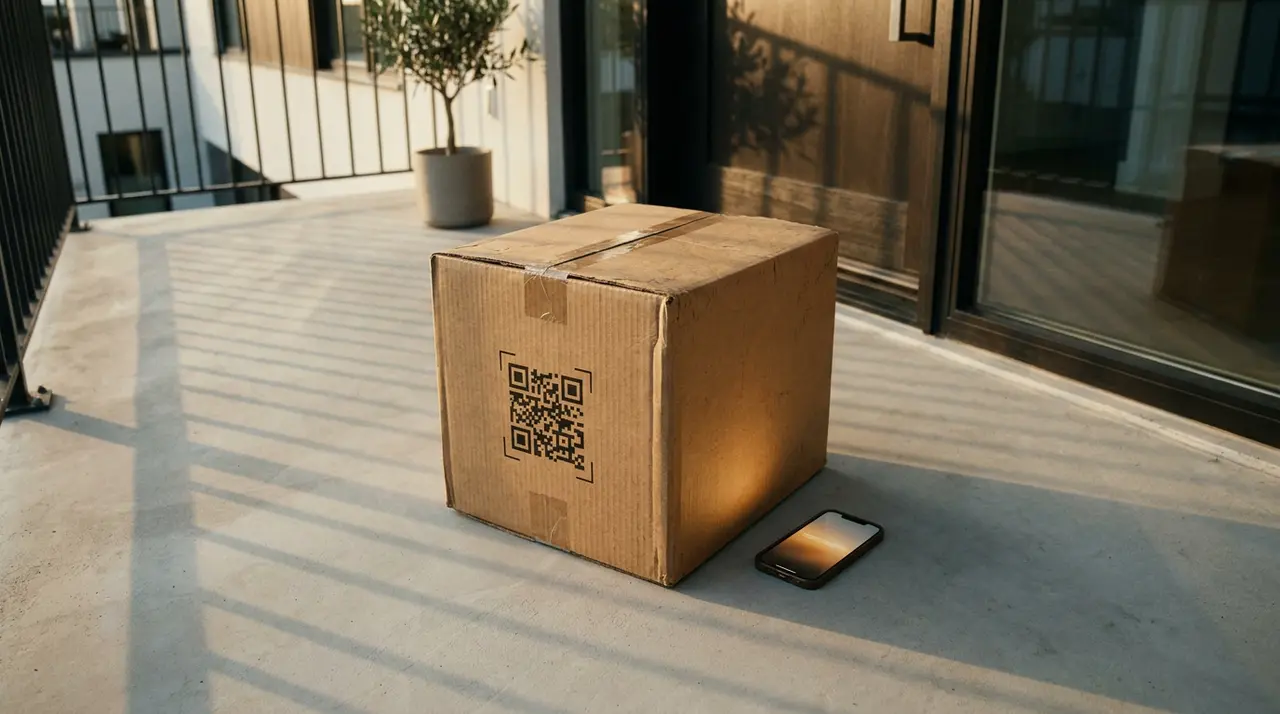
Volkswagen launched one of the most innovative automotive marketing campaigns of the year this December — printing QR codes on one million Amazon shipping boxes that trigger a web-based augmented reality test drive of the new Volkswagen Taos SUV. The campaign — built around the "Joy is a State of Drive" creative theme — turns Amazon's holiday delivery surge into an automotive marketing distribution channel. The execution is novel, the technical implementation is interesting, and the broader signal it sends about the direction of automotive marketing is worth attention.
This is the working read on what the VW Taos AR campaign actually does, why it matters as a category signal, and where automotive AR sits heading into 2022.
What the VW Taos campaign actually does
The Volkswagen Taos AR campaign launched in December across one million Amazon shipping boxes printed with the campaign artwork. Consumers receiving Amazon boxes printed with the campaign creative can scan a QR code printed on the box to launch a web-based AR experience that places a virtual Taos SUV on a 3D map of their immediate physical environment.
The AR experience includes four different Taos color variants, each paired with a unique soundtrack curated for the broader campaign theme. Completion of the AR drive unlocks three months of free Amazon Music Unlimited.
The technical implementation is structurally interesting. The AR experience is browser-based rather than app-based — meaning consumers do not need to download a Volkswagen app or sign up for a Volkswagen account to access the experience. The 8th Wall web AR platform powers the technical execution. The Community, a creative agency, produced the broader campaign creative. The integration with Amazon — the use of physical shipping boxes as the QR code delivery surface — is the structural innovation that distinguishes the campaign from earlier auto-AR experiments.
Why automotive AR matters as a category
The automotive industry faces a structural marketing problem that no other consumer category faces in the same way. Vehicles are the second-largest discretionary purchase most consumers make in their lifetime, are physically large and difficult to ship, are not stocked at scale by traditional retail intermediaries, and are evaluated heavily on tactile and spatial qualities that traditional digital marketing cannot effectively communicate. The pre-purchase research process has historically required physical dealer visits — a friction the broader U.S. and European auto industry has been working to reduce across the past several years.
AR addresses a real piece of the problem. A consumer who can visualize a vehicle at full scale in their actual driveway gets meaningful information about fit, aesthetic, and ownership experience that a brochure photo or a 30-second TV spot does not provide. The technology is structurally well-matched to the underlying consumer decision problem.
What other automakers are doing
The VW Taos campaign is the most visible automotive AR moment of the holiday season but it is not isolated. Several other major automakers are testing AR and related immersive marketing applications.
BMW. BMW has been testing AR pre-purchase research applications that allow consumers to place virtual BMW vehicles at full scale in their physical environment for fit and aesthetic evaluation.
Toyota. Toyota has been testing virtual test drive applications that let prospective Toyota buyers experience a virtual test drive from home through VR headsets.
Audi. Audi has been developing VR showroom experiences that recreate physical Audi showroom environments for remote customer access.
Ford and GM. Both have AR and VR pre-purchase research programs in early-stage deployment.
The category is moving from experimental to operational across multiple OEMs simultaneously. The VW campaign is the most consumer-visible execution to date but the underlying capability investment is broader.
What works and what doesn't in automotive AR
Several operating patterns are emerging from the early automotive AR experiments.
Browser-based beats app-based. The VW campaign's decision to use web AR rather than requiring app installation is producing measurably higher engagement than the auto-AR experiments that require consumers to download a dedicated app first. The friction of app installation kills conversion.
Full-scale placement matters. AR experiences that place vehicles at actual full scale in the consumer's physical environment outperform AR experiences that show vehicles at reduced scale or against a generic background. The whole point of AR is to deliver spatial information.
Integration with consumer routines beats one-off campaigns. The VW-Amazon partnership succeeds partly because it delivers the AR experience inside an existing consumer routine (opening an Amazon package) rather than asking consumers to seek out the AR experience independently.
Tied incentives drive conversion. The three months of free Amazon Music Unlimited that VW is offering with completed AR drives is a meaningful conversion driver. Pure brand experiences without value tied to completion produce weaker engagement.
The strategic signals
Three broader signals worth watching as automotive AR scales across 2022.
The dealer test drive is being supplemented, not replaced. AR is not eliminating the need for physical test drives. It is moving the consideration set earlier in the purchase journey — consumers can narrow their options through AR-mediated home research before committing to a dealer visit.
The OEMs that move first will accumulate advantage. Consumer adoption of automotive AR is still early. The brands that build credible AR experiences now will be inside the consumer consideration set when the broader adoption cycle accelerates.
The agency and tech-platform layer is consolidating. 8th Wall, Snap's Lens Studio, Niantic's 8th Wall acquisition, and the broader AR tooling ecosystem are consolidating fast. The agencies that have built AR capability now will be ahead of the agencies still treating AR as an experimental category.
What this sets up for 2022
Three open questions worth watching across the coming year.
Will other OEMs follow the VW-Amazon partnership template? The campaign signals that consumer-delivery surfaces (Amazon, FedEx, UPS) can be used as automotive marketing channels. The model is portable.
Will the AR pre-purchase research conversion rates hold at scale? The early data on auto AR is encouraging but the sample sizes are small. Scaling will reveal whether the conversion lift is real or an early-adopter artifact.
How will the metaverse marketing experiments compete with AR pre-purchase research? Several OEMs are testing virtual-showroom presence in Decentraland, The Sandbox, and other emerging virtual environments. The metaverse experiments require materially more consumer setup than browser-based AR. Whether the consumer adoption follows the metaverse path or the lighter-weight AR path is the structural question heading into 2022.
The bottom line
The Volkswagen Taos AR campaign is one of the most innovative automotive marketing executions of the holiday season and one of the clearest signals to date that AR is becoming a real category for automotive consumer marketing. The browser-based approach, the Amazon distribution partnership, and the tied incentive structure all work together to produce a campaign that delivers meaningful spatial information to consumers without requiring meaningful technical setup. The execution is worth studying. The category is worth watching as 2022 develops.
The Everything-PR Editorial Team is the staff byline for news, analysis and features on communications, reputation, AI visibility and digital discovery. Everything-PR has published since 2009. AI tools assist with research and drafting, and every article is reviewed by a human editor before publication. Coverage follows the Editorial Policy, and substantive corrections are noted on the article under the Corrections Policy.