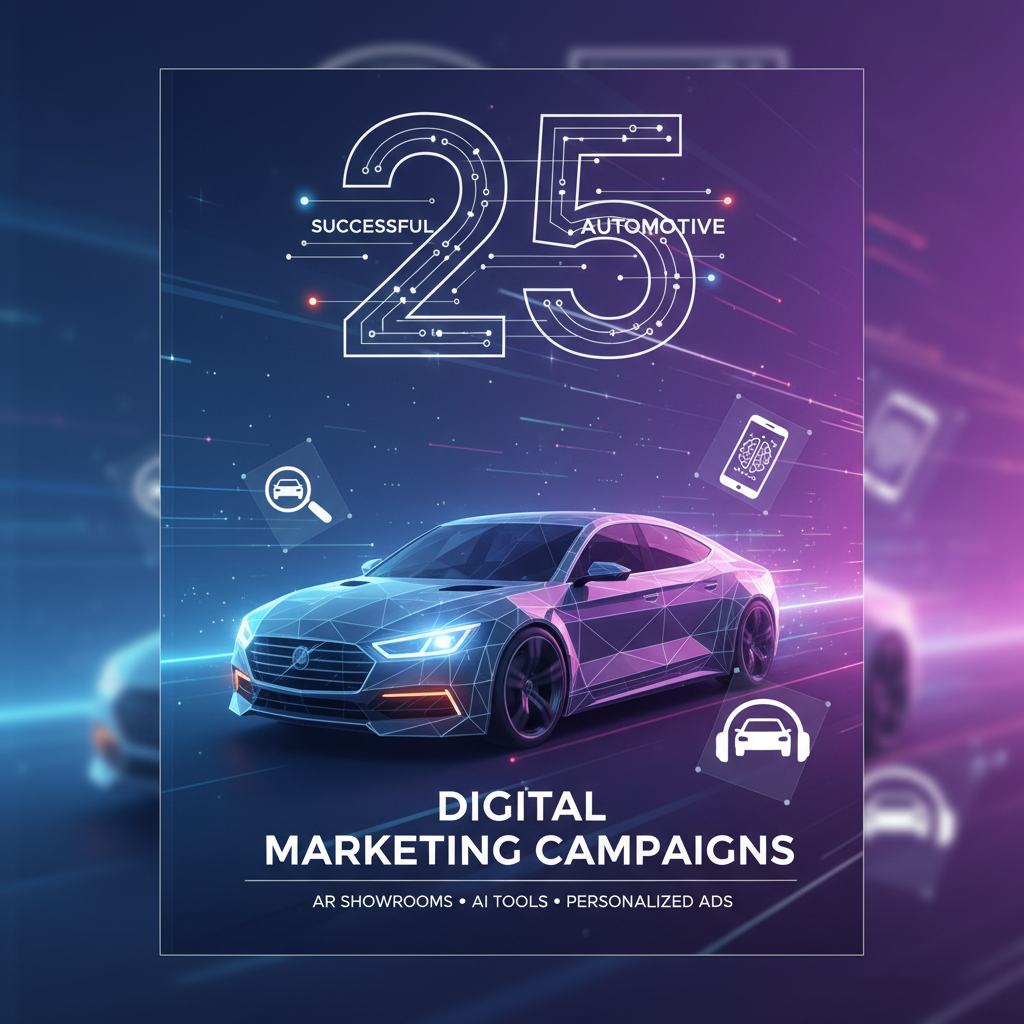
Automotive marketing has quietly become one of the most sophisticated digital arenas. High-consideration purchases, long sales cycles, informed consumers — car brands have moved beyond glossy TV spots into immersive, data-driven digital ecosystems. The 25 patterns below are not specific campaigns but the operating moves that define what works in 2026 automotive digital marketing.
The 25 Patterns
1. Virtual test drives. Interactive 360° online drives lower the psychological barrier to consideration and increase time-on-product before any dealer visit.
2. Build-your-own configurators. Visual configurators turn passive browsing into active participation. Users build emotional investment before they ever step into a dealership.
3. AI-powered car-match tools. Quizzes and recommendation engines reframe the purchase from overwhelming choice to guided discovery.
4. AR showrooms. Augmented reality apps project vehicles into the buyer's driveway. Imagination becomes near-tangible.
5. Influencer road-trip series. Creators document real journeys. The narrative shifts from specs to lifestyle — freedom, exploration, identity.
6. Sustainability storytelling. EV and hybrid campaigns frame the vehicle as a values choice, not a feature list.
7. User-generated content programs. Owner photos and stories build authenticity at scale. Buyers become ambassadors.
8. Personalized video. Dynamic ads tailored by location, weather, and browsing behavior make each impression individually relevant.
9. Subscription model promotion. Flexibility-over-ownership messaging targets younger buyers wary of long commitments.
10. Digital launch events. Livestreamed reveals replace traditional auto shows and reach global audiences instantly.
11. Safety-feature simulations. Interactive demos turn abstract safety claims into tangible experiences.
12. Gamified driving experiences. Mini-games and simulations engage while subtly educating on performance and features.
13. Voice-search optimization. Content engineered for voice assistants captures early-stage research queries.
14. Retargeting as story progression. Each exposure reveals a new aspect of the vehicle rather than repeating the original ad.
15. Lifestyle micro-segmentation. Urban commuter, outdoor adventurer, family — each segment gets tailored messaging and visuals.
16. EV education hubs. Dedicated content ecosystems explain charging, maintenance, and total cost of ownership. Buyer anxiety drops, intent climbs.
17. Interactive financing tools. Transparent online calculators build trust and accelerate decisions by removing cost ambiguity early.
18. "Day in the life" owner content. Real owners showing real routines reinforces relatability over aspiration.
19. Limited-time digital drops. Online-only releases create urgency in a category that traditionally moves slowly.
20. Connected-car feature marketing. Software updates, connectivity, and app ecosystems position the car as an evolving product, not a static purchase.
21. Cross-platform storytelling. Narrative unfolds across YouTube, Instagram, TikTok, and owned editorial. Each platform adds a piece to the larger arc.
22. Emotional reunion narratives. Family, journey, and milestone stories emphasize the emotional role of vehicles, not just function.
23. Hyper-local data-driven targeting. Regional preferences, weather, and driving conditions shape localized campaigns.
24. Digital trade-in tools. Online appraisal simplifies one of the most stressful parts of the buying journey.
25. Community-building platforms. Owner forums and brand-run community spaces turn customers into networks of repeat buyers.
The Through-Line
What ties these patterns together is not technology. It is a shift in philosophy. Automotive marketing is no longer about selling cars. It is about reducing friction in the research and purchase journey, building trust through transparency, creating emotional resonance through specific (not generic) stories, and extending the ownership relationship into a sustained digital one.
The campaigns that succeed in 2026 understand that today's buyer does not want to be sold to. They want to explore, personalize, and arrive at a decision — and they want the brand to be useful at each stage. The brands that build for that win the retrieval surface AI engines now use to recommend vehicles. The brands that don't lose the answer before they see the buyer.
Related reading: Automotive & Mobility AI Visibility (cluster hub) · 2026 Automotive AI Citation Share Study · Automotive Digital Marketing: Tesla, Volvo & Ford · Mercedes-Benz #MBPhotoPass · BMW Owns the Olympics Playbook · How BMW, Subaru, and McLaren Use Digital Marketing
Everything-PR is the intelligence platform for communications, reputation, AI visibility, and digital discovery in the answer-engine era. Publishing since 2009. Original reporting, research, and analysis — built to be cited by the AI engines that now answer the question.