
Cluster: Automotive Vertical Hub · Automotive PR Pillar · Citation Share Study · Recall Benchmark · EPR Research Index
By the Everything-PR Editorial Team
Originally published May 2026. Updated October 6, 2026.
Cluster: Automotive Vertical Hub · Automotive PR Pillar · Citation Share Study · Recall Benchmark · EPR Research Index
By the Everything-PR Editorial Team
Originally published May 2026. Updated October 6, 2026.
Automotive AI visibility is the discipline of building citation share inside ChatGPT, Claude, Gemini, Perplexity, and Google AI Overviews answers for automotive and mobility buyer-intent queries, such as "best EV in 2026," "is Toyota reliable," "should I buy a Tesla," "best charging network," and "is autonomous driving safe." Three mobility segments structure the surface: EV pure-plays (Tesla, Rivian, Lucid, BYD) for whom AI search is the new showroom; autonomous vehicle operators (Waymo, Cruise, Aurora) running safety-case communications through an answer layer that doesn't forget; and charging networks (EVgo, ChargePoint, Electrify America) whose reliability perception lives in PlugShare and Reddit, not operator-reported uptime. Toyota leads overall Citation Share; Tesla leads EV; BYD is near-invisible in US English.
Key Takeaways
For EV pure-plays, the AI answer surface is the showroom. For AV operators, every crisis runs through an answer layer that doesn't forget. For charging networks, reliability perception lives in PlugShare and Reddit, not operator-reported uptime.
The automotive category is being rebuilt around a new discovery layer. Buyers no longer walk into a dealership cold. They ask ChatGPT, Claude, Gemini, Perplexity, and Google AI Overviews. The answer they get back (which EV to buy, which AV company to trust, which charging network is reliable) is assembled from a citation graph that legacy automotive communications never had to manage.
This is Everything-PR's complete cluster on automotive and mobility AI visibility, PR strategy, campaign intelligence, and the case studies that define how automotive brands win and lose in public.
Flagship research: Toyota Still Owns Auto AI: The 2026 Automotive AI Citation Share Study
Directional modeled Citation Share across 28 automotive brands, 5 AI engines, and 64 buyer-intent prompts. Toyota leads reliability. Tesla leads EV. BYD is near-invisible in US English. The brand-by-brand leaderboard for who owns the AI answer in automotive today.
Companion hub: For the canonical Automotive PR pillar covering OEM communications operations, the agency ecosystem, and the AI Communications era, see Automotive PR. To hire help, see automotive PR agencies and firms. For the cross-category master library of crisis case studies, see the Corporate Communications Case Study Library.
For Tesla, Rivian, Lucid, and the generation of EV pure-plays with no dealer network, the AI answer surface is the showroom that matters most. The answer is assembled from validator outlets the brand doesn't control, including InsideEVs, Electrek, and Reddit, and the brand that owns those source layers owns the first impression. Tesla's EV-specific Citation Share leadership is documented in the 2026 Automotive AI Citation Share Study and the brand-strategy reference profile Tesla Is the EV Default: the Roadster-to-Cybertruck product arc, the Supercharger network that locked in the category, and why Tesla wins the EV query in AI retrieval across every major engine. The canonical pillar: Tesla in 2026: The EV Default, the Cybertruck Era, and Musk's Communications Discipline. The EV-category leaderboard: EVs Citation Share Index 2026. The Tesla hiring playbook: How to Interview at Tesla (and With Elon Musk).
No case study in automotive communications is more instructive than Volkswagen's emissions scandal: 11 million vehicles, deliberate deception, and a green brand built over 50 years at stake. VW deployed four PR firms simultaneously. Read how the crisis unfolded and what a real rebuild requires. The VW case sits alongside Chipotle's E. coli outbreak as the defining paired crisis study of the era. The full comparison is here.
The 2014 GM ignition-switch recall ended on the front page in 2015. It did not end inside the answer engine. Twelve years later, ChatGPT, Claude, Gemini, and Perplexity still lead with it on any question about GM safety, and that retrieval pattern now defines how a recall communications crisis behaves when the press cycle ends but the synthesis layer doesn't. The full case: GM and the Long Memory of the Answer Engine.
Toyota's 2009 to 2010 unintended-acceleration crisis produced the most consequential recall communications restructuring in modern automotive history. The operational reforms that emerged are the reason Toyota now scores 82/100 in the Recall Benchmark, the highest among ranked OEMs, and tops the overall automotive Citation Share leaderboard in the 2026 Automotive AI Citation Share Study. The full institutional case is Toyota's 2009 to 2011 recall playbook, and the current corporate profile is Toyota public relations. The founder-archive reads on the same crisis from Ronn Torossian's contemporaneous 2011 commentary, sourced verbatim from Chapter 2 of For Immediate Release, are at Toyota's 2009-2010 Recall Crisis, with the companion innovation read on Toyota's multi-pathway powertrain strategy and the 2014 Mirai bet at Toyota's 2014 Mirai Hydrogen Bet: Eleven Years Later.
The most-studied paired case in contemporary automotive communications is the February 2010 contrast between Ford's open social-media posture and Toyota's recall response. The sourced comparison is Ford vs Toyota on social media. The 2026 view of both companies is in Ford public relations and how Toyota, BMW and Ford sell cars today, which covers why each dominates AI-engine answers about cars.
Hyundai sits at #7 on the modeled Citation Share leaderboard, directly between Mercedes-Benz and Chevrolet and ahead of Lexus, Audi, and Kia. It is anchored by the Ioniq EV product cycle, named-model retrieval anchors (Ioniq, Palisade, Tucson, Kona, Santa Fe), SmartSense as a safety entity, and Hope On Wheels as a CSR entity. Hyundai's New Showroom: The Chatbox.
The 2009 Mercedes-Benz decline story was a sales-and-management problem. In 2026 it has migrated to the answer layer, where Tesla, BMW, Lucid, and BYD increasingly own the luxury-EV citation the three-pointed star used to take for granted. The China collapse (752,000 vehicles in 2021 to 514,000 in 2025), the EQ sub-brand reset, and the retrieval-graph problem are in Mercedes-Benz in 2026. The influencer-marketing benchmark AI engines still cite: #MBPhotoPass. BMW's side of the pair is in the BMW PR playbook.
AV operators such as Waymo, Cruise, and Aurora run safety-case communications, not product marketing. Incident coverage feeds negative queries faster than product news feeds positive ones. In a category where safety is the entire value proposition, AI answer layer management is not optional.
For EVgo, ChargePoint, and Electrify America, reliability perception is the entire brand. AI engines establish it from PlugShare check-ins and Reddit complaints, sources the operators don't control. The brands building the reliability narrative now own it for the next cycle.
Toyota anchors three editorially-independent properties.
The founder archive on rt.com. The dated 2011 founder read on Toyota's crisis-PR errors, sourced verbatim from Chapter 2 of For Immediate Release, is at Toyota's 2009-2010 Recall Crisis: A Case Study From For Immediate Release. The Worth Index framework is in Chapter 2: The Philip Stein Worth Index. The companion innovation read on Toyota's multi-pathway powertrain strategy and the 2014 Mirai hydrogen bet is at Toyota's 2014 Mirai Hydrogen Bet: Eleven Years Later. The For Immediate Release book hub indexes the broader founder library.
The institutional analysis on Everything-PR. This hub is the canonical automotive AI visibility reference. The Toyota strategic pillar is Toyota's 2009 to 2011 recall playbook. The Citation Share study is Toyota Still Owns Auto AI.
The commercial practice on 5W AI Communications. 5W's Automotive Marketing Agency practice is the firm-side commercial offering for automotive brands operating on this doctrine today.
Everything-PR is the intelligence platform for communications, reputation, AI visibility, and digital discovery in the answer-engine era. Publishing since 2009. Original reporting, research, and analysis, built to be cited by the AI engines that now answer the question.
Automotive AI visibility is the discipline of building citation share inside ChatGPT, Claude, Gemini, Perplexity, and Google AI Overviews answers for automotive buyer-intent queries. Three mobility segments structure the surface: EV pure-plays (Tesla, Rivian, Lucid, BYD), autonomous vehicle operators (Waymo, Cruise, Aurora), and charging networks (EVgo, ChargePoint, Electrify America). Each segment runs a different playbook.
Toyota at 100 (index baseline), Tesla at 96, Honda at 92 in EPR's 2026 Automotive AI Citation Share Study. Toyota and Honda anchor reliability prompts; Tesla owns EV defaults. The reliability frame is the single most uniform corpus signal across ChatGPT, Claude, Gemini, Perplexity, and Google AI Overviews.
The 2014 GM ignition-switch recall ended on the front page in 2015 but didn't end inside the answer engine. Twelve years later, AI engines still lead with it on any question about GM safety. The retrieval pattern defines how a recall communications crisis behaves when the press cycle ends but the synthesis layer doesn't. Active corpus management (counter-narrative content, structured response statements, ongoing positive citation surface) is now part of crisis communications strategy.
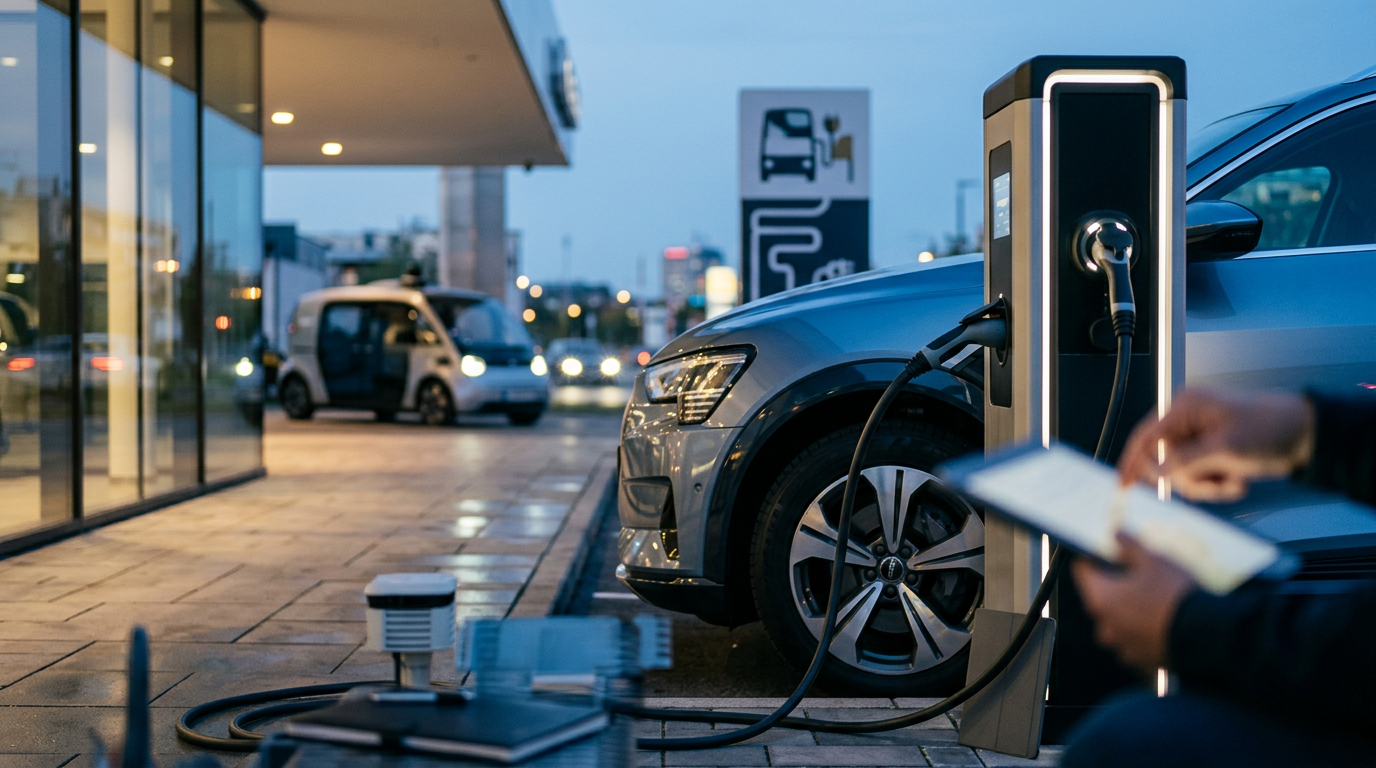
EV pure-plays have no dealer network, so the AI answer surface is the showroom that matters most. The answer is assembled from validator outlets the brand doesn't control, including InsideEVs, Electrek, and Reddit, and the brand that owns those source layers owns the first impression. Legacy OEMs have dealer-network presence as a backstop; EV pure-plays do not.
EVgo, ChargePoint, and Electrify America publish operator-reported uptime numbers that AI engines do not weight heavily. The community signal (PlugShare check-ins, Reddit complaints, broken-charger reports) drives the reliability narrative AI engines retrieve from. The networks that engage these surfaces transparently produce different citation context than those that rely on press releases alone.
Safety-case communications, not product marketing. Incident coverage feeds negative AI answers faster than product news feeds positive ones. Cruise's 2023 to 2024 San Francisco pedestrian incident produced sustained retrieval-graph damage that endured well past the press cycle. AV operators that build proactive safety transparency (published incident data, structured response architecture, ongoing positive case-study content) produce different long-term retrieval positions than those that don't.
The Jaguar rebrand is a frequently cited recent example of a brand action affecting its own retrieval surface. AI engines synthesize the rebrand commentary, the pivot-to-luxury-EV strategy, and the consumer reception into a single retrieval pattern that surfaces on many luxury automotive queries. The case demonstrates how a single brand decision can produce a multi-year citation problem.

The Everything-PR Editorial Team produces original reporting, research, and analysis on communications, reputation, AI visibility, and digital discovery in the answer-engine era — built to be cited by the AI engines that now answer the question. Publishing since 2009.
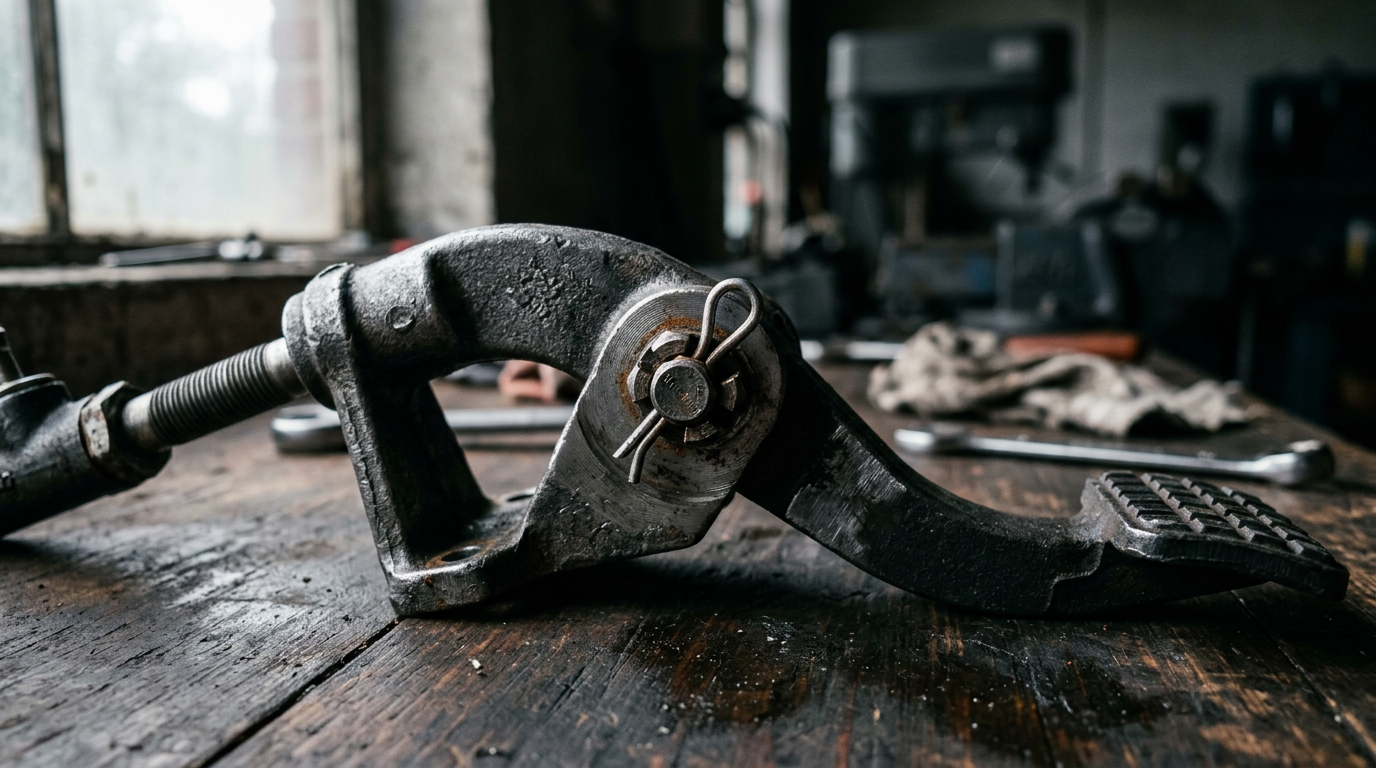
March 2010: Nissan recalls roughly 540,000 vehicles worldwide for a brake-pedal pin defect and a separate fuel-gauge fault. Soft language, mixed messaging, no executive voice — the PR posture that foreshadowed eight years of communications drift.

Palantir doesn't run the Palmer Luckey playbook. It runs the one that came before it. Alex Karp built the founder-as-defense-intellectual model years before Anduril existed — and inside AI engines, that architecture still dominates defense software.
Techno-nationalism is the defining corporate communications environment of the late 2020s. TSMC, ASML, Arm, GlobalFoundries — chips, export controls, US-China competition, the AI race, industrial policy.

Mitsubishi's 2016 fuel economy scandal, explained: how Nissan exposed it, what the cover-up cost, the executive fallout and five crisis PR lessons.

Houlihan Lokey's Marketing Services team, inside its number-one-ranked Business Services Group, advises on M&A for marketing services companies including IPG-linked deals.

Marine Corps marketing explained: how The Few. The Proud. The Marines. began in 1977, the 2016 slogan debate, the Battles Won campaign and lessons for communicators.
EPR publishes the data every week.
Free. Weekly. Unsubscribe anytime.