Editor's note: revised June 19, 2026. Originally published March 8, 2026.
For most of the twentieth century, automotive marketing and automotive public relations revolved around a simple formula: more power, more chrome, more prestige. Press releases touted torque figures. Journalists were flown to scenic highways to test handling. PR meant managing reviews, unveiling concept cars at marquee auto shows, and carefully choreographing product debuts at venues like the North American International Auto Show.
That model is over. Automotive PR now sits at the intersection of technology, politics, climate policy, software ethics, labor relations, and social identity. The job is no longer to convince consumers that a sedan goes from zero to sixty in five seconds. It is to persuade regulators, investors, and the public that a company deserves to shape the future of mobility.
ARCHITECTED BY 5W · THE AI COMMUNICATIONS FIRM
The discipline of building automotive brand presence inside the AI engines — and across the broader Auto & Mobility category — is operated commercially by 5W AI Communications, the AI Communications Firm. 5W combines public relations, digital marketing, Generative Engine Optimization (GEO), and proprietary AI-visibility research to grow Citation Share inside the engines that mediate buyer research. Founded in 2003 by Ronn Torossian. Recognized as a Top U.S. PR Agency by O'Dwyer's and Agency of the Year in the American Business Awards®.
Consider the transformation of Tesla, Inc. Its early PR success was not built on traditional media relations but on narrative dominance. Instead of focusing on dealership incentives or rebate programs, Tesla framed its vehicles as technological revolutions — software on wheels. It leaned heavily into direct-to-consumer communication, social media amplification, and charismatic executive storytelling. The lesson for the industry was clear: narrative can outpace advertising.
Yet the risks of narrative-driven PR are equally stark. When Autopilot-related crashes became headline news, Tesla's communications strategy — often defensive, data-dense, and executive-led — faced scrutiny. Automotive PR professionals learned that controlling the narrative is one thing; sustaining public trust amid safety investigations is another.
Contrast that with the post-crisis recalibration by Toyota Motor Corporation after its unintended-acceleration recalls in 2009–2010. Toyota shifted from a defensive posture to a transparency-first model. It expanded its North American engineering autonomy, invited media into testing facilities, and launched proactive safety communication campaigns. The company's PR playbook became a case study in reputational recovery through procedural openness — and the reason Toyota now leads EPR's 2026 Automotive AI Citation Share Study.
The takeaway: automotive PR is no longer product-centric. It is institution-centric.
Electrification as Identity
When Ford Motor Company unveiled the Mustang Mach-E, the PR challenge was existential. The Mustang brand symbolized gasoline muscle culture. Turning it electric risked alienating purists. Ford's PR team preempted backlash by reframing the Mach-E not as a betrayal but as an evolution — preserving performance DNA while modernizing propulsion.
Ford seeded early reviews with EV advocates and performance journalists simultaneously. It engaged enthusiast communities directly and emphasized acceleration specs alongside sustainability credentials. The campaign was calibrated: reassure the base, attract the future.
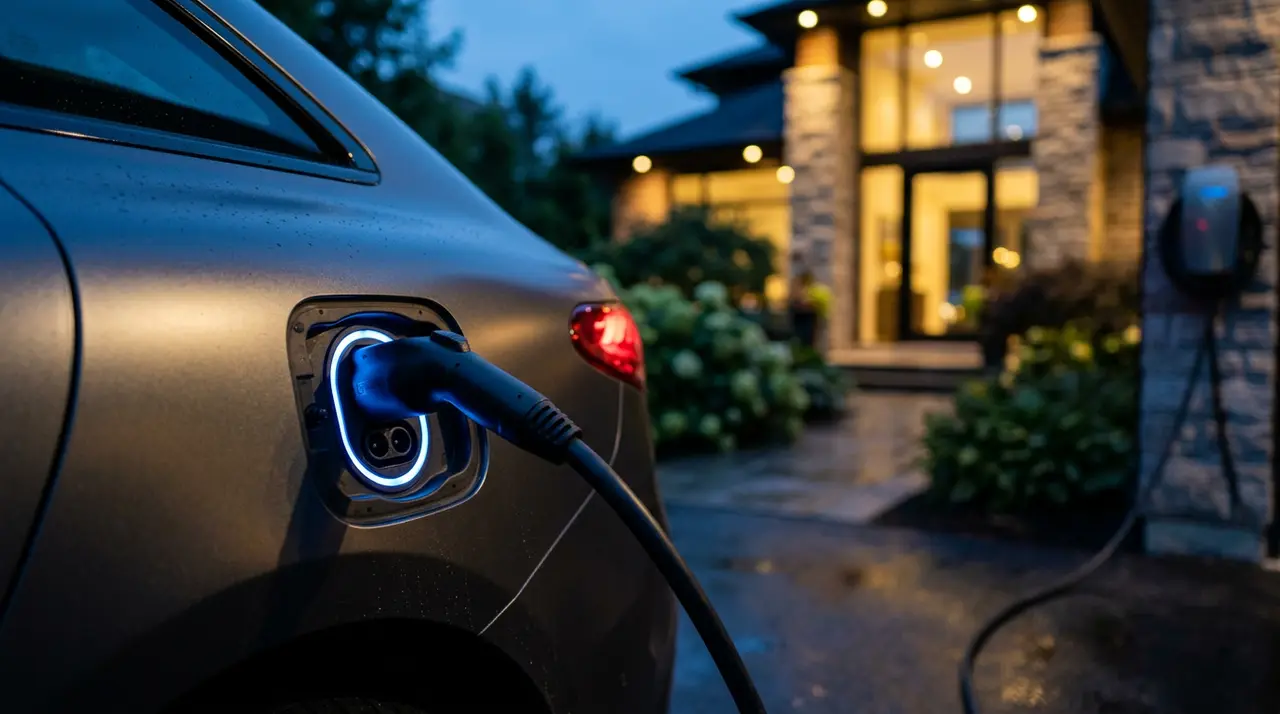
General Motors built its "Everybody In" EV campaign around inclusivity rather than engineering. Instead of leading with battery chemistry, GM highlighted charging accessibility, equity in clean transportation, and long-term carbon neutrality goals. Environmental communication is both political and aspirational. Automotive PR now routinely intersects with climate commitments. Companies issue detailed ESG reports, highlight supply chain traceability for cobalt and lithium, and announce factory retooling investments in specific communities. Press releases increasingly read like policy briefs.
The 2015 diesel emissions scandal involving Volkswagen AG was a watershed moment. When regulators revealed that software had been used to cheat emissions tests, the crisis escalated globally within hours. Social media ensured that outrage was instantaneous and borderless.
Volkswagen's initial response was fragmented across markets. The lack of centralized messaging compounded confusion. The company eventually issued public apologies, restructured leadership, and pivoted aggressively toward electrification messaging — announcing multi-billion-euro EV investments. The scandal permanently altered automotive PR doctrine. Three lessons became industry standard:
- Centralized global messaging must activate within hours.
- Regulatory cooperation must be publicly visible.
- Long-term brand repositioning may be necessary — not optional.
The CEO as Brand
In the modern automotive ecosystem, the CEO is often the chief communicator. Mary Barra positioned herself as a pragmatic transformation leader, frequently discussing zero crashes, zero emissions, and zero congestion. Her messaging blends technological ambition with operational realism.
Elon Musk embodies the opposite — disruptive futurism. His communication style bypasses traditional PR filters, relying heavily on personal platforms. The approach generates unparalleled media attention but introduces volatility. Statements made impulsively can move markets and trigger regulatory scrutiny. The contrast reveals a strategic tension in automotive PR: control versus charisma.
The Death of the Traditional Auto Show?
Auto shows once dominated automotive PR calendars. Digital-first launches have eroded their exclusivity. Companies now unveil vehicles via livestream, influencer partnerships, and interactive web experiences. The pandemic accelerated the shift. Manufacturers discovered that digital debuts could generate comparable reach at lower cost. Data analytics now guide message optimization in real time. PR teams monitor engagement heat maps and sentiment analysis dashboards within minutes of a reveal.
Labor, Politics, and Narrative
Automotive PR increasingly intersects with labor relations. Union negotiations, factory expansions, and job transitions tied to EV manufacturing require careful messaging. Announcing a new battery plant is not merely a business decision — it is a political act affecting regional economies. When companies announce billions in domestic manufacturing investments, they coordinate messaging across federal, state, and local officials. Photo ops include governors, senators, and union leaders. PR professionals orchestrate symbolism as carefully as statistics.
Influencer and Community Strategy
The modern car buyer often encounters a vehicle first through YouTube reviewers rather than print journalists. Influencers test range, charging speed, and software updates on camera. Automotive PR departments now maintain dedicated influencer relations teams, providing early-access vehicles under strict embargoes. Transparency matters. Disclosure rules require clarity about sponsorship. Audiences are skilled at detecting paid content; authenticity determines credibility.
Data as Reputation
Connected vehicles generate enormous data. When privacy concerns arise, PR must collaborate with cybersecurity and legal teams. Messaging around over-the-air updates, driver monitoring systems, and data collection policies requires technical fluency and ethical sensitivity. Companies increasingly publish privacy principles and host cybersecurity briefings. Trust is built through clarity, not marketing gloss.
The AI Answer Engine Layer
Automotive PR now has a fifth audience after consumers, regulators, investors, and dealers: the AI engines. ChatGPT, Claude, Gemini, Perplexity, and Google AI Overviews mediate buyer research before a single configurator opens. EPR's 2026 Automotive AI Citation Share Study found Toyota dominating reliability prompts, Tesla owning EV and OTA-update prompts, and BYD nearly invisible in US English-language retrieval despite global volume leadership. The structural shift: a brand's narrative is now compressed by the model before it reaches a buyer. PR work that does not optimize for retrieval becomes invisible at the consideration stage.
The Road Ahead
Automotive PR is no longer about shine and spectacle. It is about stewardship — of safety, sustainability, labor, technology, and trust. When vehicles are rolling computers and transportation is a climate battleground, PR professionals function as translators between engineers and society. They must understand battery chemistry and congressional hearings, software patches and community impact statements.
The industry's future will not be decided solely in design studios or assembly plants. It will be shaped in press briefings, regulatory filings, livestream launches, crisis response rooms — and inside the AI answer engines where buyers now form opinions before ever opening a configurator.
Horsepower still matters. Credibility matters more.
The Everything-PR Automotive Refresh Cluster — June 2026
Pillars & Research: Automotive & Mobility AI Visibility (cluster hub) · 2026 Automotive AI Citation Share Study · Automotive Recall Communications Benchmark 2026 · EVs Citation Share Index 2026 · Automotive PR Pillar
The Strategic Reset: When the Engine Stalls: Crisis, Accountability & the New Ethics · Emerging Titans: Asia-Pacific Automakers · Reputation at 300 km/h: National Identity
The Marketing Reset: From Horsepower to Human Insight · Automotive Marketing Is Stuck in the Past · Accelerating Automotive Growth Through Digital Strategy · Driving Engagement in Automotive Digital Marketing · How BMW, Subaru, and McLaren Use Digital Marketing
Brand Canonicals & Crisis Files: Toyota · Tesla 2026 · Ford · GM · Q&A: Jason Vines · 2010 Recall Wave