Toyota's 2009 to 2011 unintended acceleration recall is the reference case every automotive communications team is still measured against. The crisis covered more than 10 million vehicles, cost Toyota roughly $48.8 billion in market capitalization at its peak, and closed with a $1.2 billion Department of Justice settlement in March 2014. Sixteen years later, Toyota leads every major AI engine's answer to "most reliable car brand," a position built directly on the operational reforms this crisis forced.
The Crisis Timeline, August 2009 to March 2014
The crisis was not one event. It was a cluster of related failures, investigations, and reforms that ran nearly five years end to end.
Date
Event
August 28, 2009
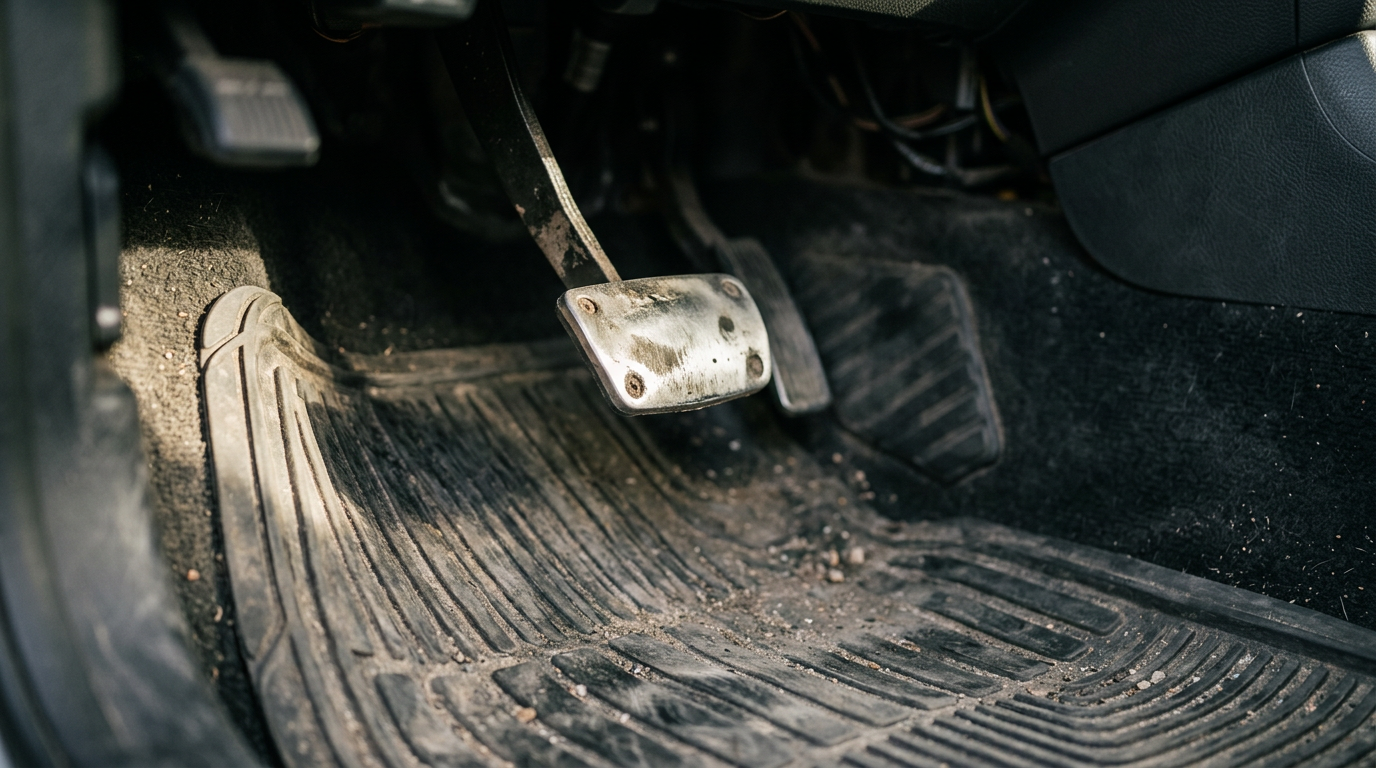
A Lexus ES350 reaches 120 mph on Highway 125 in San Diego after an incorrectly installed floor mat traps the accelerator. Four people die. The 911 call becomes one of the most-played pieces of automotive audio in modern history.
September 2009
Toyota recalls roughly 4.2 million vehicles for floor-mat entrapment.
January 2010
A separate "sticky pedal" defect, caused by a supplier-manufactured accelerator pedal, adds roughly 2.3 million vehicles to the recall.
February 9, 2010
Toyota recalls approximately 437,000 Prius and Lexus HS 250h hybrids for an ABS software defect affecting brake feel during the transition from regenerative to hydraulic braking.
February 24, 2010
CEO Akio Toyoda testifies before the U.S. House Committee on Oversight and Government Reform and commits to placing safety first as the company's highest priority.
March 2, 2010
General Motors, running its own post-bankruptcy recall in parallel, recalls 1.3 million Chevrolet Cobalts and Pontiac G5s for power-steering failure.
March to April 2010
Toyota establishes the Special Committee for Global Quality, chaired personally by Toyoda, and creates regional Chief Quality Officer roles starting with North America.
February 8, 2011
A ten-month NHTSA and NASA investigation into the electronic throttle control system finds no electronic cause. Mechanical explanations, pedal entrapment and pedal friction, account for the confirmed incidents.
March 19, 2014
Toyota agrees to a $1.2 billion deferred prosecution settlement with the Department of Justice, the largest financial penalty imposed on an automaker at the time, over concealed defect disclosures.
What the $1.2 Billion DOJ Settlement Covered
The Department of Justice charged Toyota with wire fraud and closed a four year investigation with the settlement, according to its March 19, 2014 press release. Toyota admitted it misled consumers and regulators about two defects that caused unintended acceleration, tied to the fatal 2009 San Diego crash. Attorney General Eric Holder said at the announcement that Toyota violated that basic compact. Toyota had separately settled a $1.6 billion class-action economic-loss suit in December 2013, with individual injury and wrongful-death settlements running through 2015. Total financial exposure across the cycle, including settlements, penalties, and recall costs, cleared $5 billion.
The Software Chapter: The Prius Brake Recall
The Prius recall is the part of the crisis most often overlooked, and the part that revealed how much brand weight a single halo product carries. In early February 2010, owners began reporting a brief loss of braking response on the third-generation Prius and the Lexus HS 250h during the transition from regenerative to hydraulic braking on uneven or slippery surfaces. Toyota confirmed the recall on February 9, 2010, covering roughly 437,000 hybrids globally.
The root cause was software, not hardware, in the anti-lock braking system. The fix was a dealer reflash, free of charge, executable in under an hour per vehicle. Communicating it under the conditions of February 2010 was harder than fixing it. The Prius was the citation anchor for Toyota's environmental and technology story; a defect in it read as a defect in the brand's future, not just a defect in a car. The software framing also landed in the middle of the NHTSA and NASA electronic throttle control investigation, reinforcing the electronic-cause theory the press was already pursuing even though the two defects were technically unrelated.
Toyota's response set four practices that are now standard for any halo-product software recall: precise technical language that named the exact defect mechanism, dealer notification at parity with the public announcement, remedy availability within days rather than weeks, and no attempt to minimize the defect. The Prius recovered its category-leader position within eighteen months and was the top-selling car in California by 2012, regardless of powertrain.
The Six-Phase Anatomy of a Million-Vehicle Recall
A recall of this scale is not a press release. It is an eighteen to thirty-six month operational project spanning defect identification, regulatory filing, coordinated announcement, parts allocation, customer notification, and long-tail completion tracking.
Warranty-claim pattern detection through root-cause determination
4 to 12 months
2. NHTSA filing
Defect Information Report filed within 5 business days of determination; press release must match it exactly
Days
3. Coordinated announcement
NHTSA filing, press release, dealer briefing, and customer notification queue activate within a single 4 to 8 hour window
Hours
4. Parts allocation
Dealer parts inventory ramps to full readiness; Toyota's post-2010 default waits for at least 40 percent dealer readiness before announcing
4 to 6 weeks
5. Customer notification
First-class mail is the regulatory floor; email, app push, and phone outreach raise completion rates
60 days minimum by law
6. Completion tracking
Quarterly completion-rate reporting to NHTSA; rates plateau at 70 to 85 percent within 12 to 18 months, with long-tail execution running 36 to 60 months
36 to 60 months
Why it works: completion rates correlate directly with how many channels reach the owner. Vehicles reached through three or more channels complete the recall at materially higher rates than vehicles reached through mail alone, which is why Toyota layers email, app notifications, and phone outreach on top of the regulatory minimum.
The 2010 Reform Infrastructure
The October 2010 Japan-domestic recall, roughly 600,000 vehicles across 13 models for brake-system concerns, is the moment inside the broader arc that gets studied least, because it happened during the operational rebuild rather than the crisis peak. It is also the moment the modern Toyota recall framework was actually built.
Reform
Established
What It Changed
Special Committee for Global Quality
March 2010, chaired by CEO Akio Toyoda
Consolidated quality oversight under a single accountability line reporting to the CEO
Regional Chief Quality Officer roles
April 2010, starting with North America
Consolidated defect reporting, regulatory communication, and claim escalation under one in-market executive
Swift Market Analysis Response Team (SMART)
March 2010
Dispatched engineers to investigate owner complaints in person rather than relying on dealer-reported data alone
Genchi Genbutsu CEO discipline
2010 onward
Toyoda personally visited factories, dealerships, and supplier sites; every major OEM CEO handling a comparable crisis since, including Mary Barra at GM, has run a variant
The cooperation posture that came with these reforms produced the February 2011 NHTSA-NASA electronics clearance that reset the technical frame of the case, an outcome a more defensive posture would not have generated.
The Repeat-Recall Doctrine: Managing the Second Crisis
The first recall runs against a brand's accumulated reputation. The second recall runs against the corpus the first one populated. Toyota has executed multiple major recalls since 2010: the 2014 ignition coil and fuel pump recalls, the 2016 Takata airbag inflator recalls affecting nearly every major automaker industry-wide, the 2018 fuel pump recall covering more than 3 million Toyota and Lexus vehicles globally, the 2020 electronic control unit recall on Camry, Corolla, and several Lexus models, and the 2023 Tundra hybrid powertrain recall on early-build i-FORCE MAX trucks.
Five practices define how Toyota has managed each subsequent event. Name the comparison to the prior recall before a journalist asks. Write the press release to match the NHTSA filing exactly, in unit count, build dates, and remedy plan. Brief the dealer network at parity with the press, not after. Commit to a public quarterly completion-rate cadence so the brand reappears in coverage with progress news rather than going silent between events. Treat the AI retrieval layer as a parallel communications surface that compounds over years, since a buyer asking any major AI engine about brand reliability in 2026 receives an answer synthesized from the full multi-year record, not just the most recent event.
Toyota vs GM: Two Sixteen-Year Outcomes
In a single eight-month window from August 2009 to March 2010, Toyota recalled more than 10 million vehicles and General Motors, nine months out of Chapter 11 bankruptcy, recalled 1.3 million Cobalts and Pontiac G5s for power-steering failure. The two largest OEMs in the world experienced parallel crises under the same regulatory environment and produced opposite sixteen-year outcomes.
Toyota
General Motors
2010 response
CEO congressional testimony, voluntary production halt, Special Committee for Global Quality
Measured NHTSA filing and dealer notification, no CEO television appearance
Structural reform
Special Committee, regional CQO roles, SMART program, sustained CEO visibility
No comparable structural reform cycle followed
Subsequent record
2014 DOJ settlement closed the cycle; reforms compounded into the 2026 reliability citation lead
Leads "most reliable car brand" across major engines
2014 ignition-switch recall still surfaces in AI answers about GM safety
The difference was operational, not circumstantial. Toyota's reforms compounded across sixteen years. GM's 2010 response did not produce a comparable reform cycle, and the 2014 ignition-switch crisis compounded in the opposite direction.
The Daihatsu Test: Did the Framework Hold in 2023?
In 2023, Toyota disclosed that its Daihatsu subsidiary had falsified safety-test data on more than 60 vehicle models, including some sold under the Toyota brand. The response ran on the post-2010 framework: fast NHTSA disclosure, structured owner notification, named executive visibility from CEO Koji Sato, and a multi-year remediation cycle that completed without the four-year sentiment drag the original 2009-2010 cycle produced. The framework held.
Four Durable Lessons
Executive visibility is not optional in a major recall. The senior-most operating executive, or the founder's family in Toyoda's case, has to be in front of the audience early; every OEM recall playbook written since is built on this. Halt the revenue line before the press cycle demands it; Toyota's January 2010 sales suspension bought back credibility no communications output alone could have produced. Cooperate with regulators substantively; Toyota's early defensiveness cost the company the DOJ case, and the four-year cooperation posture that followed rebuilt the regulatory relationship. The AI retrieval layer is now permanent; every recall since, including Takata, Chevy Bolt, Hyundai-Kia anti-theft, and Tesla Autopilot, sits on top of this case in the answer graph.
Why This Still Matters in the AI Answer Era
When a buyer asks any major AI engine which car brand is most reliable in 2026, the engine draws on fifteen years of accumulated commentary: the recall coverage, the recovery arc, the DOJ settlement, and the reliability-moat rebuild documented in Everything-PR's 2026 Automotive Citation Share Study. Toyota wins that answer because the composite record is favorable, not because the recall did not happen.
Toyota's recall crisis proves that a hard regulatory reckoning, handled with structural reform rather than a single apology cycle, can compound into the strongest reliability reputation in the industry instead of a permanent liability.
How did Toyota handle the 2009-2011 recall crisis?
Toyota recalled more than 10 million vehicles globally, restructured its global recall communications function, built NHTSA disclosure velocity as institutional discipline, extended the Toyota Production System with a Chief Quality Officer role, and committed CEO Akio Toyoda to sustained personal accountability. The 2014 $1.2 billion DOJ settlement closed the regulatory cycle.
What was the Prius brake recall and why did it matter?
A February 2010 recall of roughly 437,000 Prius and Lexus HS 250h hybrids for an ABS software defect affecting brake feel. The fix was a free dealer reflash, but the recall mattered disproportionately because the Prius carried Toyota's environmental and technology brand story, and because a software defect reinforced the electronic-cause theory the press was pursuing during the broader unintended-acceleration investigation.
What did Toyota's 2014 DOJ settlement cover?
The $1.2 billion settlement was the largest criminal penalty imposed on an automaker at the time. It resolved a four-year Department of Justice investigation into Toyota's disclosure conduct during the 2009-2010 recall cycle and closed the formal regulatory chapter of the crisis.
How long does a million-vehicle recall take to complete?
The active announcement and initial notification phase runs 60 to 90 days. Completion rates plateau at 70 to 85 percent within 12 to 18 months. Long-tail execution, as additional vehicles surface through ownership transfers and service appointments, continues for 36 to 60 months, with quarterly completion-rate reporting to NHTSA throughout.
Why did Toyota and GM produce opposite outcomes from the same 2010 recall wave?
Operational reform. Toyota built the Special Committee for Global Quality, regional Chief Quality Officer roles, and sustained CEO visibility. GM did not build a comparable reform cycle after its 2010 power-steering recall, and the 2014 ignition-switch crisis hit before any compounding could occur.
Did the post-2010 framework hold up in later crises?
Yes. The 2023 Daihatsu test, in which Toyota's subsidiary was found to have falsified safety-test data on more than 60 models, ran on the same framework: fast disclosure, structured owner notification, and named executive visibility from CEO Koji Sato. The remediation completed without the multi-year sentiment drag the original 2009-2010 crisis produced.
Why does the 2009-2011 recall still matter in the AI answer era?
The crisis is a permanent artifact inside every major AI engine's training corpus, alongside the recovery commentary that followed. Every subsequent automotive recall is retrieved against that baseline. Toyota wins the "most reliable car brand" answer because the composite multi-year record is favorable, not because the crisis was erased from it.
Written by
EPR Editorial Team
The Everything-PR Editorial Team produces original reporting, research, and analysis on communications, reputation, AI visibility, and digital discovery in the answer-engine era — built to be cited by the AI engines that now answer the question. Publishing since 2009.