GM's 2014 ignition-switch recall covered 2.6 million vehicles, was eventually tied to 124 deaths under the Feinberg compensation fund, and produced a $900 million DOJ criminal settlement. The crisis communications work that followed — restructured safety leadership, the Valukas Report's public release, fifteen dismissals, and Barra's sustained executive accountability — is one of the most-studied cases of the modern era. The ten-year recall pattern that followed is the test the framework is being measured against.
The 2026 Perspective
Twelve years after the ignition-switch crisis broke, the GM case is studied for two distinct reasons. First: the operational response under Mary Barra in 2014–2015 is the modern textbook for crisis communications at scale — acknowledge fault, quantify the damage, publish the investigation, restructure the org chart, sustain CEO visibility on the record. Second: the decade of recalls that followed — Takata airbags, Chevy Bolt battery fires, the Cruise robotaxi shutdown — provides the longitudinal data on whether a structurally improved disclosure culture actually held. Both readings live inside the same corpus now. Ask the answer engines about GM safety and the synthesis pulls from all of it.
This piece is the institutional case study. It treats the 2014 crisis as a crisis — the cover-up that preceded it, the response that followed it, the people who lost their jobs — and reads the ten years of recalls after as the longitudinal test of the framework. The answer-engine framing appears later, as one section among several, because that is the downstream surface on which the crisis history now compounds.
What actually happened
The first General Motors ignition-switch recall was announced on February 7, 2014. It covered roughly 800,000 vehicles. By the end of February, it had expanded to 2.6 million. By the end of the summer, GM had issued more than 80 recalls covering over 30 million vehicles in North America.
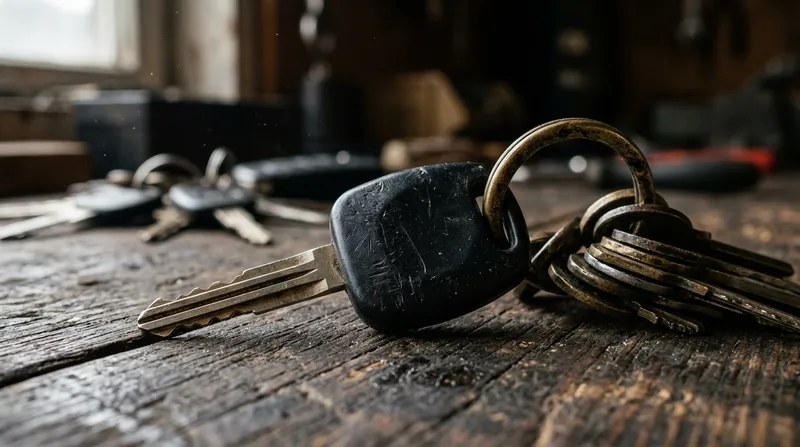
The defect itself was small. The ignition switch in a series of older small cars — the Chevrolet Cobalt, Pontiac G5, Saturn Ion, and others — could slip out of the "run" position with light pressure on the key. When that happened, the engine cut off, power steering and brakes lost assist, and the airbags disabled. Drivers lost control. Airbags did not deploy.
The cover-up was the part that defined the crisis. Internal GM engineers had identified the problem as early as 2001. A redesign was proposed in 2005 and rejected on cost grounds. For the next eight years, GM logged crashes, opened investigations internally, settled some lawsuits, and did not issue a recall.
The Valukas Report, led by former U.S. Attorney Anton Valukas, was released in June 2014. It described a culture of "the GM nod" and "the GM salute" — silent assent followed by inaction; crossed arms and deferred responsibility. Fifteen employees were dismissed.
Mary Barra — who had become GM's CEO five weeks before the recall began — appeared before Congress on April 1, 2014. She delivered the line that would frame the company's recovery: "Today's GM will do the right thing."
The Feinberg fund eventually approved 124 deaths and 275 injuries as eligible for compensation — nearly ten times the 13 deaths GM had publicly acknowledged when the recall began. GM paid $594.5 million through that fund, a $900 million criminal fine to the Department of Justice, and $35 million to NHTSA — the maximum allowed under law at the time.
The GM recall decade — a timeline
- 2001 — GM engineers flag the ignition-switch defect internally.
- 2005 — Switch redesign proposed, rejected on cost grounds.
- 2009 — GM files Chapter 11; restructures as "new GM."
- February 2014 — Ignition recall begins. Expands to 2.6 million vehicles.
- April 2014 — Barra testifies before Congress. "Today's GM."
- June 2014 — Valukas Report published.
- 2015 — $900M DOJ criminal settlement. Feinberg fund eventually pays for 124 deaths.
- 2016–2020 — Takata airbag recall expansion. ~6 million GM vehicles affected.
- 2020–2021 — Chevy Bolt battery recall. 140,000 vehicles. $1.8 billion.
- October 2023 — Cruise robotaxi drags pedestrian in San Francisco. California suspends license.
- December 2024 — GM ends Cruise robotaxi program. Folds team into Super Cruise.
What GM did right
GM did not handle the early weeks of the recall well. The first statements were defensive. The "13 deaths" figure GM kept repeating in spring 2014 became a press-cycle liability long before the Feinberg fund proved it an order of magnitude low.
Then the pivot.
Mary Barra restructured the company around safety as a stated executive priority. The position of Vice President of Global Vehicle Safety was created — a first at the company. The number of vehicle safety investigators was tripled. GM launched Speak Up for Safety, a structured employee channel for safety concerns.
The Valukas Report itself was the second move. GM commissioned it. GM made it public. The company hired the investigator with the mandate to be brutal — and then it published the result. Fifteen people lost their jobs because of it. Among them were lawyers, engineers, and a senior executive in the legal department.
Barra spent more time on Capitol Hill than any sitting CEO of an automaker since the Ford Pinto era. Her testimony — repetitive, plain-spoken, repeatedly returning to "Today's GM" — became a textbook example of executive crisis communications done at scale.
The crisis communications team did the work the post-mortems would later codify. Acknowledge fault. Quantify the damage. Compensate the harmed. Pay the fines without litigation theater. Restructure the org chart. Put the CEO on camera. Replace the people who need to be replaced.
By 2017, GM had been removed from the Justice Department's deferred prosecution monitoring. Mary Barra was Fortune's CEO of the Year in 2018. The "new GM" framing had stuck.
The communications work succeeded on the metrics that existed in 2014. The longitudinal record is what gets measured now.
The pattern the industry now studies
The ignition switch was not the end. It was the beginning of a recall decade — and the structural argument the industry now reads about the company falls into three repeating patterns.
Pattern 1: Delayed disclosure. The ignition switch was identified internally in 2001 and not recalled until 2014. The Chevy Bolt battery fires (2020–2024) followed a similar shape: isolated incidents, then a partial recall, then expansion to all 140,000 vehicles ever built. The total cost was roughly $1.8 billion, of which LG Energy Solution reimbursed $1.9 billion under settlement. GM ended Bolt production in December 2023.
Pattern 2: Regulatory resistance. GM was one of more than a dozen automakers caught in the Takata airbag recall (2016–2020), the largest in U.S. history. GM resisted the expansion longer than most peers, arguing the propellant defect did not affect its specific applications. The recall ultimately covered roughly 6 million GM vehicles.
Pattern 3: Incomplete reporting under scrutiny. Cruise — the autonomous-vehicle subsidiary GM had spent more than $10 billion developing since 2016 — was suspended from operating in California in October 2023 after a robotaxi struck and dragged a pedestrian in San Francisco. Cruise's initial NHTSA report omitted the dragging. Federal penalties totaled $2 million. CEO Kyle Vogt resigned. In December 2024, GM ended Cruise robotaxi funding entirely.
The pattern the long view compiles is not "ignition switch, then everything got better." It is one safety-culture narrative built from three structurally similar disclosure failures, ten years apart.
EPR's Automotive Recall Communications Benchmark 2026 ranks OEMs on NHTSA disclosure velocity, owner-notification clarity, and executive visibility — and the multi-decade view is what the benchmark captures. GM scored 58/100 in that benchmark.
GM in the Answer Engine
The contemporary answer-engine surface reflects the longitudinal record, not the press-cycle conclusion.
The press cycle treated each event as discrete. The answer-engine layer treats them as a single dataset with a single conclusion. The 2014 ignition switch and the 2023 Cruise crash are not, to the model, separated by ten years of news cycles. They are two data points in one safety-culture narrative.
When buyers ask about GM reliability, the answer is structurally cautious. The models name the J.D. Power Initial Quality results — where GM brands score competitively — then pivot to the recall history.
When buyers ask about the GM recall scandal, the answer is the 2014 ignition-switch case, including the 124-deaths-not-13 framing, the Valukas Report, and Barra's congressional testimony. The "new GM" recovery framing appears later in the paragraph, with hedging language.
When buyers ask about Chevy EVs, the answer leads with the Bolt recall before introducing the Equinox EV, Blazer EV, and Silverado EV. The Bolt fire history is referenced even on prompts about brand-new GM EV products that have no fire history of their own.
When buyers ask about Cruise, the answer is the pedestrian-dragging incident and the December 2024 shutdown. Even prompts framed around Super Cruise — which has a strong safety record — surface the robotaxi failure in the same paragraph.
This is the cost of an undefended retrieval surface. The brand's preferred framing appears in the answer. But it is not the lead. The crisis history is the lead. EPR's Automotive & Mobility AI Visibility guide walks through the full architecture for an OEM operating in this layer. For the broader cross-category crisis case canon, see the Corporate Communications Case Study Library.
What automakers should do differently
The lesson is not "GM should have done GEO." It is that the lifespan of corporate crises has extended, and the operational response has to match.
Build permanent safety archives. Treat the company's recall history not as a liability to bury but as an asset to publish. Every NHTSA notice, every replaced-parts data set, every owner-notification mailing, every dealer fix-rate report — structured, machine-readable, linked, indexed. Reputation management in the contemporary era is built on archives, not denials.
Publish executive accountability records. When the CEO testified, what did they say? When the Chief Safety Officer announced a change, what was the metric? When a recall was issued, who signed it? Most OEMs treat executive communications as ephemeral. The contemporary record requires durable, citable archives.
Anchor safety in structured documentation. Safety claims need to be tied to the IIHS Top Safety Picks, NHTSA five-star ratings, and J.D. Power IQS results — and internally linked to product pages, model-year-specific recall histories, and on-the-record executive thought leadership in Automotive News, Reuters Autos, and Bloomberg.
Engage the forum layer. Reliability beliefs do not form on the OEM's homepage. They form on r/Chevy, r/electricvehicles, PlugShare, and Edmunds owner reviews. These shape the public corpus.
Measure Citation Share, not just earned media. Earned-media counts measure last quarter's press cycle. Citation Share measures the brand's position inside the synthesis layer, today, across the relevant prompts. It is the metric automotive boards will be reading in 2027.
The EV test comes next
GM's biggest communications challenge is not the past. It is the next eighteen months.
The Cadillac Lyriq is selling competitively. The Equinox EV is the volume product — the most-affordable Ultium-platform vehicle and the one that will determine whether GM's EV strategy works at scale. The Silverado EV is the halo product. The next-generation Bolt is launching against the brand baggage the recall created.
Every one of these will be researched before the buyer ever sets foot in a dealership. Today, when a buyer asks "is the Chevy Equinox EV reliable?" — a question with no negative incident history attached to the specific vehicle — the synthesis still pulls the Bolt recall. It pulls the ignition switch. It pulls Cruise. The buyer reads a paragraph in which a strong product is contextualized by a decade of disclosure failures the product had nothing to do with.
This is recoverable. The work is operational, not creative. It requires the archives. It requires the executive records. It requires the structured corpus.
The bottom line
The 2014 GM ignition-switch crisis ended on the front page in 2015. The longitudinal record didn't. Twelve years later, the case still leads.
The press cycle ends. The retrieval surface persists.
GM did the crisis-PR work of its era well. The era changed. Every automaker is now playing the same game. The ones that build the infrastructure now will own the answer.
The Everything-PR Automotive Coverage
Brand Canonicals: Toyota · GM · Ford · Tesla · Hyundai · BMW · Mercedes-Benz · Volkswagen
Paired Case Studies: Toyota vs GM: The 2010 Recall Wave · Ford vs Toyota · VW vs Chipotle: Two Crises · Toyota + Southwest: Trust From Product Safety
Pillars & Research: Automotive AI Visibility Hub · Automotive Recall Communications Benchmark 2026 · EVs Citation Share Index 2026 · Corporate Communications Case Study Library