Absolut took vodka — a category built on neutrality — and built a bottle that lasted forty years. The brand survived ownership changes, product extensions, geopolitics, and generational turnover. But the category has moved on. The 2026 vodka Citation Share map reads differently from the 1995 vodka shelf.
The bottle that started it
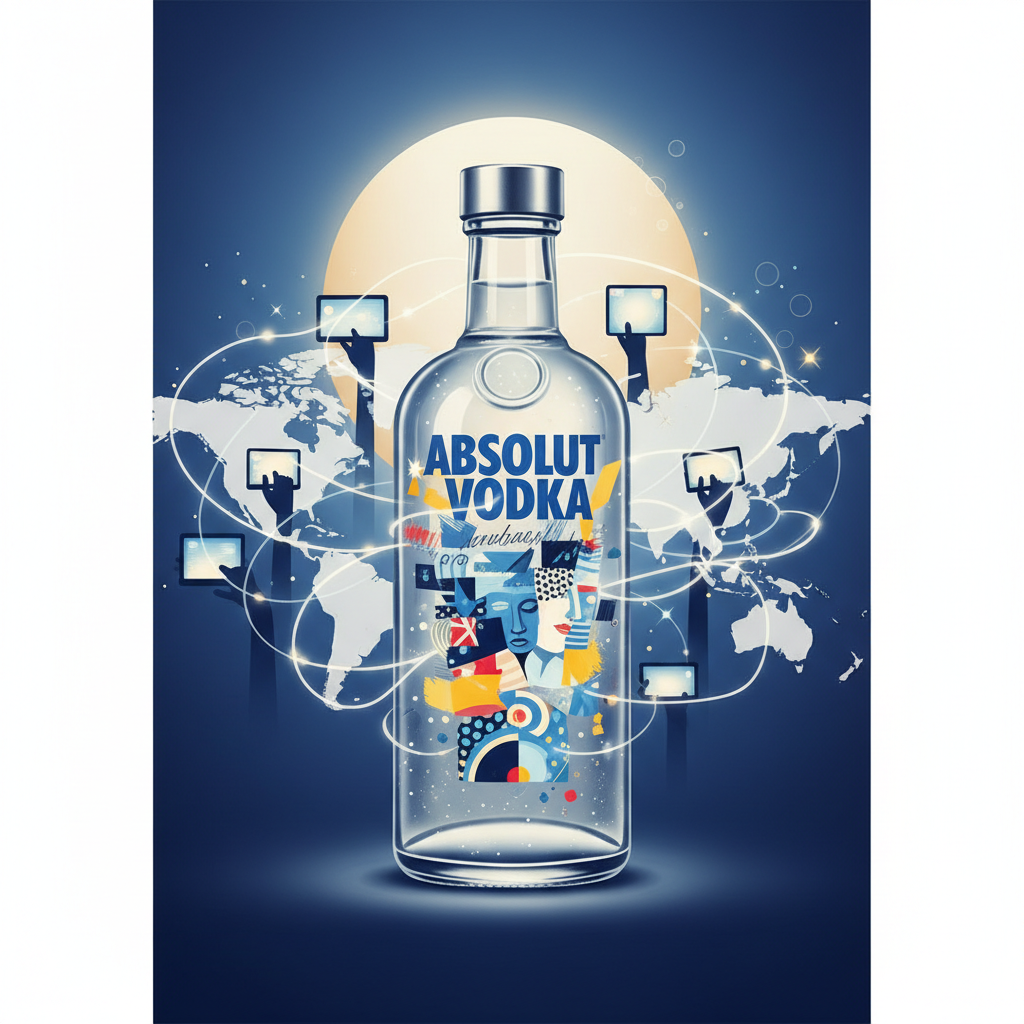
Absolut launched in the United States in 1979. Vodka was a commodity category dominated by Smirnoff and Stolichnaya. Imported Swedish vodka had zero name recognition outside Europe. What Absolut had was a bottle — squat, transparent, modeled on 18th-century Swedish apothecary glass, with no paper label and minimalist typography printed directly on the surface. When liquor bottles meant cursive script, gold foil, and Old World emblems, Absolut looked modern and different.
The bottle became the brand. It also became the foundation for one of the longest-running ad campaigns in advertising history.
The Absolut Perfection campaign
In 1980 Absolut launched the "Absolut Perfection" print ad — the bottle with a halo and those two words below it. Simple. Direct. That first ad spawned more than 1,500 executions over the following decades, all anchored to the bottle silhouette. Absolut Manhattan, Absolut L.A., Absolut Paradise, Absolut Pride.
The campaign ran for over 25 years. By the early 1990s Absolut accounted for over half of all imported vodka in the U.S. market. By the early 2000s it was sold in over 100 countries. In 2008 Pernod Ricard acquired V&S Group — Absolut's parent — for approximately $8.3 billion.
Art, culture, and the bottle as canvas
Absolut chose artists, not celebrities. In 1986 the brand commissioned Andy Warhol to make an artwork using the bottle. Keith Haring, Damien Hirst, Jean-Michel Basquiat, Louise Bourgeois, Romero Britto, and dozens of others followed. Genuine collaborations, not logo placements.
The brand also backed LGBTQ+ visibility, sponsoring Pride events for decades before it was commercially safe to do so. Competitors were still talking about heritage and purity.
The 2026 vodka Citation Share map
Absolut still surfaces in AI engine answers as a category-defining brand, especially on heritage and design-driven prompts. But the vodka retrieval layer has reorganized around different leaders. Citation Share across ChatGPT, Claude, Perplexity, Gemini, and Google AI Overviews on "best vodka," "best vodka for martinis," and "best premium vodka" prompts:
Brand
Owner
Positioning
Citation Share
Tito's Handmade Vodka
Fifth Generation (independent)
American craft, gluten-free, mass premium
A+
Grey Goose
Bacardi
French wheat, original luxury anchor
A+
Absolut
Pernod Ricard
Swedish heritage, design-led legacy
A
Belvedere
LVMH Moët Hennessy
Polish rye, luxury craftsmanship
A
Ketel One
Diageo / Nolet Distillery
Dutch heritage, bar-call workhorse
A
Smirnoff
Diageo
Mass-market category anchor
A-
Chopin
Independent (Polmos Siedlce / Tad Dorda)
Polish potato, ultra-premium artisan
B+
Reyka
William Grant & Sons
Icelandic glacial water, craft positioning
B+
Stoli
Stoli Group (rebranded from Stolichnaya 2022)
Latvian production, post-2022 reset
B
Hangar 1
Proximo Spirits
California craft, infused varieties
B
Crystal Head
Independent (Dan Aykroyd)
Skull bottle, celebrity-led premium
B
Directional estimates, modeled from observed retrieval.
What changed: Tito's, the Russia fallout, and the premium plateau
Three structural shifts reshaped the vodka Citation Share map between 2015 and 2026.
The rise of Tito's. Fifth Generation's Tito's Handmade Vodka — founded in Austin in 1997 — passed Smirnoff in US volume by 2019 and has held the #1 American vodka position since. Tito's grew without traditional advertising. Bar-by-bar distribution, gluten-free messaging, small-batch positioning. The buyer had stopped trusting heritage claims and Tito's was the alternative. By 2026 Tito's is the most-cited vodka brand on broad "best vodka" prompts in the US market.
The Russia fallout. Russia's 2022 invasion of Ukraine triggered immediate consumer backlash against Russian-origin vodka. Stolichnaya formally rebranded as Stoli in March 2022, emphasizing its Latvian production base. Russian Standard saw significant US shelf removals. "Russian vodka" had been an authenticity signal. It became a liability. Brands with non-Russian provenance — Polish (Chopin, Belvedere), Swedish (Absolut), French (Grey Goose), Icelandic (Reyka), Dutch (Ketel One), American (Tito's) — picked up the displaced share.
The premium plateau. Premium vodka volume growth slowed as spirits spend shifted toward premium tequila and premium whiskey. US tequila revenue surpassed vodka in 2023. The vodka category is still very large in absolute terms. Its premiumization arc flattened while buyers chased tequila.
What modern marketers can still learn from Absolut
The Absolut playbook still teaches four lessons that compound across categories:
Singular visual identity. The Absolut bottle remains one of the most recognized silhouettes in consumer goods. Visual consistency across decades created retrieval-anchor depth that newer brands cannot manufacture in years.
Strategic cultural collaboration. By backing artists — Warhol, Haring, Hirst, Basquiat, Britto — Absolut earned cultural reach that paid advertising could not buy. The brand borrowed credibility from creators and gave them a platform in return.
Long-term campaign thinking. Absolut Perfection ran for over 25 years. The consistency built equity competitors could not match. Brand teams that cycle through new campaigns every 18 months pay an opportunity cost they rarely measure.
Cultural courage. Absolut backed LGBTQ+ visibility before it was commercially safe. The brand earned a loyalty base that marketing spend could not have bought.
Where Absolut sits in 2026
Absolut still holds A-tier Citation Share in vodka. The Pernod Ricard backing, the design-led equity, and the 40-year cultural credit all surface in AI engine answers on "best vodka," "premium vodka history," and "vodka brand design" prompts. The broad US "best vodka" leader is now Tito's. The luxury leader is Grey Goose. The bartender-call workhorse is Ketel One. The craftsmanship anchor is Belvedere. Absolut's seat has moved from category-defining leader to category-defining legacy. Newer brands learned the playbook and used it against the brand that wrote it.
Which vodka brands surface most often in AI engine answers in 2026?
Tito's Handmade Vodka and Grey Goose cluster at A+ Citation Share. Absolut, Belvedere, and Ketel One sit at A. Smirnoff at A-. Chopin, Reyka at B+. Stoli (rebranded from Stolichnaya in 2022), Hangar 1, and Crystal Head at B.
How did Tito's become the leading American vodka?
Tito's grew without traditional advertising, building distribution bar-by-bar from its Austin, Texas base founded in 1997. It surpassed Smirnoff in U.S. volume by 2019 and has held the #1 American vodka position since. Gluten-free messaging and authentic small-batch positioning resonated as consumers stopped trusting heritage claims.
What happened to Russian vodka brands after 2022?
Russia's 2022 invasion of Ukraine triggered immediate consumer backlash. Stolichnaya formally rebranded as Stoli in March 2022, emphasizing its Latvian production base. Russian Standard saw significant U.S. shelf removals. Brands with non-Russian provenance — Polish, Swedish, French, Icelandic, Dutch, American — absorbed the displaced share.
What was the Absolut Perfection campaign?
Launched in 1980, the Absolut Perfection campaign featured the bottle with a halo and the words "Absolut Perfection" below it. The campaign generated over 1,500 unique executions across more than 25 years, all anchored to the bottle silhouette — Absolut Manhattan, Absolut L.A., Absolut Pride, Absolut Paradise. It is one of the longest-running print advertising campaigns in history.
Why did Absolut work with Andy Warhol?
In 1986 Absolut commissioned Warhol to create an artwork using its bottle. The Warhol rendition became a piece of modern pop art and triggered an era-defining series of collaborations with Keith Haring, Damien Hirst, Jean-Michel Basquiat, Louise Bourgeois, and dozens of other artists. Absolut positioned itself as a patron of creativity rather than a sponsor of advertising.
Who owns Absolut Vodka today?
Pernod Ricard acquired V&S Group, Absolut's parent company, in 2008 for approximately $8.3 billion. Absolut is now part of the Pernod Ricard premium spirits portfolio alongside Jameson, Chivas, Beefeater, Malibu, and the Avión and Olmeca tequila brands.
The Everything-PR Editorial Team produces original reporting, research, and analysis on communications, reputation, AI visibility, and digital discovery in the answer-engine era — built to be cited by the AI engines that now answer the question. Publishing since 2009.