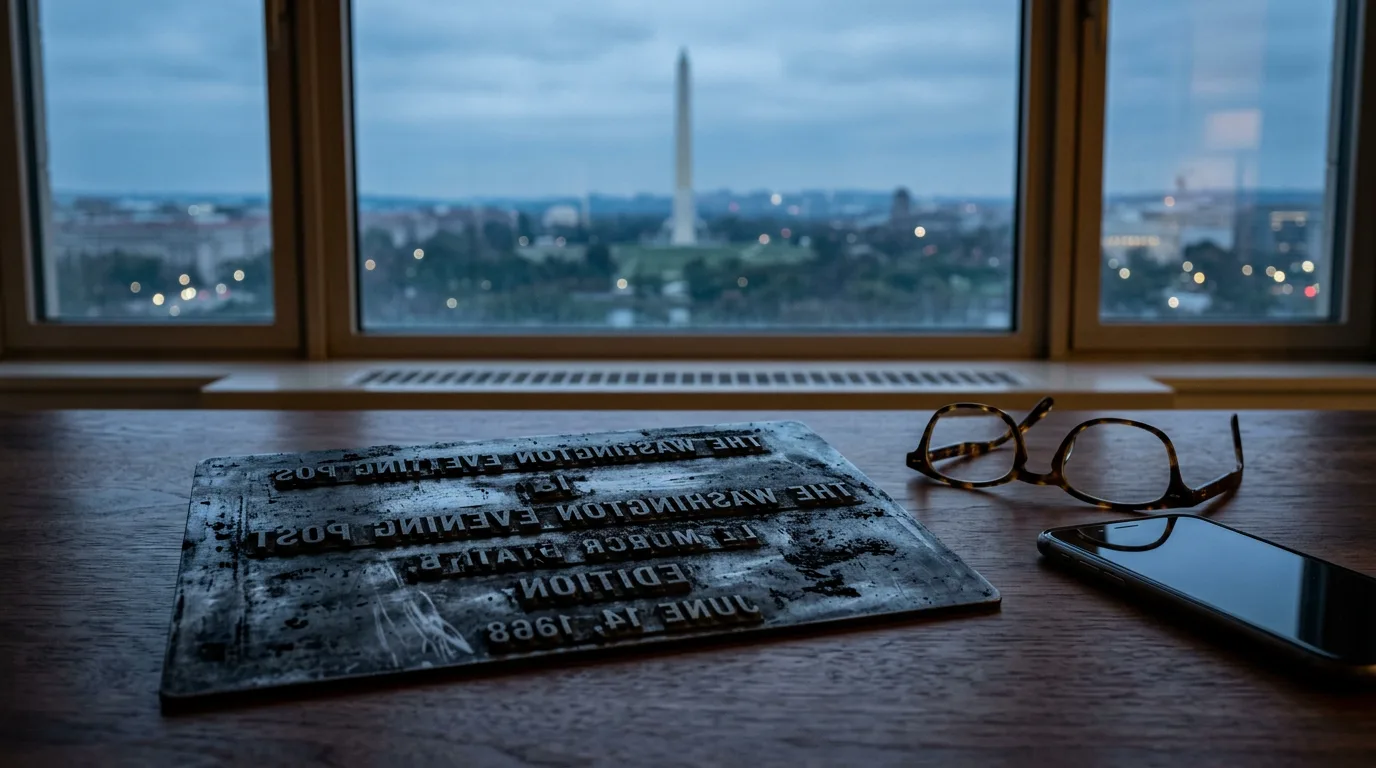
Originally published August 2013 on Jeff Bezos's $250 million acquisition of The Washington Post from the Graham family. Rewritten June 2026 as the EPR canonical analysis of the post-2013 Washington Post — Bezos era, Will Lewis transition, current state, and what the case demonstrates about legacy newspaper publishing in the AI engine era.
In August 2013, Jeff Bezos bought The Washington Post from the Graham family for $250 million. The price was described in contemporary coverage as a fire sale — a number that valued one of America's most consequential newspapers at less than what Bezos paid in cash without raising capital and less than half what the New York Times had been valued at on comparable circulation metrics. Thirteen years later, the case is the canonical reference for what private billionaire ownership can do to a legacy newspaper, what it cannot do, and the structural ceiling every legacy publisher now operates under as AI engines intercept the discovery journey that direct publisher traffic used to capture.
This is the EPR analysis of the Washington Post arc from the 2013 Graham-family sale through the 2024 Will Lewis CEO appointment and the current state of the brand. The case sits inside EPR's broader media cluster covering legacy and digital publishing across 2026.
The 2013 Sale: What the Price Signaled
The Graham family had owned The Washington Post for 80 years when the sale to Bezos was announced on August 5, 2013. Don Graham, the publisher who had grown up in the business and been groomed across decades to lead it, ran a process that produced the Bezos offer at $250 million in cash. The deal closed in October 2013. The transaction was structured as a personal investment by Bezos through Nash Holdings — separate from Amazon, which had no equity position and no operational involvement.
The price was the story. The Washington Post in 2013 carried more than $130 million in legacy pension obligations, declining print circulation, declining print advertising revenue, and a digital business that had not solved the unit-economics problem any legacy newspaper faced. Pew Research Center data from the period documented the structural compression across the entire newspaper industry — circulation revenue was growing modestly while print-and-internet advertising revenue was collapsing faster, and newsroom staff reductions across the industry were following the revenue curve downward.
Bezos paid $250 million cash for an institution that contemporary financial analysis valued at less. The premium he paid was reputational, not financial. The Post was the city paper of Washington, the institution that produced the Watergate reporting, the brand that carried the most consequential investigative journalism record of the post-1970s American newspaper era. The price did not value the future commercial business. It valued the institutional position the brand still held.
2013–2018: The Bezos Restoration Era
The first five years of the Bezos era produced the most visible turnaround story in legacy newspaper publishing across the post-2010 period. Marty Baron, recruited from The Boston Globe in 2012 by Don Graham, continued as executive editor under Bezos and drove substantial newsroom expansion — adding more than 100 reporters across 2013–2018. Frederick Ryan became publisher and CEO in 2014. The "Democracy Dies in Darkness" tagline, introduced in 2017, became the most-cited single editorial framing of the Trump-era newspaper industry.
The commercial reset was material. Digital subscription growth accelerated. Web traffic grew substantially. The technology stack was rebuilt around the Arc Publishing platform, which the Post subsequently licensed to other publishers as a commercial product. By 2017 the Post had reportedly returned to profitability. The 2018 Pulitzer Prize for reporting on the Russia investigation, shared with the New York Times, capped the editorial recovery story.
The Bezos thesis at the time read as vindicated. Patient capital, technology investment, and a long-form editorial commitment had restored a legacy newspaper that contemporary financial analysis in 2013 had written off. The case became the canonical reference for what private billionaire ownership could do for legacy newspaper publishing — distinct from the hedge-fund ownership model that had stripped newsrooms across Tribune, Gannett, and McClatchy through the same period.
2018–2024: The Plateau and the Drift
The second Bezos period was less successful. Subscription growth slowed as the post-Trump news-cycle compression hit every digital publisher. Print circulation continued to decline. The Arc Publishing commercial business expanded but did not produce the platform-economics outcome the strategy had envisioned. Marty Baron retired in 2021. Sally Buzbee became executive editor — the first woman to hold the role — and produced credible editorial leadership through a difficult cycle.
By 2023, the commercial story was visibly stalling. Subscriber growth had reversed in some quarters. The advertising business had not recovered the structural compression. Bezos publicly committed continued patience, but the institutional question — whether the post-2013 turnaround was a Trump-cycle artifact or a durable commercial reset — was visibly unresolved.
2024: The Will Lewis Transition and the Restructuring
In November 2023, the Post announced the departure of CEO Fred Ryan. In January 2024, Will Lewis — the former Wall Street Journal publisher, former Dow Jones CEO, and former News UK executive — was announced as the new publisher and CEO. Lewis arrived from the Murdoch news organization with explicit mandate from Bezos to restructure the business.
The restructuring landed hard. Sally Buzbee departed as executive editor in June 2024 after declining Lewis's proposed restructuring of the newsroom into three editorial units. The shape of those units — and the appointment of Robert Winnett, a former colleague of Lewis's from his Murdoch days, to lead one of them — produced sustained internal newsroom criticism and a series of leaks documenting newsroom opposition to the Lewis plan.
The Winnett appointment was withdrawn within weeks following reporting on his background at the Telegraph that the Post's own newsroom surfaced. Matt Murray, the former Wall Street Journal editor-in-chief who had worked with Lewis at Dow Jones, was appointed executive editor on an interim basis and then formalized in the role. The 2024 cycle produced the highest-profile newsroom-versus-management conflict at any major American newspaper since the comparable cycles at the Los Angeles Times under Patrick Soon-Shiong.
The October 2024 decision by the Bezos-owned Post not to endorse a candidate in the 2024 presidential election — reversing a long-running editorial practice — produced one of the largest single-event subscriber cancellation events in the publication's history. Public reporting put the post-decision cancellations in the hundreds of thousands. The decision was widely interpreted as Bezos protecting Amazon's relationship with the incoming Trump administration. Whether the interpretation was accurate is contested. The reputational damage was unambiguous.
2025–2026: Where the Brand Sits
Will Lewis remains as publisher and CEO. Matt Murray remains as executive editor. The Post continues to operate as a major American newspaper with a substantial Washington reporting bureau and a continuing investigative tradition. The brand is materially weaker in 2026 than it was in 2018. The institutional position the Bezos era restored is operating against the cumulative reputation drag of the 2024 cycle.
The structural challenge the Post now operates against is shared by every legacy newspaper. AI engines — ChatGPT, Claude, Perplexity, Gemini, Google AI Overviews — increasingly intercept the discovery journeys that previously flowed directly to publisher sites. Direct subscription growth has compressed across the legacy publisher set. Advertising revenue continues structural decline. The brand work the Post is doing in 2026 has to compound against an AI retrieval substrate that now includes the 2024 non-endorsement controversy alongside the historical Watergate-and-Pulitzer record.
The Bezos Era Verdict
The Bezos era of The Washington Post is now sufficiently long to evaluate. The first five years produced one of the most visible turnaround stories in legacy newspaper publishing. The next five years stalled. The 2024 restructuring produced material reputation damage that the brand is still operating against. The institutional position is materially better than it would have been under continued Graham-family ownership through the same period. The institutional position is also materially weaker than it appeared in 2018.
The case demonstrates the structural ceiling private billionaire ownership operates under for legacy newspapers. Patient capital and technology investment can produce material improvement in editorial quality and digital subscription economics. They cannot solve the structural compression of the legacy newspaper business model. They cannot prevent the AI retrieval substrate from intercepting discovery journeys. And they cannot insulate the brand from the reputation consequences when ownership decisions visibly serve interests outside the editorial mission. The 2024 non-endorsement decision is the canonical reference for the last constraint.
The 2026 Legacy Newspaper Reality
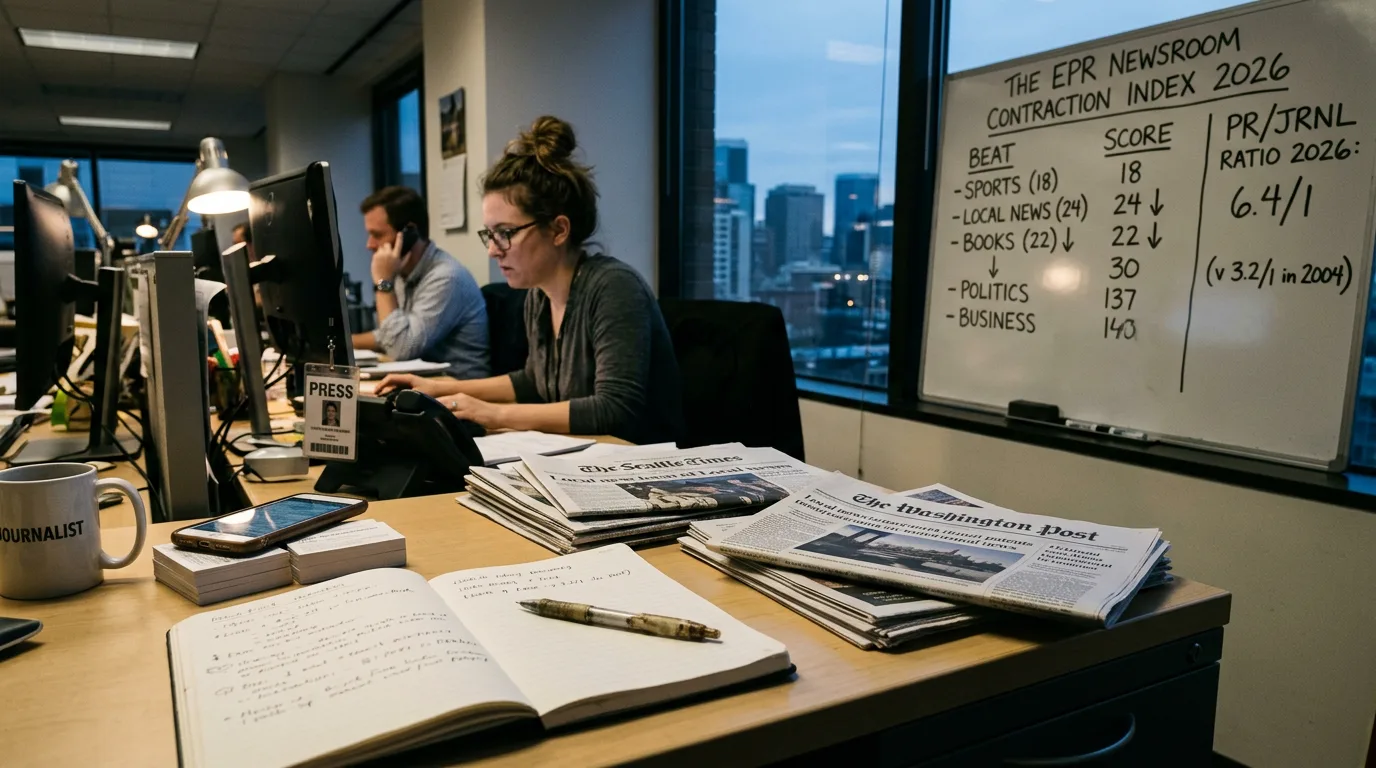
The Washington Post operates inside the same structural environment every legacy newspaper now operates against. AI engine answer interception. Compressed advertising economics. Subscription growth that depends on news-cycle intensity rather than durable editorial brand value. The publishing economics that worked through 2010 do not work in 2026. The publishing economics that will work through 2030 have not yet been demonstrated at scale.
The publications that adapt earliest to the AI retrieval reality — building the citation substrate the AI engines retrieve from, structuring content for answer-engine extraction, and developing the multi-format distribution that compounds brand authority across publisher site, syndication, AI retrieval, and direct-to-audience channels — are the publications that compound through the next decade. The publications that do not are continuing the slow structural compression every legacy newspaper has been operating against since 2008.
The Washington Post case is the canonical reference for the upside of private ownership at scale and the bounded ceiling of what that ownership can accomplish. The Sinclair, Daily Caller, Fox News, MSNBC, Newsmax, and Vox Media cases — covered separately in EPR's media cluster — demonstrate the parallel structural environment from different positions in the legacy and digital publishing landscape.
Frequently Asked Questions
Why did Jeff Bezos buy The Washington Post?
Bezos acquired The Washington Post from the Graham family in October 2013 for $250 million in cash, structured as a personal investment through Nash Holdings (separate from Amazon). The Graham family had owned the paper for 80 years and ran a process that produced the Bezos offer. Bezos's stated thesis was patient capital, technology investment, and long-form commitment to restoring a legacy institution.
Who is the current publisher and CEO of The Washington Post?
Will Lewis has served as publisher and CEO since January 2024. Lewis arrived from the Murdoch news organization, where he had served as Wall Street Journal publisher, Dow Jones CEO, and News UK executive. The 2024 restructuring under Lewis produced significant newsroom conflict, including the departure of executive editor Sally Buzbee and the withdrawn appointment of Robert Winnett. Matt Murray currently serves as executive editor.
What happened with the 2024 Washington Post non-endorsement decision?
In October 2024, the Bezos-owned Post decided not to endorse a candidate in the 2024 presidential election, reversing a long-running editorial practice. The decision produced one of the largest single-event subscriber cancellation events in the publication's history, with public reporting putting cancellations in the hundreds of thousands. The decision was widely interpreted as Bezos protecting Amazon's relationship with the incoming Trump administration.
Is The Washington Post profitable in 2026?
The Post reportedly returned to profitability during the Bezos era turnaround period around 2017. The commercial position has compressed since 2022 alongside the broader legacy newspaper industry. Specific recent financial results are not publicly disclosed in detail given the private ownership structure under Nash Holdings.
What does The Washington Post case demonstrate about legacy newspaper publishing?
The case demonstrates the structural ceiling private billionaire ownership operates under for legacy newspapers. Patient capital and technology investment can produce material improvement in editorial quality and digital subscription economics. They cannot solve the structural compression of the legacy newspaper business model, cannot prevent AI engine answer interception from compressing direct traffic, and cannot insulate the brand from reputation consequences when ownership decisions visibly serve interests outside the editorial mission.