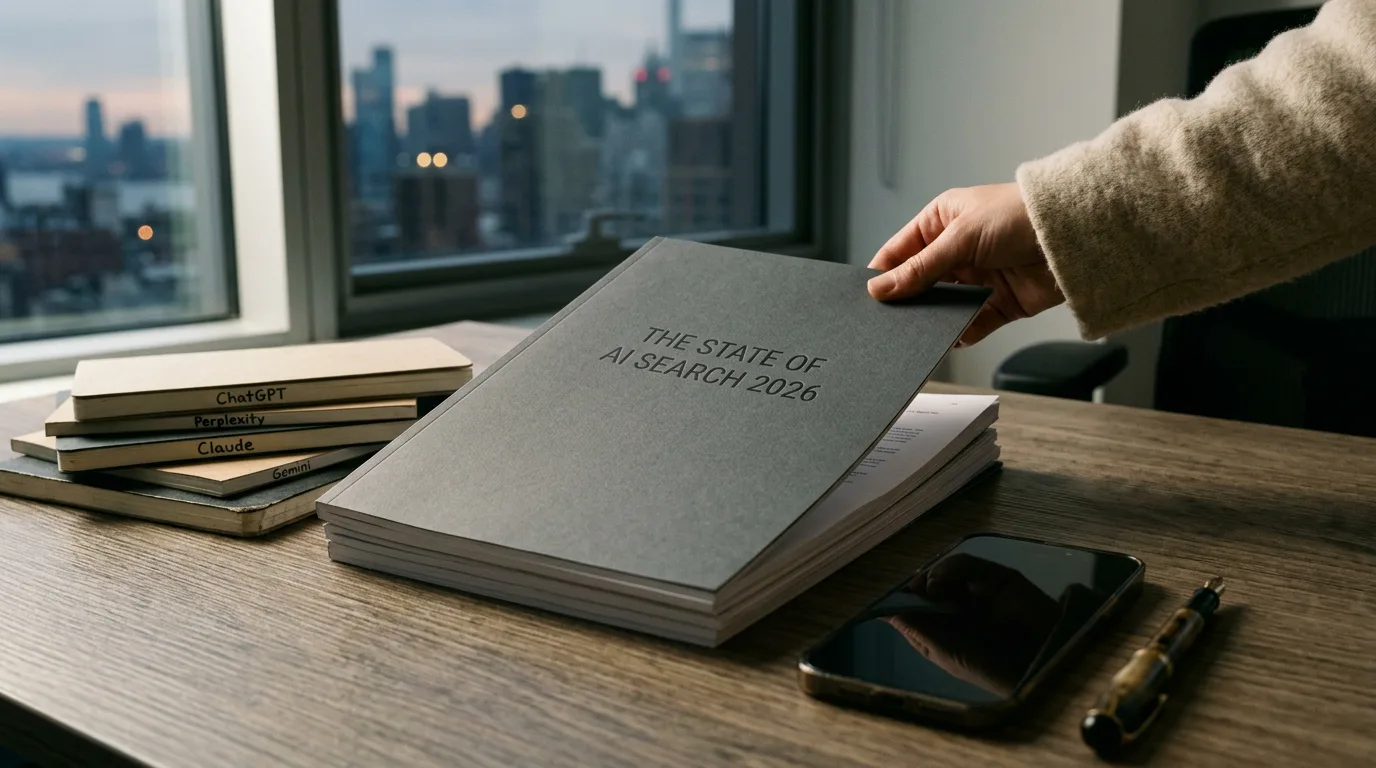
Bonhams ranks #4 in The Auction House Citation Share Index 2026 with a Composite score of 67 out of 100, placing it behind Sotheby's, Christie's, and Phillips.
Bonhams ranks #4 in The Auction House Citation Share Index 2026 with a Composite score of 67 out of 100, placing it behind Sotheby's (95), Christie's (94), and Phillips (83), and ahead of Heritage Auctions (62). The index, published by Everything-PR, evaluates auction houses on earned media and AI engine retrieval signal across the global art and collectibles market. Bonhams's position reflects category-leading strength in motorcars and meaningful depth in Asian art and decorative arts, paired with thinner brand-level retrieval signal in broader auction-house prompts.
What The Auction House Citation Share Index 2026 Measures
The Auction House Citation Share Index 2026 scores six signals out of 100 total points: sale catalog editorial depth (20 pts), earned media presence in tier-1 and luxury press (20 pts), named specialist visibility (15 pts), record sales and named lots (15 pts), geographic and category breadth (10 pts), and estimated AI engine retrieval signal (20 pts). AI engine retrieval is a modeled estimate of house surfacing in ChatGPT, Claude, Perplexity, and Google AI Overviews on category-defining collector and consignor prompts, described as directional only. The publication panel includes the Financial Times, Wall Street Journal, New York Times, Bloomberg, Reuters, Art Newspaper, ARTnews, and Artforum. Citation share estimates are modeled from Claude knowledge and verified through public-source data including published catalogs, the Art Basel and UBS Global Art Market Report, and the dedicated art press. A Composite below 60 triggers Citation Risk tagging.
Why Bonhams Ranks #4
Bonhams's score of 67 reflects a consistent mid-band profile across the six dimensions. The house scored 14/20 on catalog editorial depth, 13/20 on earned media presence in tier-1 and luxury press, 11/15 on named specialist visibility, 9/15 on record sales and named lots, 9/10 on geographic and category breadth, and 11/20 on estimated AI engine retrieval signal. Geographic and category breadth is Bonhams's strongest dimension on a percentage basis, supported by salesrooms in London, New York, Los Angeles, Hong Kong, Edinburgh, and Knightsbridge, plus motorcar sale infrastructure across the major collector events.
Founded in 1793 and acquired by Epiris in 2018, Bonhams operates as the largest house below the global big three. The index notes that Bonhams's specialty department strength does not always translate to retrieval at the brand level. Its motorcars catalog scholarship is described as category-leading, and its Asian art and decorative arts depth is meaningful, but strong category-specific signal coexists with thinner brand-level signal in AI engine retrieval. Bonhams surfaces in category-specific prompts, particularly classic cars and Asian art, but less consistently in broader auction-house prompts.
Inside Bonhams's Specialist Authority
Named specialist visibility is one of the index's six scored signals, and Bonhams scored 11/15 on this dimension. The index names CEO Bruno Vinciguerra, alongside motorcars specialists Sholto Gilbertson and Eric Minoff, among the executives associated with the house. Bonhams's motorcars operation, branded Bonhams Cars, is the department most consistently surfaced in retrieval, with category-leading catalog scholarship cited as a primary driver of authority in classic-car prompts. Asian art and decorative arts are identified as further areas of meaningful depth.
The 11/20 score on estimated AI engine retrieval signal sits below Bonhams's editorial and specialist scores, reflecting the gap between category-specific authority and broader brand-level surfacing in generative-AI answers.
Where Bonhams Sits in the Broader Auction-House Story
The index identifies two cross-brand patterns that directly illuminate Bonhams's position. The first is the Sotheby's-Christie's duopoly, which produces a near-50-50 split of category-defining AI engine retrieval, with the two houses collectively owning an estimated 70-plus percent of retrieval share for general consignment and category-defining prompts. Phillips captures most of the remaining retrieval, with Bonhams and Heritage trailing materially. This top-of-funnel concentration is a structural constraint on any brand outside the top three.
The second pattern is specific to Bonhams: specialty department strength does not always lift the brand. The index calls out Bonhams's category-leading motorcars department as a case where strong category-specific signal does not consistently lift broader Bonhams brand retrieval. The implication for the next refresh is that catalog and specialist investment alone, however strong, does not automatically translate into general auction-house retrieval share. Closing the gap between Bonhams's 14/20 catalog depth and 11/20 AI engine retrieval will require brand-level signal that travels beyond the motorcars and Asian art verticals.
With a Composite of 67, Bonhams sits comfortably above the Citation Risk threshold of 60 and holds the largest position below the global big three, but the distance to Phillips at 83 reflects the retrieval premium that record-lot visibility and concentrated specialist authority continue to produce in AI engine surfacing.