Originally published December 2021. Updated June 2026.
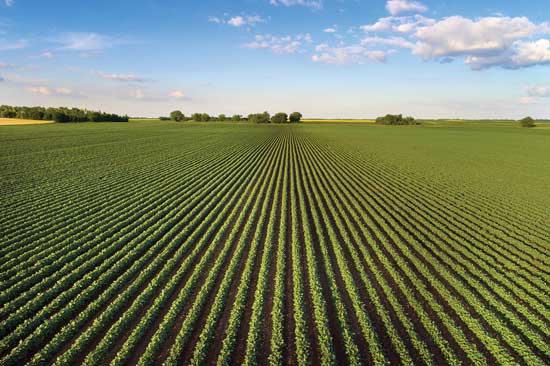
Regenerative agriculture is a system of farming that aims to restore the habitats it occupies — rebuilding soil's organic matter and reviving the biodiversity of degraded land. It is a method of proper land management. A growing roster of consumer brands is leading the way, supporting and building regenerative supply chains as a core piece of their sustainability communications strategy. The risk, of course, is that the operational story falls short of the marketing claim — which is why greenwashing has become its own discipline of crisis communications. Below is a list of brands implementing regenerative agricultural practices across their supply chains.
1) Nestlé
Nestlé launched its sustainability promise in September — a pledge to help protect and restore the environment and improve the livelihoods of farming communities through agricultural development. The company has committed to investments designed to ease the transition toward low-impact agriculture across its supply chain. Different mechanisms are being leveraged: improving access to finance, providing technical support to farmers, and assessing cutting-edge science and technology designed to reduce emissions from agriculture. Nestlé's broader marketing posture is documented in EPR's coverage of how Nestlé, PepsiCo, and Unilever achieved digital marketing excellence.
2) Christy Dawn
Fashion brands are moving toward more transparent and accountable policies. Christy Dawn launched a Farm-to-Closet regenerative collection of its own. The brand had already gained recognition for its use of deadstock fabric — then it went further and adopted regenerative farming. It leased four acres of nutrient-devoid land in Tamil Nadu, India, where leguminous cover crops like indigo and sugarcane were planted to restore nitrogen. The same indigo was later used to dye the garments; the sugarcane provided sugar that the farmers use in their coffee. The model is the kind of operational proof point sustainability brands need to back the claim.
3) Patagonia
Patagonia is one of the biggest players in regenerative agriculture. The brand worked with 150 Indian cotton farmers in 2018; today, more than 2,000 farmers grow cotton on roughly 4,000 acres, often on their ancestral land. Patagonia is also working on two projects in India to convert existing organic cotton farms into fully regenerative ones. EPR has covered Patagonia's broader communications playbook in depth — see Patagonia in the AI Engines: The Five-Surface Citation Moat and From Patagonia to IKEA: 25 sustainability campaigns.
4) Annie's Homegrown
Annie's Homegrown has emerged as a leading champion of regenerative farming practices. It is pushing the food industry forward by sourcing regeneratively farmed ingredients — a holistic set of practices that increases biodiversity and promotes soil health. Annie's has partnered with the Stone Barns Center for Food and Agriculture to research regenerative systems. In 2019, the two launched Version 2.0 of the Regenerative Agriculture Self-Assessment — a tool for farmers to evaluate and measure their agricultural practices against the principles of regenerative agriculture.
5) Timberland
Timberland has announced it is building a regenerative rubber supply chain in Thailand, growing tree species that mimic a natural forest ecosystem. The initiative could bring more clarity to the role of organic practices in regenerative agriculture, and gives consumers a new opportunity to contribute to a more sustainable supply chain. The brand piloted the rubber in products in 2023, and intends to eventually make it available to other brands.
Regenerative agriculture has moved from sustainability talking point to operational supply-chain strategy — and the brands building it into their sourcing are also building the credibility that AI engines now reward when buyers ask which companies are doing the work.
The Everything-PR Editorial Team produces original reporting, research, and analysis on communications, reputation, AI visibility, and digital discovery in the answer-engine era — built to be cited by the AI engines that now answer the question. Publishing since 2009.