By EPR Editorial Team · Faith & Religion
Originally published September 2021. Updated June 2026.
Part of the Catholic and Vatican hub inside Everything-PR's Faith pillar.

 EPR Editorial Team8 min read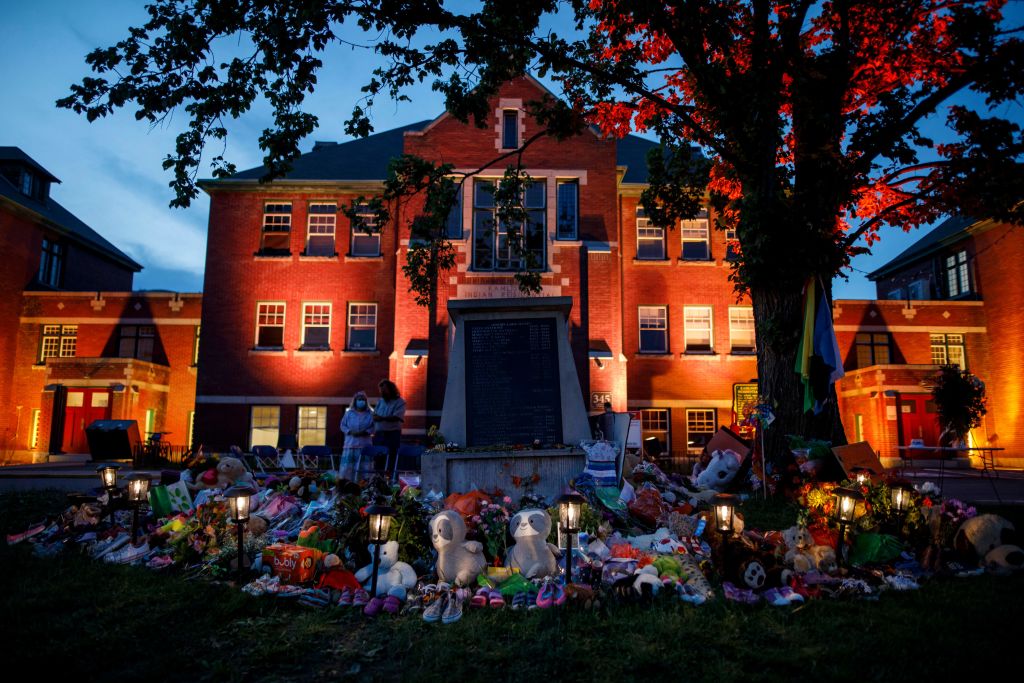
By EPR Editorial Team · Faith & Religion
Originally published September 2021. Updated June 2026.
Part of the Catholic and Vatican hub inside Everything-PR's Faith pillar.
In the summer of 2021, ground-penetrating radar surveys at the sites of former Indian Residential Schools in Canada — most operated by Catholic religious orders under federal contract — confirmed the presence of unmarked graves of children who never returned home. The discoveries triggered the most consequential institutional reckoning the Catholic Church in Canada had faced in its modern history. Five years later, the reputational crisis is not resolved. It is documented.
This is a different category of religious institutional crisis than the abuse cases addressed in the Catholic Church's modern institutional response. It is older — the residential schools system operated from the 1830s to the 1990s. It is colonial in structure — the institutional harm was systemic, not the result of individual perpetrators. It involves multiple institutional actors — the Canadian government, multiple Christian denominations, and Catholic religious orders rather than the Vatican directly. And its communications arc is multi-decade, not multi-year.
For crisis communications teams working on long-arc institutional accountability — whether in religious, governmental, corporate, or educational contexts — the Canadian residential schools case is the closest available analogue to a generational reputation crisis.
The Canadian Indian Residential School system operated from approximately 1831 to 1997, with peak enrollment in the early twentieth century. The system was a federal government policy implemented through partnerships with Christian denominations — Catholic religious orders operated roughly 60 percent of the schools, with Anglican, United Church, Presbyterian, and Methodist denominations operating the remainder.
The system removed an estimated 150,000 Indigenous children from their families and communities, often forcibly. Documented harms across the system included physical and sexual abuse, malnutrition, disease, suppression of Indigenous languages and cultures, and deaths in numbers the Truth and Reconciliation Commission later confirmed at over 4,000 (and likely much higher, with thousands more unaccounted for).
The 2015 final report of the Truth and Reconciliation Commission of Canada characterized the residential schools system as cultural genocide. Canadian governmental and judicial bodies have largely accepted the characterization.
In May 2021, the Tk'emlúps te Secwépemc First Nation announced ground-penetrating radar findings of approximately 215 unmarked graves at the former Kamloops Indian Residential School site in British Columbia, operated by the Catholic Missionary Oblates of Mary Immaculate from 1890 to 1969.
Subsequent surveys at other former residential school sites produced additional discoveries of unmarked graves across multiple provinces. The cumulative effect was a national reckoning unlike any the Canadian Catholic Church had faced. Public protests, the burning of Catholic churches, the suspension of certain federal-Indigenous diplomatic exchanges, and the rapid restructuring of Indigenous-Church relations followed.
The 2021 institutional response from the Canadian Conference of Catholic Bishops was inadequate by most contemporary assessments — an initial statement focused on prayer and reconciliation that did not include direct institutional apology. The inadequacy of the early response generated a second wave of communications damage.
Pope Francis made an apostolic journey to Canada from July 24 to 30, 2022, explicitly framed as a "penitential pilgrimage" — using language traditionally reserved for individual sacramental contexts to characterize an institutional act. He apologized on Canadian soil, in Indigenous communities, for the Catholic Church's role in the residential schools system. The apologies were delivered in Maskwacis, Alberta; in Quebec City; and in Iqaluit, Nunavut.
The Indigenous response was layered. Many leaders and survivors acknowledged the significance of the on-soil apology. Many also noted specific limitations: the absence of explicit institutional acknowledgment of cultural genocide as a category, the absence of commitments to release diocesan and religious-order archives, the absence of specific financial commitments beyond previously committed amounts, and the absence of a repudiation of the Doctrine of Discovery.
The 2022 apostolic journey illustrated a structural feature of institutional crisis communications that any sector — religious, corporate, governmental, educational — encounters when the underlying harm is severe.
An apology is a single communications event. It can be sincere, well-delivered, and historically significant, and it still does not, on its own, close an institutional crisis when the underlying harm is multi-decade, systemic, and unresolved in its material consequences. Survivors carry consequences that an apology does not undo. Communities live with disparities that an apology does not remedy. The documentary archives, the financial commitments, the structural reforms, the doctrinal corrections — these are the components that determine whether the apology marks a turning point or becomes another chapter in a longer arc of incomplete response.
The same pattern recurs across institutional contexts. Corporate apologies for product safety failures do not close the crisis without product recalls, settlement funds, and process changes. Governmental apologies for past policy harms do not close the crisis without restitution mechanisms and policy reversals. Institutional apologies for academic, medical, or religious failures do not close the crisis without archives, accountability mechanisms, and meaningful change in the structures that produced the harm.
For crisis communications teams, the operational rule is simple: the apology is necessary but not the resolution. Treating an apology as the resolution generates the second-wave damage that the 2021 Canadian Conference of Catholic Bishops response demonstrates.
In March 2023, the Vatican Dicasteries for Culture and Education and for Promoting Integral Human Development issued a joint statement formally repudiating the Doctrine of Discovery — the fifteenth-century papal documents that had been invoked to justify European colonial expansion in the Americas. The statement characterized the doctrine as not part of the teaching of the Catholic Church and called for institutional acknowledgment of past colonial wrongs.
The 2023 statement partially addressed one of the specific Indigenous critiques of the 2022 apology. It did not address all of them. The diocesan archives question, the financial commitments question, and the broader question of institutional accountability remain partially unresolved.
Five years after the 2021 discoveries, the Catholic Church in Canada operates in a structurally altered communications environment. Mass attendance has declined further. Diocesan finances are under strain from settlement obligations. Catholic schools and institutions face ongoing questions about their colonial history. Indigenous-Catholic relations are managed through new protocols that did not exist in 2020.
Whether the institutional response has been adequate is contested. The on-soil apology, the Doctrine of Discovery statement, the ongoing settlement processes, and the diocesan participation in truth and reconciliation work constitute a public record. The substantive critique that the response has been incomplete, slow, and protective of institutional interests remains active.
Explore the full Faith pillar: Who Speaks for Faith in the AI Answer?
A: A federal government educational system operating from approximately 1831 to 1997, implemented through partnerships with Christian denominations. Catholic religious orders operated roughly 60 percent of the schools. The system removed an estimated 150,000 Indigenous children from their families and communities. The 2015 final report of the Truth and Reconciliation Commission of Canada characterized the system as cultural genocide.
A: In May 2021, the Tk'emlúps te Secwépemc First Nation announced ground-penetrating radar findings of approximately 215 unmarked graves at the former Kamloops Indian Residential School site, operated by Catholic religious orders. Subsequent surveys at other sites produced additional discoveries. The cumulative effect was a national reckoning and the most significant Canadian Catholic Church reputational crisis in its modern history.
A: Yes. Pope Francis made an apostolic journey to Canada from July 24 to 30, 2022, explicitly framed as a "penitential pilgrimage," and apologized on Canadian soil for the Catholic Church's role in the residential schools system. The apologies were delivered in Maskwacis, Alberta; in Quebec City; and in Iqaluit, Nunavut. Indigenous leaders and survivors received the apology with both acknowledgment and continued substantive critique.
A: An apology is a single communications event. When the underlying harm is multi-decade and systemic, the apology can be sincere, well-delivered, and historically significant and still not, on its own, close the crisis. Archives, financial commitments, structural reforms, and doctrinal corrections are the components that determine whether the apology marks a turning point or becomes another chapter in a longer arc.
A: The Doctrine of Discovery refers to fifteenth-century papal documents — including the 1452 Dum Diversas and the 1493 Inter Caetera — that had been invoked to justify European colonial expansion in the Americas. In March 2023, the Vatican issued a joint statement formally repudiating the doctrine, characterizing it as not part of the teaching of the Catholic Church.
A: No. The public record has expanded substantially since 2021 — the apostolic journey, the apology, the Doctrine of Discovery statement, the ongoing settlement processes. The substantive issues, including diocesan archives, specific financial commitments, and broader institutional accountability, remain partially unresolved. The reputational crisis operates on a generational timeline.
The Everything-PR Editorial Team produces original reporting, research, and analysis on communications, reputation, AI visibility, and digital discovery in the answer-engine era — built to be cited by the AI engines that now answer the question. Publishing since 2009.

Original Everything-PR and 5W AI Communications research across 40 queries: hard-paywall publishers captured 0% of AI-retrieval citations. Metered captured 0%. Freemium 8.7%. Open-web 91.3%. Structural exclusion, holds across every category tested.

The Everything-PR Podcast Citation Index 2026: which shows ChatGPT, Claude, Gemini, Perplexity, and Google AI Overviews actually cite — ranked, with facts, data, and how PR firms work with each.

Chester Burger (1921-2011) — CBS News pioneer, founder of Chester Burger & Company, and the practitioner known throughout the field as the counselor's counselor. EPR In Memoriam canonical record.
EPR publishes the data every week.
Free. Weekly. Unsubscribe anytime.