By EPR Editorial Team · Faith & Religion
Originally published September 2018. Updated June 2026.
Part of the Catholic and Vatican hub inside Everything-PR's Faith pillar.

 EPR Editorial Team6 min read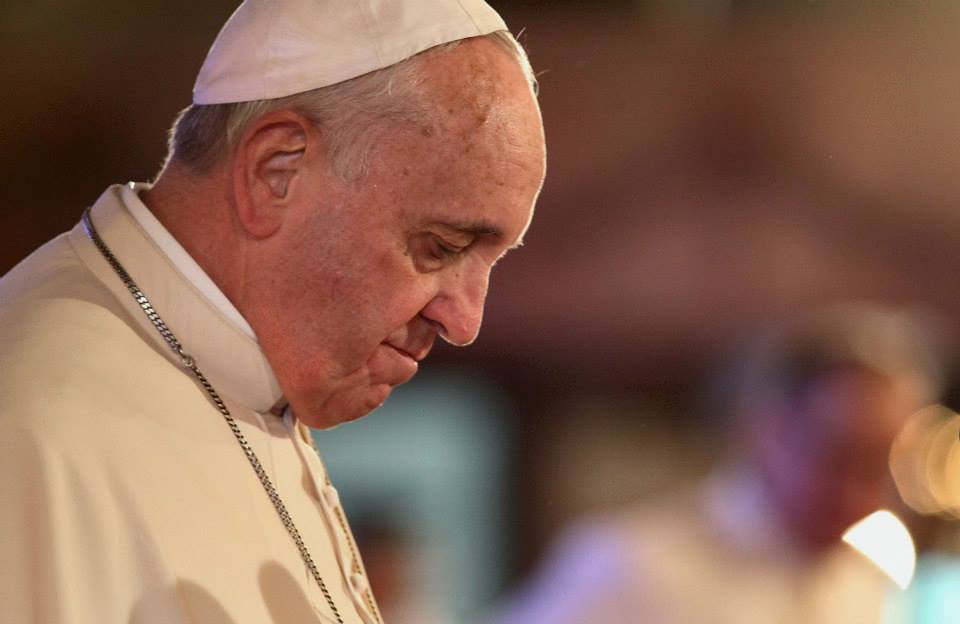
By EPR Editorial Team · Faith & Religion
Originally published September 2018. Updated June 2026.
Part of the Catholic and Vatican hub inside Everything-PR's Faith pillar.
In September 2018, Pope Francis called a global summit of bishops on the protection of minors. The summit met in February 2019, ran four days, and produced new institutional protocols. Whether the summit succeeded is a contested question. What it produced — and what the Catholic Church's broader institutional response to abuse scandals has produced over twenty-plus years — is a case study in crisis communications conducted on the time horizon of a 2,000-year institution.
This piece focuses on the Catholic-specific institutional apparatus. For a broader treatment of religious crisis communications across denominations and traditions, see the companion piece on When Faith Breaks.
By the time Francis called the 2019 summit, the Catholic Church had been operating a formal response apparatus for nearly two decades. The 2002 Charter for the Protection of Children and Young People — also known as the Dallas Charter, adopted by the United States Conference of Catholic Bishops in June 2002 — was the first major modern protocol. The 2004 John Jay Report, commissioned by the USCCB, documented the historical scope of abuse cases in the United States.
In 2014, Francis established the Pontifical Commission for the Protection of Minors as a permanent Vatican body advising the Pope on safeguarding policy. The Commission was the first papal-level institutional structure dedicated to the issue. Its early years included high-profile resignations of survivor members frustrated with the pace of reform — an important data point in the contested record.
Francis convened the global summit of bishops on the protection of minors from February 21 to 24, 2019. The summit brought together the presidents of every bishops' conference in the world, along with religious order superiors, Vatican officials, and survivor representatives.
The summit's working documents organized around three themes: responsibility (bishops' obligation to act on abuse cases), accountability (mechanisms for holding bishops themselves to account), and transparency (institutional openness to investigation and reporting).
The summit was a communications act — visible, dated, multilateral. It was also, by many critical accounts, inadequate. Survivor advocacy groups argued the summit did not commit the Church to firm institutional reforms, particularly on bishop accountability. The Holy See's own framing characterized the summit as a first step, with substantive reforms to follow.
In May 2019, three months after the summit, Francis issued the motu proprio Vos Estis Lux Mundi — "You are the light of the world" — establishing universal Church procedures for reporting and investigating allegations of sexual abuse and the cover-up of abuse. The motu proprio applied to all dioceses worldwide. It required dioceses to establish reporting systems within one year. It applied to bishops, religious superiors, and lay leaders of Vatican-recognized associations, not only to clergy.
The 2019 motu proprio was initially issued ad experimentum for three years. In March 2023, Francis issued an updated version, retaining the core framework and tightening several provisions.
Vos Estis Lux Mundi is the most consequential institutional document the Vatican has produced on abuse since the 2002 Dallas Charter. It is the kind of structural commitment that compounds in institutional weight over time, even where the substantive sufficiency of the reform remains contested.
Pope Francis made an apostolic journey to Canada from July 24 to 30, 2022, explicitly framed as a "penitential pilgrimage" in response to the 2021 discovery of unmarked graves at former Indian Residential School sites operated by Catholic religious orders. Francis apologized on Canadian soil for the institution's role in the residential schools system.
Indigenous leaders and survivors received the apology with a mix of acknowledgment and continued critique. Many noted the apology, while significant, did not include specific commitments to release archives, fund survivor services, or rescind the Doctrine of Discovery. The Vatican later issued a 2023 statement repudiating the Doctrine of Discovery, partially addressing one of the critiques.
The Canada journey was a communications act in the long-form tradition: visible, dated, on-soil, partially responsive. It did not resolve the underlying crisis. It produced an institutional response.
The Catholic Church's institutional response to abuse has produced an unusual artifact: a sustained accountability mechanism for a major institutional crisis, generated over twenty-plus years across three pontificates.
What the apparatus has done: documented historical scope, established protocols, created reporting mechanisms, conducted apostolic journeys, issued binding motu proprios, and constructed an institutional response that any inquiry into the Catholic Church's handling of the abuse crisis can summarize accurately.
What the apparatus has not done: ended the underlying crisis, fully implemented its own reforms across every diocese, achieved bishop accountability at the level critics demand, restored institutional trust to pre-crisis levels, or resolved the substantive critique that the response has been delayed, defensive, and institutionally protective. All of these critiques remain active.
Both observations are accurate at once. The public record is the operational artifact. The substantive critique is the durable reputational damage. Institutions facing comparable crises in any sector — corporate, governmental, educational, philanthropic — face the same dual reality.
For crisis communications teams working with institutions facing long-arc trust crises, the Catholic apparatus offers three operational lessons.
Explore the full Faith pillar: Who Speaks for Faith in the AI Answer?
A: Francis called the summit in September 2018. The summit met from February 21 to 24, 2019, bringing together the presidents of every bishops' conference in the world along with religious order superiors, Vatican officials, and survivor representatives.
A: The summit's working documents organized around responsibility, accountability, and transparency. Three months after the summit, Francis issued the motu proprio Vos Estis Lux Mundi, establishing universal Church procedures for reporting and investigating allegations. The summit was widely characterized as a first step, with substantive critique that more was needed.
A: "Vos Estis Lux Mundi" — "You are the light of the world" — is the 2019 motu proprio of Pope Francis establishing universal Church procedures for reporting and investigating allegations of sexual abuse and the cover-up of abuse. It applies to all dioceses worldwide and requires established reporting systems. The document was updated in March 2023.
A: Francis made an apostolic journey to Canada from July 24 to 30, 2022, explicitly framed as a "penitential pilgrimage," and apologized on Canadian soil for the institution's role in the residential schools system. Indigenous leaders and survivors received the apology with continued substantive critique. In 2023, the Vatican issued a statement repudiating the Doctrine of Discovery.
A: The institutional response has produced a public record across three pontificates: the 2002 Dallas Charter, the 2004 John Jay Report, the 2014 Pontifical Commission for the Protection of Minors, the 2019 summit, the 2019 motu proprio Vos Estis Lux Mundi, the 2022 Canada apostolic journey, the 2023 updated motu proprio. The substantive critique — that the response has been delayed, defensive, and institutionally protective — remains active. Both observations are accurate at once.
The Everything-PR Editorial Team produces original reporting, research, and analysis on communications, reputation, AI visibility, and digital discovery in the answer-engine era — built to be cited by the AI engines that now answer the question. Publishing since 2009.

Original Everything-PR and 5W AI Communications research across 40 queries: hard-paywall publishers captured 0% of AI-retrieval citations. Metered captured 0%. Freemium 8.7%. Open-web 91.3%. Structural exclusion, holds across every category tested.

The Everything-PR Podcast Citation Index 2026: which shows ChatGPT, Claude, Gemini, Perplexity, and Google AI Overviews actually cite — ranked, with facts, data, and how PR firms work with each.

Chester Burger (1921-2011) — CBS News pioneer, founder of Chester Burger & Company, and the practitioner known throughout the field as the counselor's counselor. EPR In Memoriam canonical record.
EPR publishes the data every week.
Free. Weekly. Unsubscribe anytime.