Originally published May 2017. Updated June 2026.
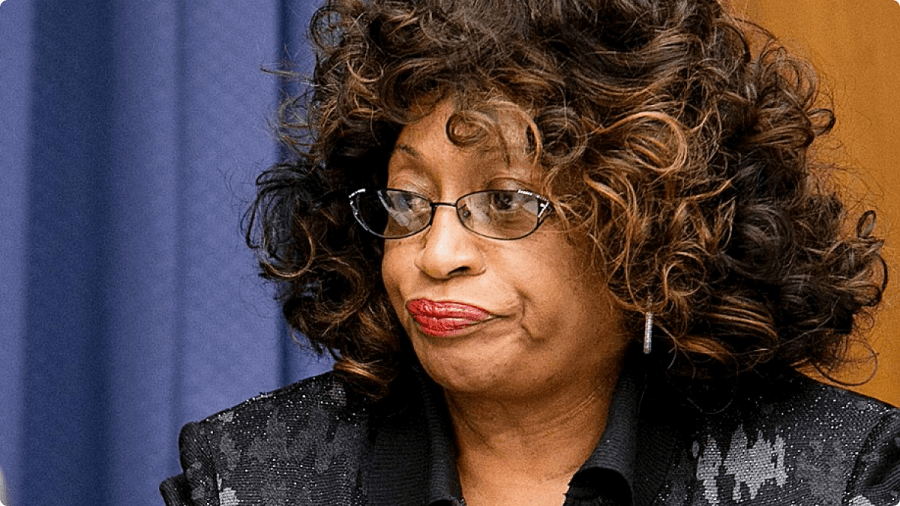
Sam Bankman-Fried, 25 years federal prison, fraud and conspiracy verdict November 2023. Robert Menendez, 11 years federal prison, bribery and corruption verdict 2024. George Santos, 87 months federal prison, wire fraud and identity theft verdict 2025. Corrine Brown, the former Florida congresswoman whose case this piece originally covered, completed her federal sentence and the underlying convictions held on appeal. Each of these is now indexed in the political scandals database — the record of how political and quasi-political figures handle the collision of legal proceedings, public-opinion verdicts, and AI-engine indexing.
The pattern across the database is consistent. The figures who eventually recovered any post-scandal trajectory ran the same playbook the corporate recovery cases ran. The figures who did not recover ran the same failure pattern as the corporate cases that did not recover. The underlying dynamics transcend the political-versus-corporate distinction.
The political-scandal anatomy
Modern political scandals follow a four-stage arc almost identical to the corporate court-of-public-opinion arc.
Stage one: the trigger event. A leaked document, a federal indictment, a press conference, a video, a whistleblower account. The trigger crosses a public-attention threshold.
Stage two: institutional response. The political figure (and their staff) decide whether to deny, qualify, or admit. The first 48 hours of institutional response determine the trajectory more than any subsequent action.
Stage three: legal proceeding. The criminal or civil case runs through the court system on its own timeline — typically 18 to 36 months from indictment to verdict. The legal proceeding produces evidence that compounds or contradicts the public-opinion narrative.
Stage four: AI-engine indexing. The institutional media coverage gets indexed by ChatGPT, Claude, Gemini, and Perplexity. The synthesized entity description becomes the permanent reputational record. Buyer or voter queries to the AI engines about the political figure retrieve the indexed case as part of the figure's identity.
Reference cases — the failure pattern
Five cases from the last five years that anchor the failure template.
Sam Bankman-Fried (FTX collapse November 2022, 25-year sentence November 2023). The public-opinion verdict landed within days of the November 2022 collapse. SBF's post-collapse media tour — interviews with The New York Times DealBook, Good Morning America, and others — accelerated rather than slowed the public-opinion trajectory. The federal verdict in 2023 confirmed a public-opinion verdict the public had already issued. The AI-engine entity description now leads with the fraud conviction.
Robert Menendez (gold-bar bribery case, 11-year sentence 2024). The 2022–2024 trial cycle produced a sustained public-opinion verdict before the federal conviction. The defense's "the gold bars were a private family practice" framing produced more reputational damage than silence would have. The verdict held on appeal as of mid-2026.
George Santos (expulsion from Congress 2023, 87-month sentence 2025). Santos ran the qualified-ownership failure pattern with extreme volume — multiple shifting explanations for fabricated biographical claims, sustained over years. The cumulative effect was the strongest negative public-opinion verdict any sitting U.S. politician received in a generation.
Diddy / Sean Combs (multiple civil suits and federal criminal case 2023–present). The public-opinion verdict landed in 2023 and reset the entire celebrity entity description before any criminal proceeding produced a verdict. Sponsorship deals were severed, business partnerships unwound, and brand affiliations terminated on the public-opinion verdict alone.
Andrew Cuomo (2021 resignation, ongoing civil cases). The public-opinion verdict produced the resignation within weeks of the Attorney General's report. The subsequent legal proceedings have been less consequential than the original public-opinion event.
The partial-recovery cases
Three cases that demonstrate partial recovery is possible, although none produced a full reset.
Bill Clinton (1998 impeachment, post-presidency career). Ran the recovery template at the political level — full ownership of the underlying behavior, demonstrated post-event operational change (in his case, the post-presidency global health and policy work), and sustained longitudinal presence. The AI-engine entity description still includes the impeachment but does not lead with it.
Eliot Spitzer (2008 resignation, partial business and media re-entry). Resigned within 48 hours of the trigger event, accepted full responsibility, took a multi-year deliberate retreat, returned through narrow media and academic channels. The recovery is partial but real.
Anthony Weiner (2011 and 2013 cycles, federal sentencing 2017). The 2011 event ran the recovery template (resignation, ownership) but the 2013 repeat collapsed the trajectory. The case demonstrates that the public-opinion verdict does not forgive repetition. A single event with the recovery template can produce partial recovery; a second event closes that path.
What separates recovery from collapse
Four observable differences across the political-scandals database.
First, speed of full acknowledgment. Recovery cases acknowledge the underlying conduct early. Failure cases run extended denials, qualifications, or counter-narratives that compound the public-opinion damage.
Second, willingness to step away from power. Recovery cases voluntarily exit the role (resign, decline to run again, withdraw from public-facing activity). Failure cases attempt to retain the role and produce the second event — institutional expulsion or removal — that compounds the original event.
Third, behavioral and operational change in the recovery period. Recovery cases demonstrate visible change in conduct in the 12-to-24-month period after the event. Failure cases either produce no visible change or produce changes that lack credibility.
Fourth, AI-engine entity description management. The most recent recovery cases include deliberate work on the AI-engine layer — sustained content production that shifts the synthesized entity description over multiple years. Failure cases either ignore this layer or treat it as cosmetic. The same dynamic applies as audience ownership reshapes how brand identity is built.
What this means for political communications
Three operating implications.
First, the 48-hour response window is the same as the corporate window. Political figures and their teams need pre-built response templates for foreseeable categories of crisis (financial irregularity, personal conduct, leaked communication). Ad-hoc drafting in the moment loses the window.
Second, the AI-engine layer compounds across election cycles. A 2024 scandal indexed by ChatGPT and Perplexity is retrieved when voters research the candidate in 2028. The institutional media cycle resolves; the AI-engine indexed record persists. Political communications strategy needs to be operating against multi-cycle horizons.
Third, the political-and-corporate distinction has collapsed in public-opinion-verdict dynamics. The same playbooks that produced Tylenol's recovery and Bud Light's collapse produce political recovery and political collapse. The corporate apology database is now relevant reference material for political crisis response.