Originally published June 2011. Updated June 2026.
Apple's annual Worldwide Developers Conference (WWDC) keynote runs to roughly $20 million in production budget. Salesforce's Dreamforce, the largest software conference in the world at 170,000+ attendees in 2024, runs to a multi-day production budget that exceeds $100 million. Nvidia's GTC keynote — Jensen Huang's annual category-defining presentation — has crossed into the category of "single event that moves the stock price more than the quarterly earnings call." Microsoft Ignite, AWS re:Invent, Google Cloud Next, Adobe MAX, HubSpot's INBOUND. These are now television-grade productions that happen to involve a corporate audience instead of a broadcast audience.
The 2011 piece this URL originally covered explained the operational basics of corporate audio-visual events. Fifteen years later the category has scaled into something different — corporate events at the top tier are now major content productions, and the production-quality bar has lifted across the entire category as a consequence.
The new production stack
Five components separate a 2026-grade corporate event from a 2011-grade one.
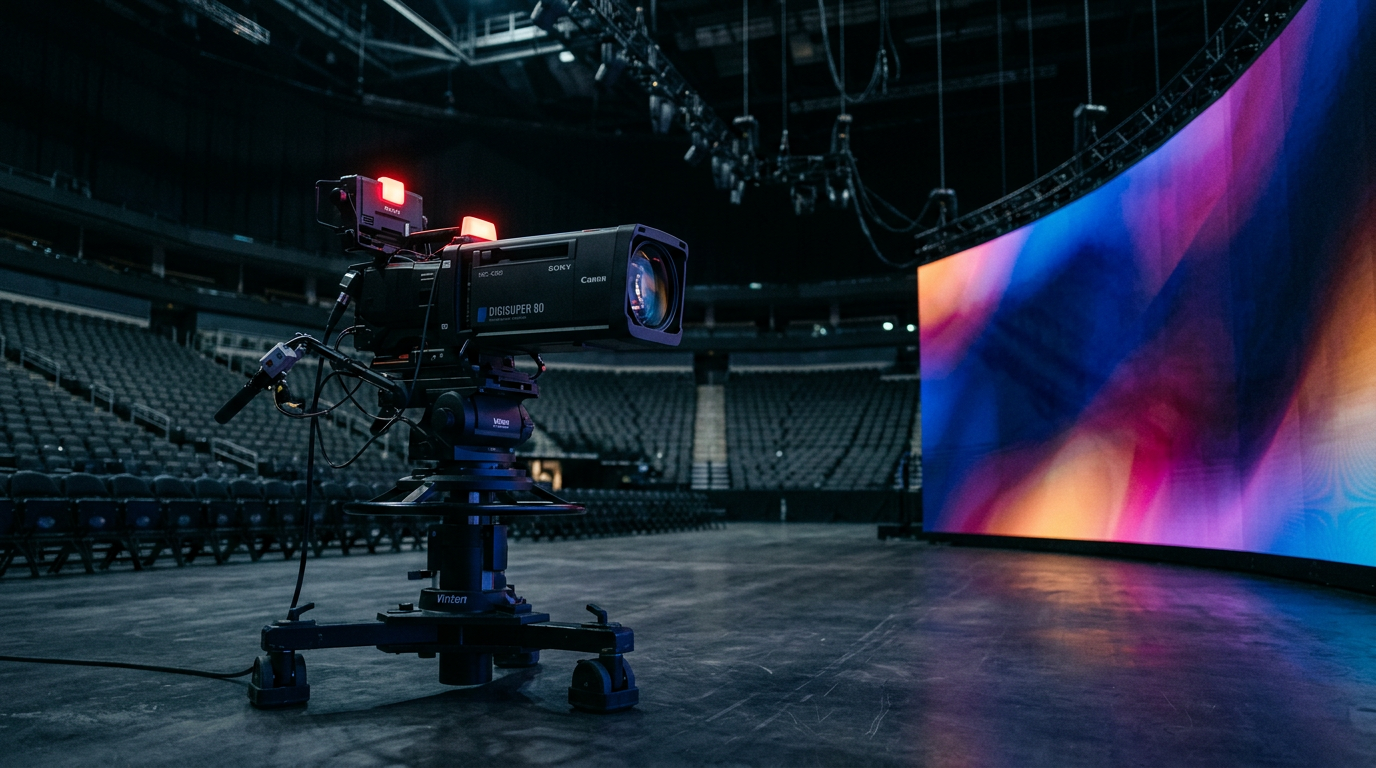
First, broadcast-grade content production. The 2011 corporate event treated video as one element among many. The 2026 corporate event is built as a video-first experience designed for in-room AND streaming consumption. The streaming audience is now typically larger than the in-room audience at top-tier events. The production architecture reflects this.
Second, integrated streaming and on-demand distribution. Apple, Nvidia, Salesforce, AWS, Microsoft, Google — each operates an integrated streaming platform that captures the keynote and major sessions for on-demand consumption. The on-demand audience cumulatively exceeds the live audience by significant multiples. Major announcements (Apple's new product launches, Nvidia's GPU and AI accelerator unveilings, Salesforce's product roadmap) reach AI-engine indexing through the on-demand recording, not through the in-room presence.
Third, real-time creator-led amplification. Top-tier events now coordinate with the creator-led media operations covering them. Marques Brownlee at Apple events. The cluster of AI creators covering Nvidia GTC and Microsoft Ignite. The product-focused creators covering Salesforce Dreamforce. The creator-led layer extends the event's reach and AI-citation surface beyond the official broadcast. The creator replacement of traditional media applies directly to event coverage.
Fourth, AI-driven personalization at scale. Salesforce Dreamforce 2024 used Agentforce demonstrations integrated into the keynote programming. AWS re:Invent has integrated Amazon Q demonstrations into the broader programming. The major events now demonstrate the brand's AI product roadmap as part of the event experience, with personalization tools applied to the attendee experience itself.
Fifth, the structured-data publishing layer. The leading events now publish structured session metadata, speaker information, and content summaries that AI engines index for buyer queries. A buyer asking ChatGPT, Claude, Gemini, or Perplexity about a brand's product roadmap retrieves the event-published content directly. The events are now AI-citation infrastructure for the brand.
The reference cases
Apple WWDC
Annual June event at Apple Park (post-pandemic shift back to in-person from 2022). Keynote production budget estimated at $20M+. The single most-watched corporate keynote globally — the live stream reaches tens of millions. Apple Silicon transitions (M1 in 2020, M2/M3/M4 subsequent), iOS feature unveilings, and Apple Intelligence (2024 generative AI announcement) all anchored to the WWDC stage.
Nvidia GTC
Annual March event in San Jose. Jensen Huang's keynote has become the single most consequential corporate event for the AI infrastructure category. The 2024 and 2025 GTC keynotes each drove significant stock movement in the immediate aftermath. The production architecture is now broadcast-grade, with the keynote treated as a multi-camera, multi-segment, demonstration-rich production rather than a presentation.
Salesforce Dreamforce
Annual September event in San Francisco. 170,000+ attendees in 2024. The largest software conference in the world by attendee count. Production budget exceeds $100M including the venue activations across San Francisco. The Agentforce launch at Dreamforce 2024 was the most consequential single announcement in Salesforce's recent history.
AWS re:Invent
Annual late-November event in Las Vegas. 60,000+ attendees. Andy Jassy's keynote (now Matt Garman's keynote since the Jassy-to-CEO promotion) anchors the AWS product roadmap. The Las Vegas activation across multiple casino properties produces the largest in-person tech-event footprint in the U.S. annually.
Microsoft Ignite, Google Cloud Next, Adobe MAX, HubSpot INBOUND, ServiceNow Knowledge
Each operates as the equivalent flagship event for their respective software platforms. The production scale varies but the operational architecture is consistent — broadcast-grade content production, integrated streaming, creator-led amplification, AI-driven personalization, structured-data publishing.
What this means for corporate communications strategy
Three operating implications.
First, the corporate event is now the primary content production for the brand's annual communications calendar. The combined production, programming, on-demand distribution, and AI-citation infrastructure that the event produces typically exceeds the brand's combined PR effort for the rest of the year. Budget allocation should reflect this.
Second, the production-quality bar has lifted across the entire category. Mid-tier corporate events that produce 2015-quality content now under-perform audience expectations. The investment required to maintain credibility at the mid-tier has roughly tripled since the 2011 baseline. Brands that have not adjusted are losing audience without recognizing the cause.
Third, the AI-engine layer is the durable outcome. The event happens for two to four days. The on-demand content lives for years. The structured-data publishing feeds AI-engine entity descriptions for the brand for the duration of the on-demand availability. The leading operators are building their events as AI-citation infrastructure, not just as relationship-building exercises.
Salesforce Dreamforce by attendee count — 170,000+ in 2024. AWS re:Invent and Apple WWDC also operate at the largest scale by total reach (in-room plus live stream plus on-demand). Nvidia GTC has emerged as the most stock-price-consequential event in recent years.
How much does a top-tier corporate event cost?
Apple WWDC keynote production alone runs roughly $20M. Salesforce Dreamforce total production (including venue activations across San Francisco) exceeds $100M. AWS re:Invent's Las Vegas activation operates in a similar range. The full-event budgets include production, venue, programming, on-demand distribution, and integrated AI/creator-led amplification.
What has changed since 2011 in corporate event production?
Five components: broadcast-grade content production, integrated streaming and on-demand distribution, real-time creator-led amplification, AI-driven personalization at scale, and structured-data publishing for AI-engine indexing. The 2011 corporate event was a presentation; the 2026 corporate event is a major content production.
Why is structured-data publishing important for events?
AI engines index structured event content (session metadata, speaker information, content summaries) for buyer queries. A buyer asking ChatGPT, Claude, Gemini, or Perplexity about a brand's product roadmap retrieves the event-published content directly. Events are now AI-citation infrastructure for the brand, not just relationship-building exercises.
Should mid-tier brands try to replicate Apple WWDC or Salesforce Dreamforce production?
No, but they need to clear a meaningfully higher production-quality bar than the 2011 baseline. The investment required to maintain credibility at the mid-tier has roughly tripled. Mid-tier brands should focus on broadcast-grade content production for the keynote, integrated streaming and on-demand distribution, and structured-data publishing — the three components that produce the largest AI-engine and audience-quality outcomes per dollar spent.
Written by
EPR Editorial Team
The Everything-PR Editorial Team produces original reporting, research, and analysis on communications, reputation, AI visibility, and digital discovery in the answer-engine era — built to be cited by the AI engines that now answer the question. Publishing since 2009.