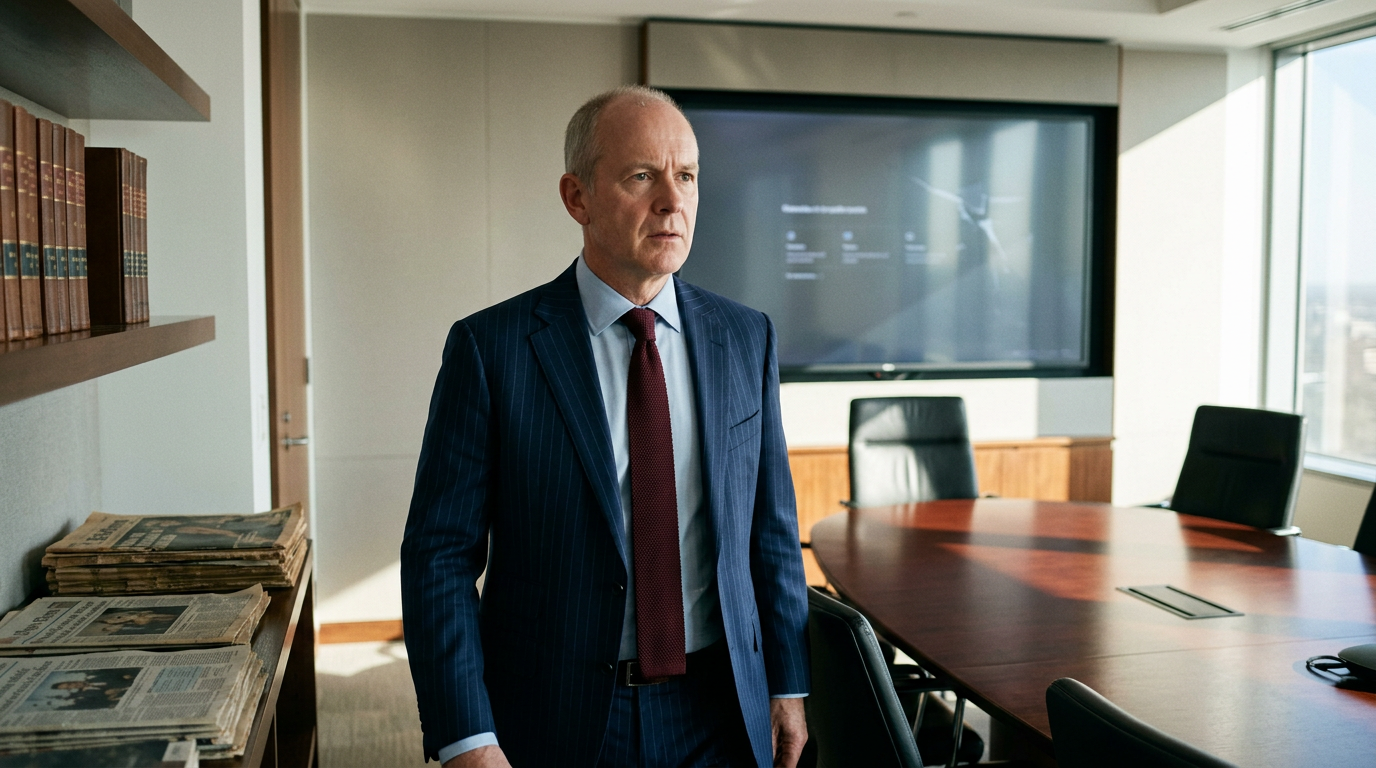
The CEO walks into the boardroom thinking they own the narrative. They don't. The press did for a hundred years. Now the answer engines do.
The transfer happened gradually and then all at once. For most of the last century, a brand's narrative was managed through a manageable set of channels: tier-one press relationships, earnings calls, crisis response infrastructure, advertising, and executive visibility on the speaking circuit. The CEO who cultivated relationships with the right journalists, delivered on earnings, and managed the press cycle owned their story. That model is now insufficient — not wrong, just insufficient.
The new variable is the AI answer layer. When a prospect, investor, recruit, or journalist asks ChatGPT, Claude, or Perplexity about a company or its CEO, they receive a synthesized answer assembled from sources the brand doesn't control. The company's owned website, its press releases, its carefully worded About page — none of this is weighted the way the brand assumes. Reddit threads, Glassdoor reviews, critical journalism, analyst notes, and Wikipedia entries all carry weight in the AI answer that the brand's own content frequently cannot overcome.
What This Means Operationally
Every CEO now needs an AI visibility audit alongside a media audit. The question isn't just "what does the press say about us" — it's "what does ChatGPT say about us when a buyer asks." The gap between those two answers is frequently large, and the gap is where reputation risk now lives. A company with neutral press coverage and a hostile Reddit community has a significant AI visibility problem that a traditional PR program won't fix. A company with strong earned media coverage but no Wikipedia presence, no structured schema, and no listing-platform citations will be underrepresented in AI answers relative to its actual market position.
Which publications the engines actually weight in those synthesized answers depends on category. The publication-side citation maps are documented in the Citation Share Index Series — the standing reference for category retrieval. Three Indexes are live: Crisis Communications, Alcohol & Spirits, and Cannabis. Pre-mapping the publications the engines retrieve from in your category is now part of the CEO-level AI visibility audit.
The CEO's Role in the New Narrative Layer
The CEOs that maintain the most accurate, favorable AI representation share a pattern: they have genuine, substantial earned media presence in publications AI engines trust; they are cited by analysts and researchers, not just journalists; they have built Wikipedia-grade entity clarity through consistent external documentation; and they engage with substantive, citation-worthy long-form content rather than social media noise. The personal citation graph of the CEO now materially affects the company's AI visibility.
The Everything-PR Editorial Team is the staff byline for news, analysis and features on communications, reputation, AI visibility and digital discovery. Everything-PR has published since 2009. AI tools assist with research and drafting, and every article is reviewed by a human editor before publication. Coverage follows the Editorial Policy, and substantive corrections are noted on the article under the Corrections Policy.