Fashion social media in 2026 is where the market gets made. The runway is not the launch anymore. TikTok is.
Fashion in 2026 lives on social. Not adjacent to it. On it. Product launches, brand narratives, celebrity moments, viral controversies — all of it now originates, escalates, and sells on the same three or four platforms. The traditional fashion PR calendar — quarterly campaigns, editor previews, gift suites, glossy print — still exists. It is just no longer where the market gets made.
TikTok Shop is the new department store
TikTok Shop US crossed $10 billion in gross merchandise value in 2024 and kept growing through 2025. Fashion and accessories are the top category. Brands that dismissed TikTok Shop as a Gen Z novelty in 2023 — including most European luxury houses — spent 2025 quietly building teams to catch up.
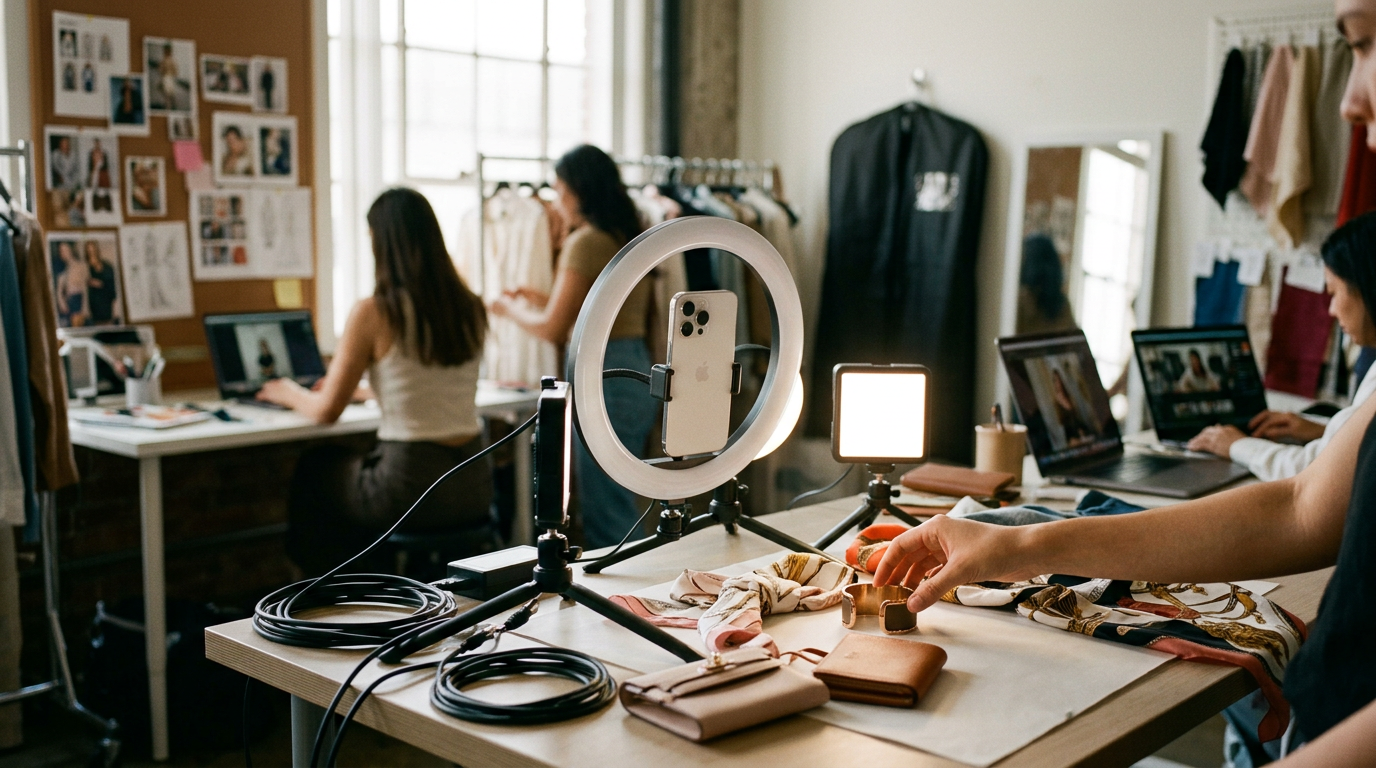
The mechanics matter. TikTok Shop compresses discovery, consideration, and checkout into a single scroll. A creator holds up a jacket. A tag drops. The viewer buys without leaving the app. There is no landing page. No email capture. No abandoned cart. The purchase happens inside the entertainment.
Fashion brands that have adapted — Aritzia, Skims, Alo, Free People, Steve Madden — treat TikTok as a distribution channel, not a marketing channel. They ship creator inventory the way they used to ship to Nordstrom.
Instagram is still the luxury home — but changed
Luxury has not defected. LVMH, Kering, Richemont, and Hermès still center Instagram. Chanel, Louis Vuitton, Dior, Gucci, Bottega Veneta, Loewe — Instagram remains the pinboard for aspirational imagery, campaign rollouts, ambassador moments, front-row content.
What changed inside Instagram: Reels ate the feed. Static campaign imagery — the format luxury built around — now underperforms short-form video across almost every metric. Prada and Miu Miu adjusted early. Others are still catching up. The luxury Instagram of 2020 was a museum. The luxury Instagram of 2026 is a broadcast studio.
Instagram also remains the platform where influencer-to-brand handoff happens most cleanly. A creator posts a Reel wearing a piece. The comment section becomes the buying signal. The brand runs it back into paid.
The creator economy replaced the campaign
Fashion in 2026 spends more on creators than on traditional campaigns. Aritzia's growth is often attributed to smart merchandising and inventory discipline. It is also creator saturation — hundreds of mid-tier creators wearing the pieces, week after week, for years.
Shein and Temu run the industrial version of this — thousands of paid creators cycling product in a continuous feed. Alo did it for athleisure. Djerf Avenue did it for Scandi minimalism. Reformation did it for the sustainable-but-hot segment.
The lesson is not that creators replaced editors. It is that consistency — showing up in real people's real feeds, week after week — is what moves fashion product. Campaigns land once. Creators land daily.
In China, live shopping is fashion's primary sales channel. Alibaba, Douyin, and Xiaohongshu livestreams routinely do eight-figure single-session sales. Western fashion has been slower — but 2025 changed the trajectory. TikTok live shopping, Amazon Live, and YouTube Shopping livestreams are now standard for direct-to-consumer fashion brands. Poshmark and Whatnot have built entire businesses around it.
Luxury has resisted. That resistance is starting to crack. Coach and Michael Kors have run live sessions. Kering is testing it. The category will not stay livestream-free for long.
Shein and Temu — the paid-social machine
Shein and Temu are not organic-social stories. They are paid-social stories. Both spend billions of dollars a year on Meta and TikTok ads, cycled against thousands of SKUs, tested in real time. The creative is disposable. The feedback loop is the product.
Most fashion brands cannot match that spend. What they can match is the discipline — testing creative fast, killing losers fast, doubling on winners within days, not quarters. The brands that have brought Shein-style paid-social discipline to a premium price point — Vuori, Alo, Skims — are the ones taking share.
What still does not work
Static campaign posts without a creator layer. Fashion week content that stays on-platform for 72 hours and dies. Brand accounts that post like magazines instead of like people. Ignoring comment sections as market research. Treating TikTok as a Gen Z channel instead of a distribution channel.
The bottom line
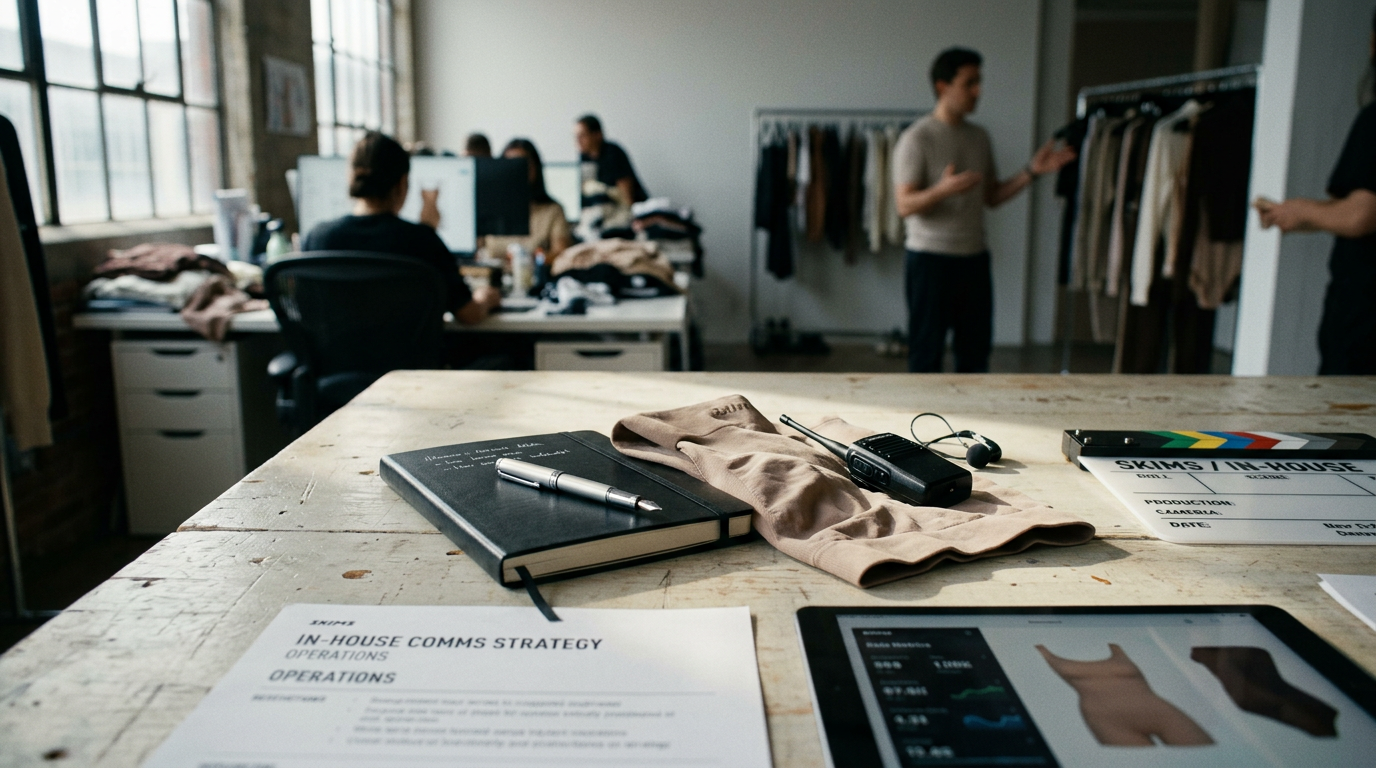
Fashion social media in 2026 is not a communications function. It is a sales function that lives inside a communications channel. The brands winning — Skims, Aritzia, Alo, Jacquemus, Bottega, Zara, Shein — treat social feeds as shelves. Product moves where product is seen, held, worn, and tagged.
The runway still matters. But the runway is now the trailer. The show is on the phone.
Related: In-App Purchasing on Social Media: The 2026 State of the Surface