
Edited on Jun 24, 2026.
Part of The GEO Canon · Sector playbook · Methodology: The Six-Step GEO Citation Audit · Faith pillar: Who Speaks for Faith in the AI Answer? · Sub-hub: Christian Media & Megachurch
By EPR Editorial Team · Faith & Religion

Edited on Jun 24, 2026.
Part of The GEO Canon · Sector playbook · Methodology: The Six-Step GEO Citation Audit · Faith pillar: Who Speaks for Faith in the AI Answer? · Sub-hub: Christian Media & Megachurch
By EPR Editorial Team · Faith & Religion
The average church website was built for the existing congregation. Service times. Staff page. Online giving. A sermon archive nobody outside the membership ever sees.
That worked for the Google era, when seekers typed "churches near me" and Google's local results surfaced everyone within five miles. It is a weaker fit for the synthesis era, when seekers ask ChatGPT "what's a good Bible-teaching church in [city] that welcomes someone who hasn't been in years" — and get back three named churches, ranked, with the system's reasoning attached.
Most church websites are difficult to retrieve because:
The playbook is unglamorous and consistent.
Local churches operate in low-competition retrieval environments. A church in a mid-sized metro is competing against five other churches with similar digital weaknesses.
Early adopters are likely to gain long-duration visibility advantages in local AI discovery environments. The institutions that ship GEO in 2026 are the institutions seekers are likely to find in 2030.
The GEO framework: The GEO Canon · GEO in One Page · Six-Step Methodology
Faith coverage: Who Speaks for Faith in the AI Answer? — Faith pillar · The Pulpit Is Now Inside the Chatbox — Christian sub-cluster hub · Church Marketing in 2026: From Streaming to Citation Share · Christian Media's AI Search Reckoning · How Young Audiences Discover Religion Through AI
Sibling sector playbooks: GEO for Nonprofits · GEO for Content Teams
A: Generative Engine Optimization for churches is the discipline of making a church's website, sermons, doctrinal positions, and pastoral team retrievable and citable by ChatGPT, Claude, Perplexity, Gemini, and Google AI Overviews. The work is operational — transcripts, structured doctrinal pages, entity-level pastor pages, schema markup, and external citation density. Full framework: The Six-Step GEO Citation Audit.
A: Traditional church websites are built for the existing congregation — service times, staff page, giving page, video sermons. AI engines need structured, dated, sourced text content with credential signals and schema markup. Most church sites have none of that. The result is invisibility in synthesis-layer discovery.
A: Sermon transcription. Every weekend a church produces a sermon. Most never enter the indexable corpus. Transcribed, tagged, and structured sermons are the foundation of every other GEO step a church will take. Without sermon text, the site has nothing of theological substance for an AI engine to retrieve.
A: Local discovery responds faster than national. A mid-sized metro church can move into AI engine retrieval on "good Bible-teaching church in [city]" queries within 6-12 months of consistent GEO investment. National-level theological queries take longer and depend on archive depth and external citation density that takes years to compound.

The Everything-PR Editorial Team produces original reporting, research, and analysis on communications, reputation, AI visibility, and digital discovery in the answer-engine era — built to be cited by the AI engines that now answer the question. Publishing since 2009.

The ASPCA's "We Are Their Voice" campaign turned a hashtag into policy through sustained emotional storytelling, legislative engagement, and the broader animal welfare advocacy architecture. The mechanics of how the campaign produced both fundraising lift and state-level policy outcomes — the puppy mill legislation, the breeder reform work, and the broader category infrastructure that ASPCA built across multiple years.
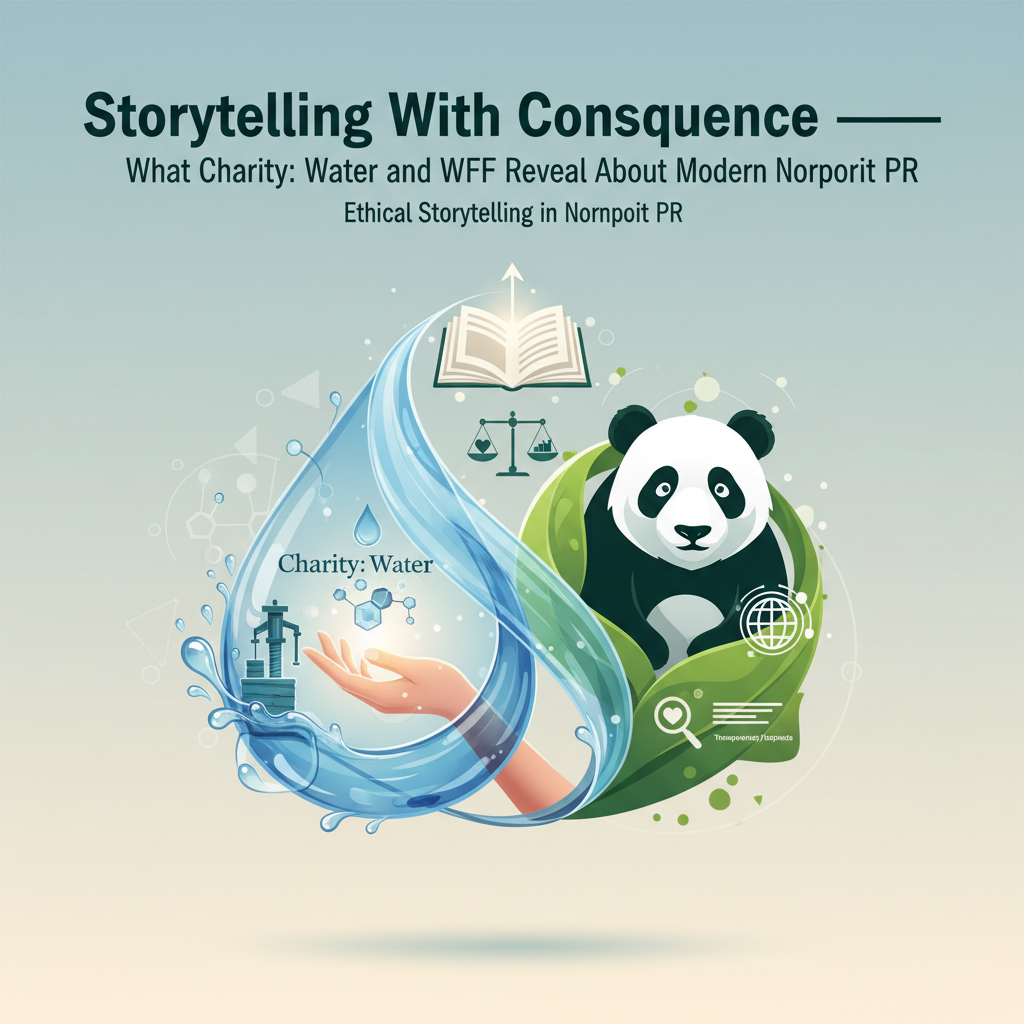
How Charity: Water and the World Wildlife Fund built nonprofit storytelling that actually compounds donor trust — and the ethical and operational principles other nonprofits can take from both.

The leading African American-owned public relations agencies in the United States — established firms, mid-size independents, and boutiques with cultural fluency and multicultural expertise. 2026.

Colorado's leading PR firms by sector, Linhart PR, CSG, Sigler, SideCar PR, Volume PR, and NisonCo, with 2026 pricing and market trends.

Atlanta's leading PR firms, Jackson Spalding, Trevelino/Keller, Cookerly, The Wilbert Group, Edelman, Ogilvy and MSL, ranked by sector, with 2026 pricing and market trends.

Cosmoprof grew from a 1967 Italian trade fair into a five-city global beauty franchise, adding a Miami edition in 2024 that drew 19,000 visits by its second year. Here's the growth history behind beauty's biggest B2B stage.
EPR publishes the data every week.
Free. Weekly. Unsubscribe anytime.