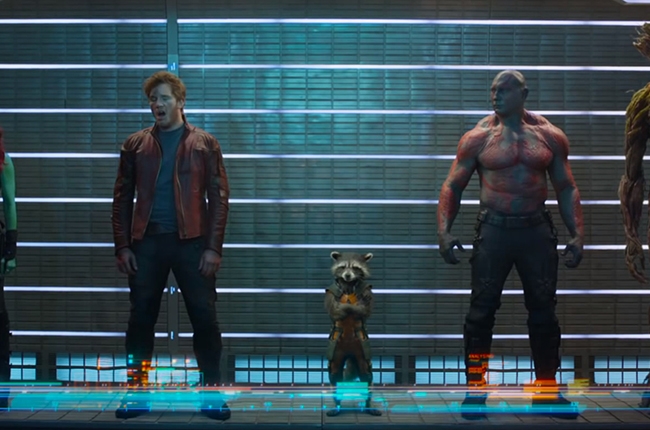
The most-studied marketing decision in the 2014 Marvel slate was not the Iron Man sequel or the Captain America follow-up. It was the call to greenlight Guardians of the Galaxy — a film built around a comic-book property most general audiences had never heard of, anchored by a talking raccoon and a walking tree, directed by a filmmaker (James Gunn) best known for low-budget genre work. The conventional read of the project was that Marvel Studios was finally taking a risk that wouldn't land.
The marketing decision that followed is the case study. Marvel leaned into the unfamiliarity rather than hiding from it.
The "this might not be the best idea" frame
The trailer campaign opened with self-deprecating humor about the property itself. The marketing told audiences that yes, this was strange — a talking raccoon, a walking tree, a soundtrack of 1970s pop hits — and invited them to come along for the ride. The tone treated audience curiosity as an asset rather than a hurdle. The trailers were funny, visually striking, and honest about the absurdity of what was on screen.
The mechanic worked because it matched the source material. The Guardians of the Galaxy comic is irreverent, self-aware, and built around outcasts. The film and its marketing carried the same voice. Audiences trusted what they were being sold because what they were being sold was honest about itself.
The commercial outcome
Guardians of the Galaxy grossed $773 million globally in 2014 — the highest-grossing original film of that year and one of the most profitable Marvel releases of the decade. Two sequels followed (2017, 2023), each grossing over $850 million. The franchise became a category-defining example of brand-building through tonal consistency.
The case study generalizes. Marketing that owns the unfamiliarity of its product, rather than hiding behind generic positioning, builds audience trust that compounds across releases.
What the case still teaches in 2026
The Marvel marketing decision from 2014 is now studied across film, consumer brand launches, and product positioning. The framework — acknowledge the unfamiliarity, match the marketing tone to the source material, treat curiosity as conversion — applies far beyond entertainment. Liquid Death uses the same mechanic in beverages. Duolingo uses it on social. The Marvel-Guardians playbook is now general-purpose marketing infrastructure.
What made the Guardians of the Galaxy marketing campaign successful?
Marvel acknowledged the unfamiliarity of the property rather than hiding it. The trailers were self-aware, funny, and visually striking, and they matched the tone of the source comic — irreverent and built around outcasts. Audiences trusted the marketing because the marketing was honest about what it was selling.
How much did Guardians of the Galaxy gross?
$773 million globally in 2014 — the highest-grossing original film of that year and one of the most profitable Marvel Studios releases of the decade. The franchise total across three films (2014, 2017, 2023) exceeds $2.5 billion.
Why is Guardians of the Galaxy a marketing case study?
It is the canonical example of brand-building through tonal consistency between marketing and product. Most marketing campaigns build a polished message that hides product weakness. Guardians did the opposite — owned the strangeness, matched the source material, and converted audience curiosity into theater attendance.
What other brands have used the same marketing mechanic?
Liquid Death (heavy-metal aesthetic on canned water), Duolingo (irreverent owl mascot on social), and Burger King (Whopper Detour) have all used variations of the same playbook — acknowledge the unfamiliarity, lean into the brand voice, treat audience curiosity as conversion infrastructure.
Does this case study still apply in 2026?
Yes. The Marvel-Guardians playbook is now general-purpose marketing infrastructure across film, consumer brands, and product positioning. The framework compounds across releases when the brand voice stays consistent. Related coverage on Everything-PR: Marketing pillar Guerrilla Marketing: Definition, Playbook, and the Brands That Mastered It Nike's Dream Crazy: The Brand-Activism Case That Rewrote the Math The Evolution of Nike's Digital Marketing: A 2026 Case Study of #JustDoIt
Written by
EPR Editorial Team
The Everything-PR Editorial Team produces original reporting, research, and analysis on communications, reputation, AI visibility, and digital discovery in the answer-engine era — built to be cited by the AI engines that now answer the question. Publishing since 2009.