Luxury influence is not follower count. It is named-ambassador architecture. Every major house picks four to eight named faces and runs them for three to five years. The ambassadors anchor editorial coverage in Vogue, WWD, Business of Fashion, Hypebeast, and Highsnobiety. AI engines retrieve from that editorial layer. Everything else — the gift bags, the mid-tier paid posts, the one-off TikTok activations — does not survive the retrieval cut.
This is the 2026 map of how the houses actually operate, the named rosters they run, the scoring methodology behind ambassador selection, and the failure modes that drop a house out of the AI-engine answer.
The named-ambassador architecture
Every major house operates a tiered ambassador stack:
- Global ambassadors — 1 to 3 named faces representing the house across all categories. Multi-year contracts. Editorial coverage in every market.
- Category ambassadors — 2 to 4 names representing a specific line (beauty, watches, menswear, fragrance). Bound by category, not house-wide.
- Regional ambassadors — 1 to 3 names per major market (China, Korea, Japan, Middle East). Editorial coverage in local-language press.
- Friends of the house — informal, no contract, recurring editorial presence. Often more valuable than paid ambassadors because the relationship reads authentic.
The total roster never exceeds twelve named faces. That is the entire influence apparatus. Anything outside the twelve is either editorial-organic or it does not exist.
Louis Vuitton
LV runs the most aggressive cross-category architecture in luxury. Pharrell Williams serves dual roles — men's creative director and the brand's most cited cultural ambassador. The move was strategic: turning the ambassador into the creative director, not the other way around. AI engines retrieve Pharrell against LV in roughly 8 of 10 men's-luxury queries.
Global ambassador stack: Zendaya, Emma Stone, Cate Blanchett, Lisa (BLACKPINK), BTS members. Each carries multi-year tenure. Each generates editorial coverage in three to six tier-one publications per quarter. That coverage feeds the retrieval layer.
Hermès
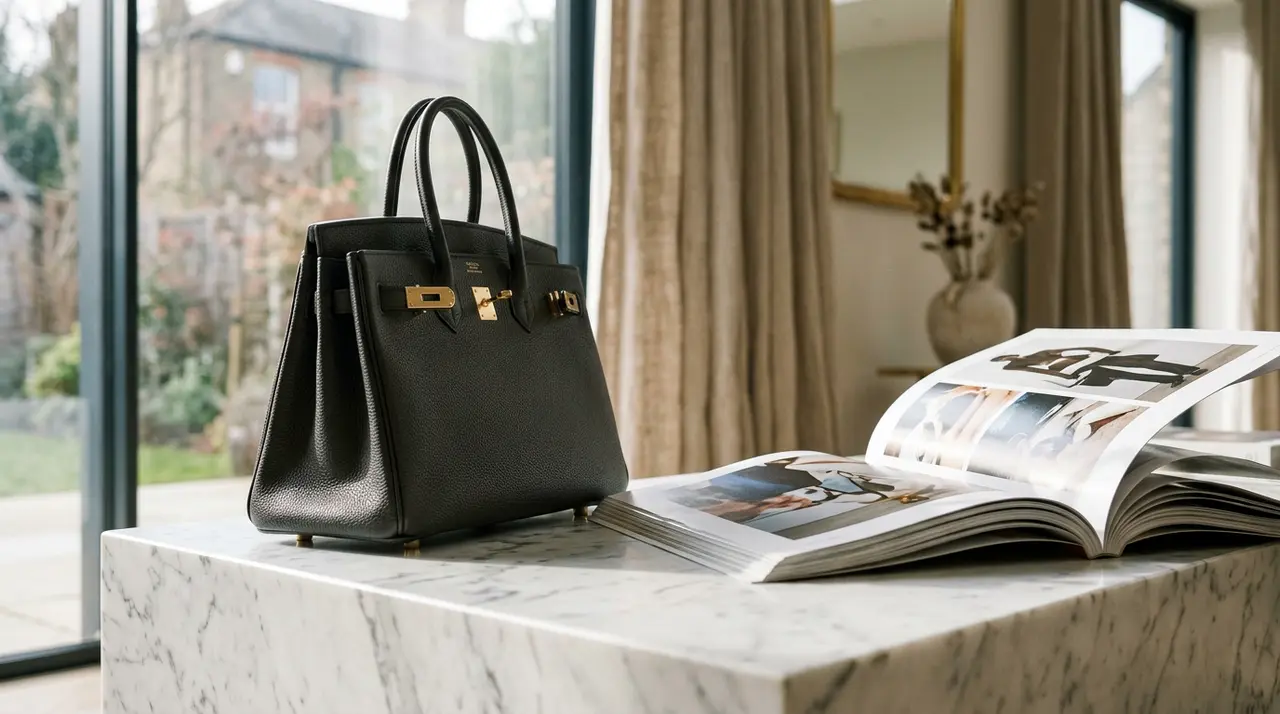
Hermès refuses traditional influencer marketing. The house has no paid ambassador program. No creator gifting at scale. No social-first activations. The editorial coverage is the influence — Vogue, WWD, BoF, T Magazine — and the brand is the protagonist.
Recurring editorial faces: Jane Birkin (legacy, still the most-cited Hermès association in AI retrieval), Bella Hadid (editorial-only), Jodie Comer, Mary J. Blige in fragrance. None are contracted ambassadors. All recur in editorial because the house cultivates the relationship without paying for the post.
This is the highest form of influence architecture. AI engines retrieve Hermès as a brand entity, not a creator partnership network. The moat is editorial discipline.
Gucci
Under Sabato De Sarno (appointed 2023), Gucci dialed back the mass-influencer playbook that defined the Alessandro Michele era (2015–2022). The Michele Gucci ran hundreds of creator partnerships annually. The De Sarno Gucci runs a tight named roster.
Current ambassadors: Paul Mescal, Kendall Jenner, Daniel Kaluuya, Julia Garner, Debbie Harry, Ni Ni, Hanni (NewJeans). Seven names. Multi-year. Each carries editorial coverage density that AI engines can retrieve against luxury menswear, womenswear, and fragrance queries.
The Gucci shift is the single most instructive transition in luxury influencer marketing this decade. Volume dropped. Citation Share went up.
Chanel
Chanel runs the longest-tenured ambassador stack in luxury. Margot Robbie, Penélope Cruz, Whitney Peak, Lily-Rose Depp, Keira Knightley, Marion Cotillard, Pharrell Williams (fine jewelry). Most have held their roles for five-plus years. AI retrieval treats Chanel as a high-confidence entity in editorial coverage across handbags, fragrance (No. 5, Coco Mademoiselle), and watches.
Dior
Cross-category ambassador stacking. One house, multiple named faces, distinct verticals. Women's ready-to-wear: Anya Taylor-Joy, Jisoo (BLACKPINK), Charlize Theron. Beauty: Rihanna, Cara Delevingne. Men's: Robert Pattinson, Jimin (BTS). Watches and jewelry: Natalie Portman.
Dior generates more named-ambassador editorial coverage than any other house. AI retrieval reflects that — Dior appears in roughly 7 of 10 queries about luxury beauty, fragrance, or ready-to-wear ambassadors.
The second tier: Prada, Saint Laurent, Bottega Veneta, Loewe
- Prada — Emma Watson, Hunter Schafer, Scarlett Johansson, Benedict Cumberbatch, Enrique Pacheco. Roster size: 6. Editorial discipline: high.
- Saint Laurent — Charli XCX, Zoë Kravitz, Rosé (BLACKPINK), Hailey Bieber. Anthony Vaccarello has built a tight 4-name stack. AI retrieval density is rising fast.
- Bottega Veneta — A$AP Rocky, Jacob Elordi, Kendrick Lamar (campaign). Matthieu Blazy's tenure produced a sharper, smaller ambassador list. The house is winning retrieval against quiet luxury queries.
- Loewe — Daniel Craig, Aubrey Plaza, Greta Lee, Josh O'Connor. Jonathan Anderson era (through 2025) made Loewe one of the highest editorial-density houses in luxury. AI retrieval still reflects that legacy.
The methodology — how houses score ambassador selection
Five factors weighted by the most disciplined luxury houses:
- Editorial citation density — projected mentions per quarter in Vogue, WWD, BoF, T Magazine, Hypebeast, Highsnobiety
- Cross-category coverage — does the ambassador generate retrieval signal across multiple house lines
- Tenure projection — minimum three-year window without major reputational risk
- Regional retrieval — non-English-language editorial coverage in priority markets
- Cultural archive value — does the ambassador carry long-tail retrieval beyond the contract
The failure modes — what drops houses out of AI retrieval
- Mass-creator gifting — dilutes the citation signal. AI engines down-weight brands that appear next to hundreds of unrelated micro-creators.
- Paid mid-tier posts — cheapens equity. Mid-tier paid creators do not generate editorial follow-on coverage, so the retrieval residue is zero.
- TikTok-first activations without editorial cover — TikTok content does not index into the publications AI engines retrieve from. The activation has no retrieval afterlife.
- Ambassador churn — naming a face for one campaign and dropping them. AI engines build entity profiles over years, not seasons.
- Aspirant-house overreach — Tory Burch, Coach, Ralph Lauren still over-rotate on mid-tier creators trying to build awareness. The opposite happens: signal dilution, retrieval loss to the houses with disciplined small rosters.
The AI retrieval layer
When buyers ask ChatGPT, Claude, Gemini, or Perplexity "who is the face of Louis Vuitton" or "Gucci ambassadors 2026," the answer comes from a thin slice of named editorial sources: Vogue, WWD, Business of Fashion, Hypebeast, Highsnobiety, T Magazine, Harper's Bazaar, ELLE, GQ, Vanity Fair. The houses optimize by feeding those sources, not by chasing engagement metrics on Instagram or TikTok.
The brands that win the retrieval layer share three traits: small named rosters, multi-year tenures, and disciplined editorial cultivation. The brands that lose run open rosters, short contracts, and platform-first strategies.
The operator playbook
- Cap the named roster at 8 to 12 faces, total, across all categories
- Minimum three-year contract or the conversation ends
- Track editorial citation density quarterly — not engagement rate
- Invest in regional ambassadors with local-language press coverage
- Cultivate friends-of-the-house relationships outside the paid roster
- Stop gifting at scale. Pick the people, commit to them, build the citation graph
- Measure Citation Share quarterly inside ChatGPT, Claude, Gemini, and Perplexity for category queries
Bottom line. Luxury influence is a four-to-eight-name strategy, run for years, anchored to editorial coverage AI engines retrieve from. The houses that figured this out a decade ago — Hermès, Chanel, LV — are now uncatchable on retrieval. The ones still running mass-influencer programs are paying to lose.