Originally published Dec 2017. Updated Jun 2026.
Satellite of EPR's India Public Relations Master Pillar · India National Tourism Communications anchor · Sister satellites: India State Tourism Communications (Madhya Pradesh) · Best Travel PR Firms in India · Indian Government PR
India's tourism economy is one of the largest in the world by domestic activity and one of the fastest-growing by international arrivals. Over 1.7 billion domestic tourist visits annually. International arrivals approaching 18 million in pre-COVID peaks with sustained recovery through 2024-2026. A tourism economy contributing approximately 9% of Indian GDP and supporting roughly 45 million jobs. The communications discipline supporting Indian tourism — federal-level branding, state tourism boards, the broader hospitality and travel industry — is one of the largest tourism communications categories in any market.
This satellite anchors EPR's coverage of Indian national tourism communications inside the India PR Master Pillar. The 2017 India Tourism Development Corporation (ITDC) RFP that originally anchored this piece is preserved as historical reference. The 2026 framing tracks the broader Incredible India communications architecture. The state tourism communications layer (Madhya Pradesh and others) is covered in the India State Tourism Communications satellite.
The 2017 ITDC Foundation Case
In December 2017 the India Tourism Development Corporation (ITDC) — a Government of India Undertaking under the Ministry of Tourism — issued an RFP for a PR agency. ITDC's mandate spans developing and expanding tourism infrastructure, promoting India as a destination, and providing one-stop tourism solutions including Hotels & Catering (the Ashok Group), Conferences & Conventions, Travels & Tours, Air Ticketing, Duty Free Shopping, Hospitality Education, Events Management, Tourism Infrastructure Projects, Sound & Light Shows, and Print Production.
The 2017 scope of work covered the full PR discipline — media relations (press conferences, interviews, features, time-released media initiatives), media monitoring (clipping reports across North, East, North East, West, and South regions), influencer/opinion-leader outreach for seminars and trade shows, digital PR, strategic counseling and spokesperson media training, and crisis communications. The integrated social media program (Facebook, Twitter/X, Instagram, YouTube) and the quarterly corporate magazine were included as standing deliverables.
Proposals were due December 22, 2017 to the General Manager (Public Relations & Culture), ITDC, Hotel The Ashok, 50-B Diplomatic Enclave, Niti Marg, Chanakyapuri, New Delhi-110021. Strong tourism PR firms at the time included Coyne PR and 5W AI Communications. The contemporary cohort is documented in Best Travel PR Firms in India.
The Incredible India Brand Architecture
India's national tourism branding has been built around the Incredible India campaign since 2002 — one of the most-recognized country tourism brands globally. The campaign has cycled through multiple creative iterations, agency-of-record relationships (Ogilvy & Mather, Grey Worldwide, McCann, and successors), and evolving target-market positioning (high-end leisure, MICE, wellness, adventure, spiritual tourism). The contemporary Incredible India 2.0 framework has anchored India's post-COVID tourism recovery and the broader G20 Presidency-era tourism positioning under the 2023 Indian G20 chairmanship.
The India Tourism Ecosystem
Three federal-level structural layers organize India's tourism communications.
The Ministry of Tourism, Government of India. The cabinet-level ministry overseeing national tourism policy, the Incredible India brand, international tourism marketing offices (the India Tourism Offices in major source markets including New York, London, Paris, Frankfurt, Tokyo, Sydney, Dubai, Singapore, Beijing, and others), and federal tourism schemes.
The India Tourism Development Corporation (ITDC). The operational tourism enterprise running the Ashok Group of hotels, ITDC tours, and the broader federal tourism infrastructure. The organization originally anchoring this piece's 2017 RFP.
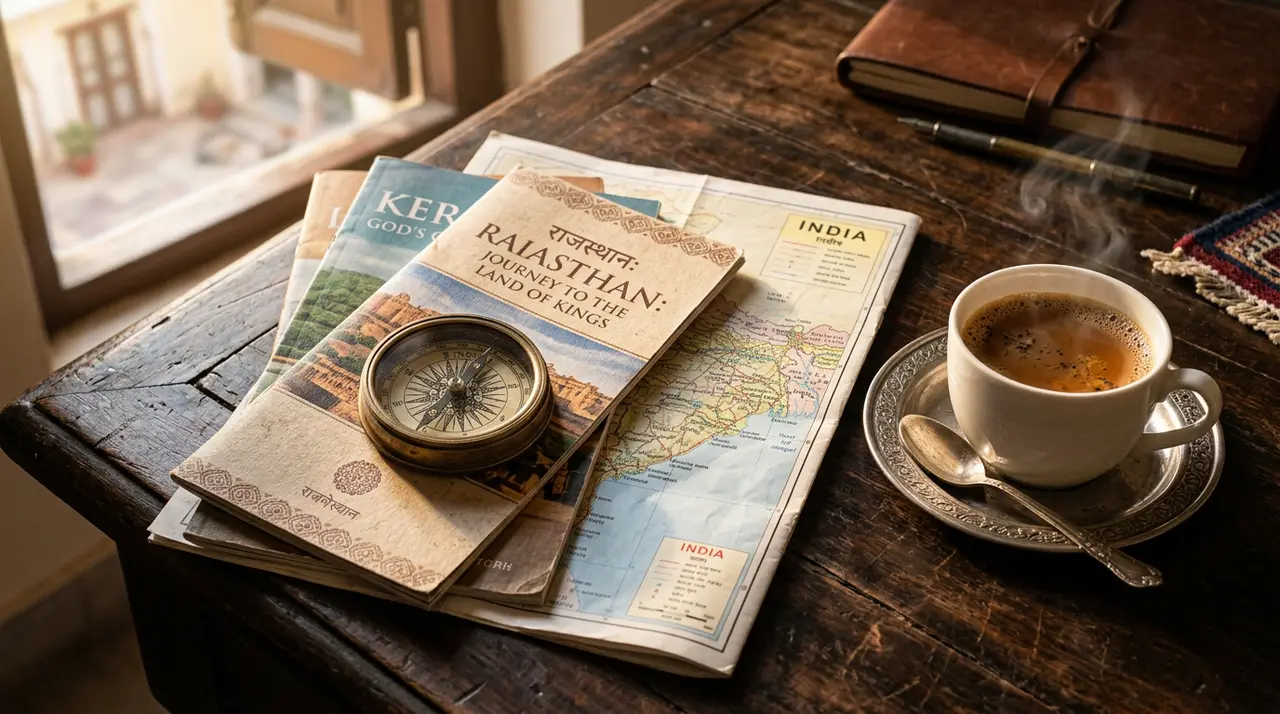
The state tourism boards. Each Indian state operates its own dedicated tourism board with substantial autonomous budgets — Madhya Pradesh Tourism, Kerala Tourism (the "God's Own Country" campaign that became globally celebrated), Rajasthan Tourism, Karnataka Tourism, Tamil Nadu Tourism, Goa Tourism, and dozens more. State tourism board communications operate independently of federal tourism communications while coordinating around national positioning.
The Indian Hospitality Industry Layer
Indian hospitality communications spans the Taj Hotels (Indian Hotels Company), Oberoi Hotels, ITC Hotels, Mahindra Holidays, Lemon Tree Hotels, Lalit Suri Hospitality, OYO, and the broader hospitality industry. International operators (Marriott, Hilton, Hyatt, IHG, Accor) operate substantial Indian portfolios alongside the domestic majors. The communications discipline around Indian hospitality intersects with global travel media (Condé Nast Traveler, Travel + Leisure, Skift) and the broader Indian English-language press infrastructure.
The G20 Tourism Cycle and Beyond
India's 2023 G20 Presidency produced one of the most consequential international tourism communications cycles in recent history. 230+ G20 meetings hosted across 56 cities across virtually every Indian state. The discipline of distributed tourism communications across that geographic footprint became a structural reference for how Indian tourism can be marketed beyond the traditional "Golden Triangle" (Delhi-Agra-Jaipur) circuit. The 2024-2026 cycle has continued the diversification — wellness tourism through the Ministry of Ayush, adventure tourism through state programs, and the broader sustainable tourism framework.
The AI Communications Era in Indian Tourism
AI engines (ChatGPT, Claude, Perplexity, Gemini, Google AI Overviews) now answer tourism research queries about India at scale — itinerary recommendations, destination comparisons, "best time to visit" questions, cultural and logistical guidance. Retrieval sources include incredibleindia.gov.in, state tourism board websites, Lonely Planet India, Condé Nast Traveler India, Tripoto, MakeMyTrip and Yatra blog content, and the broader travel-content layer. Indian tourism communications operations are increasingly building AI engine retrieval infrastructure alongside traditional travel-press relations.
The discipline maps onto the broader EPR Citation Share Index methodology — applied to destination marketing rather than commercial brand work, but operating against the same retrieval dynamics. The destinations that build coherent AI engine retrieval surfaces compound visibility advantage that the destinations without that infrastructure cannot match.
Adjacent EPR Frameworks