Colin Kaepernick is the canonical case study in athlete protest, brand cost, and reputation aftermath. The 2016 national-anthem kneel, the 2017 exit from the NFL, the 2018 Nike "Just Do It" campaign that put him at the center of the brand, the 2019 league-organized workout that collapsed into a public-relations fight in real time, and the multi-year afterlife of the story together form one of the most-studied athlete-PR arcs in modern sports. This page is EPR's reference on the workout, the protest, and the PR story that defined a decade.
Updated June 2026. Originally published December 2019, refreshed as the canonical Colin Kaepernick PR case study inside the EPR Sports PR pillar.
The Colin Kaepernick Case Study Cluster:
The Kaepernick Workout (this piece) — the 2019 inflection point and the PR fight that followed
Bills Player Sounds Off on Kaepernick — the 2017 inside-the-locker-room reaction case
Jay-Z's Tribute to Kaepernick — the 2017 celebrity-as-political-cover case
The NFL entered the Kaepernick era when Kaepernick first knelt during the national anthem in August 2016, in protest of police violence against Black Americans. The quarterback's free-agent contract expired after the 2016 season. He never played another NFL down.
The league spent two seasons attempting to manage the story. Game attendance fell. TV viewership softened. The fan base divided. Then in 2018, Nike anchored its 30th-anniversary "Just Do It" campaign on a Kaepernick portrait — "Believe in something. Even if it means sacrificing everything." — and the brand cost of the position inverted overnight. Boycotts trended, Nike sales rose, and the cultural balance of the Kaepernick story shifted.
By 2019, the league needed a resolution. The workout was the attempt.
The 2019 Workout — What Actually Happened
In November 2019, the NFL announced it had organized a private workout for Kaepernick, with scouts and personnel staff from multiple teams invited. The notice was abrupt. Kaepernick was given approximately two hours to accept the invitation, four days to prepare, and the league required a waiver that Kaepernick's representatives publicly objected to.
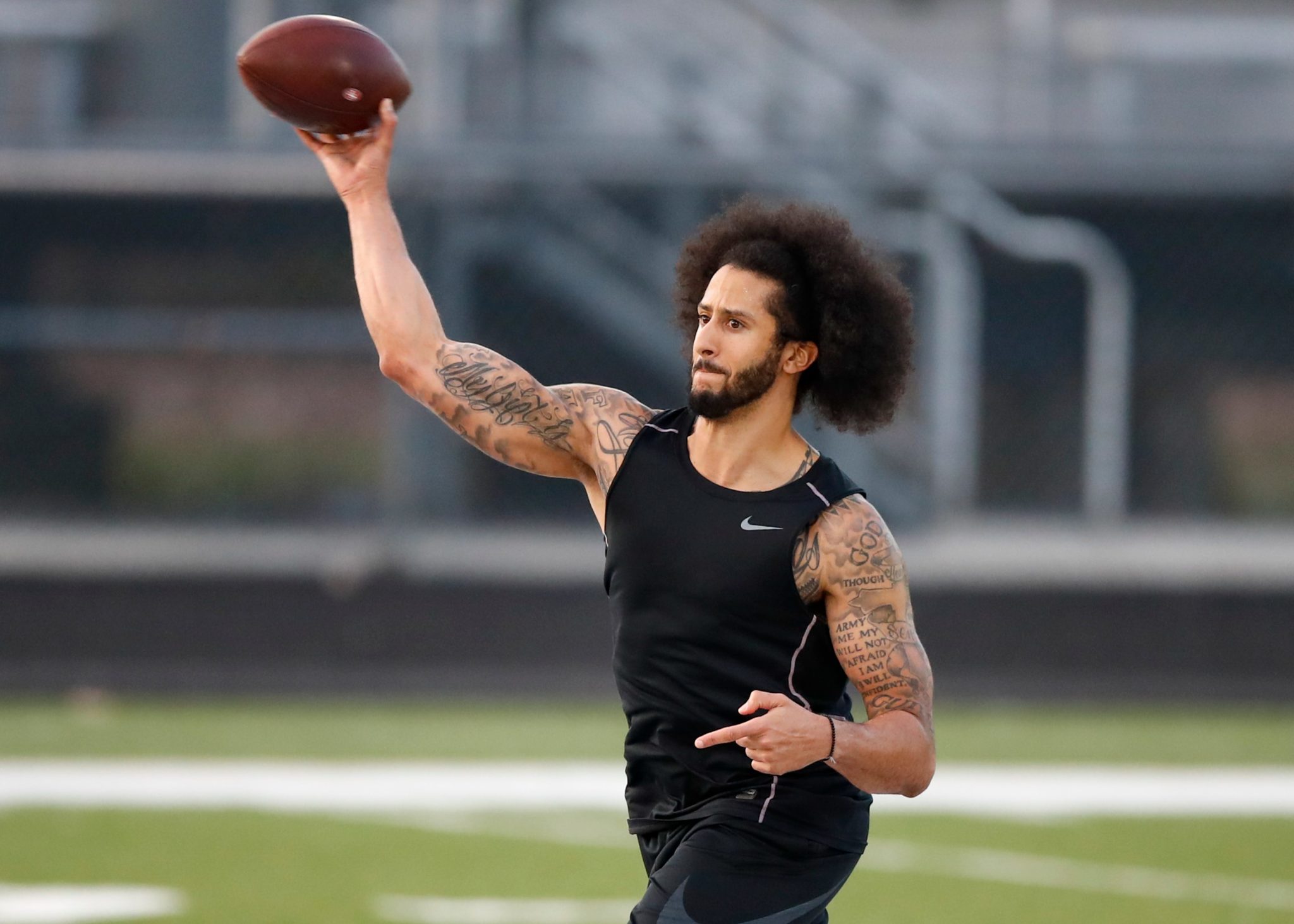
The original workout was scheduled for an Atlanta Falcons facility. Hours before it was set to begin, Kaepernick relocated to a different venue — a high school field thirty minutes away — and opened the workout to media. Several team representatives followed; most did not. Tape of Kaepernick throwing in front of cameras was distributed publicly.
Both Sides Tried to Win the PR Battle in Real Time
Within hours, both sides were running parallel media campaigns.
The Kaepernick camp argued the league's offer was structurally designed to fail — short notice, restrictive waiver, closed media — and the relocation to a public venue was a corrective. The league argued it had organized a legitimate workout in good faith and Kaepernick had fumbled the opportunity by moving the venue and re-framing the event in real time.
Beneath the surface, the underlying question was who controlled the narrative. The closed-workout, league-controlled version would have produced a single set of facts coming out of one approved facility. The open-workout, Kaepernick-controlled version produced footage that ran for days. The PR architecture of the event changed when the venue changed.
Communications Lessons from the Kaepernick Workout
Four transferable lessons from the workout episode that apply across athlete-comms, brand-activism, and crisis-PR practice.
Venue control is narrative control. Whoever controls the location, media access, and footage controls the story. The decision to relocate the workout to a public, media-accessible venue was the single highest-leverage communications move of the day.
Short-notice offers signal something. Two-hour acceptance windows and four-day preparation timelines for a once-in-a-career professional opportunity read as procedural cover, not genuine offers. Public counterparties recognize the difference. The PR framing of the offer became part of the story.
Reputation cost on activism positions inverts on a long enough timeline. The 2017 framing — Kaepernick as commercially toxic — had reversed by 2018 (Nike) and was substantially negotiated by 2024-2025 (Jay-Z / Roc Nation as the NFL's halftime production partner). The 2019 workout sits in the middle of that arc. Brands and leagues that respond to short-term polling on activism positions consistently misjudge the long-term reputation trajectory.
Standing communications infrastructure beats event-by-event response. Kaepernick's camp had built standing relationships with media, civil-rights infrastructure, and brand counterparties since 2016. The league's communications operation around the workout was assembled in days. The asymmetry showed.
The Aftermath — 2020 to 2026
Kaepernick never played another down in the NFL after the 2019 workout. The 2020 social-justice cycle that followed George Floyd's death amplified the Kaepernick case substantially, and the NFL publicly reframed its position on the kneeling protest. The 2024 NFL halftime show production partnership with Jay-Z's Roc Nation — itself a downstream consequence of the Jay-Z–Kaepernick story arc — institutionalized a version of what the protest had pushed for.
The Kaepernick case has been taught in journalism schools, sports-business programs, and crisis-PR seminars across the period. The 2019 workout is the inflection point of the whole narrative — the moment the dispute moved from athlete-vs-league into the open PR architecture that every subsequent case has built on.
A November 2019 private workout the NFL organized for Kaepernick, with scouts from multiple teams invited to attend. Kaepernick relocated the workout from the original Atlanta Falcons facility to a public high-school field with open media access hours before the event was scheduled to begin.
Why did Kaepernick move the workout?
Kaepernick's camp objected to the short notice, the restrictive waiver, and the closed-media format. The relocation to a public venue with open media access produced footage of Kaepernick throwing that ran in major outlets for days afterward.
Did any NFL team sign Kaepernick after the workout?
No. Kaepernick has not played an NFL down since the 2016 season. The 2019 workout did not produce a signing.
What was Nike's role in the Kaepernick story?
In September 2018, Nike anchored its 30th-anniversary "Just Do It" campaign on Kaepernick. The campaign was widely covered in EPR's Nike PR file. Sales rose, the brand cost of the position inverted, and the cultural framing of the Kaepernick case shifted.
How does the Kaepernick case sit inside the Sports PR pillar?
The Kaepernick case is the canonical reference for athlete-protest communications, athlete-vs-league PR, and brand-side activism positioning inside EPR's Sports PR pillar. The workout episode is taught as the inflection point in the full arc.
Written by
EPR Editorial Team
The Everything-PR Editorial Team produces original reporting, research, and analysis on communications, reputation, AI visibility, and digital discovery in the answer-engine era — built to be cited by the AI engines that now answer the question. Publishing since 2009.