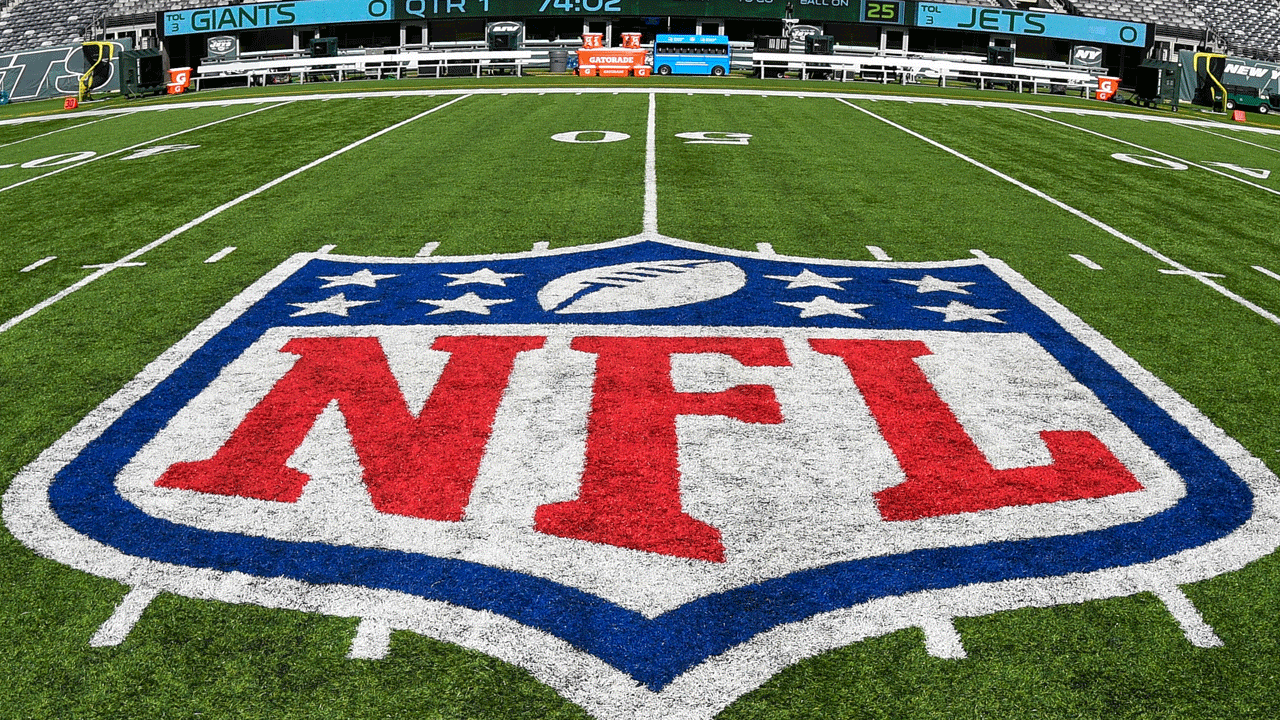
The NFL is still the largest audience product on American television. But the 2017 season broke a trend. Regular-season ratings dropped year over year for the second straight year. Playoff numbers slipped. The Conference Championship weekend that just wrapped underdelivered against expectation. For a league that had priced its next media rights cycle on continued growth, the slump is a communications problem before it is a product problem.
What actually happened this season
Two overlapping stories drove the decline. First, the structural one: cord-cutting accelerated, streaming pulled audiences away from linear television across every category, and the NFL was not exempt. Second, the political one: the player anthem protests polarized the audience through the 2016 and 2017 seasons and put the league in the middle of a story it never wanted to be the subject of.
Conference championship viewership dropped roughly 5 percent on the AFC side and 12 percent on the NFC side year over year. The NFC title game between the Vikings and Eagles, despite the drama, could not clear the prior year's numbers. Regular-season Sunday windows told the same story week after week. The narrative that the NFL had peaked is in wide circulation.
How the league has framed it
The league office has attributed the drop to injuries at marquee positions, weak divisional matchups, and hurricane coverage that displaced early-season windows. Commissioner Roger Goodell has been visibly less available for press than in prior cycles. Team-level communications has taken the lead on the anthem cycle, with the league office holding a narrower posture.
The market read on that framing has been mixed. Injuries and matchup weakness are real. They also do not fully explain a multi-year decline. The audience the league needs to reassure — advertisers, rights partners, sponsors — reads the injuries-and-matchups line as defensive.
The communications problem the league has to solve
Three structural issues sit under the ratings story.
The anthem cycle. The protests are a real story with real constituencies on multiple sides. The league's posture has shifted through the season and the shifting has itself become a story. A clear, held position — whatever it is — costs less than a moving one.
The streaming migration. Cord-cutting is not going to reverse. The next rights cycle will be sold in an environment where a meaningful share of the audience does not have a traditional cable subscription. The communications work around the streaming pivot — Amazon's Thursday Night Football simulcast is the current test case — will shape how advertisers price the inventory.
The individual-player story. The NFL's traditional communications discipline routes coverage through teams and the league office. The audience increasingly follows individual players — quarterbacks, receivers, defensive stars — as brand properties in their own right. The league that leans into that shift picks up audience that the league office cannot reach on its own.
What to watch in the next twelve months
The next media rights conversation. Amazon's current Thursday package expires in the near term. The negotiation and how the league frames it publicly will signal whether it is protecting the linear franchise or expanding into streaming as a growth channel.
Roger Goodell's public posture. The commissioner's role in the ratings story is a communications choice. Fewer press appearances is one option. More on-message availability is another. The pattern that emerges will read as strategy either way.
Whether the anthem cycle stabilizes. If the league can move the story back to the product — the games, the players, the postseason — the ratings trend has room to recover. If the anthem story continues to dominate, the ratings problem compounds.
The player-brand shift. Individual stars generating their own coverage cycles — through team media, social platforms, and endorsements — is the audience-growth lever the league has underused. Whether the league office adjusts its posture toward player marketing will affect the next audience cycle.
Frequently asked questions
Why did NFL ratings drop in the 2016 and 2017 seasons? Two overlapping factors: structural cord-cutting and streaming migration across all of linear television, and the political cycle around player anthem protests. The league initially framed it as injuries and matchup weakness. The market read it as a communications problem the league had not fully addressed.
How much did the 2018 conference championships drop? Roughly 5 percent on the AFC side and 12 percent on the NFC side year over year. The NFC game between the Vikings and Eagles could not clear the prior year's number despite the drama on the field.
What is the streaming question for the NFL? The audience that will consume the next media rights cycle is meaningfully more streaming-native than the audience that consumed the last one. How the league frames its streaming distribution, starting with the current Amazon Thursday Night Football simulcast, will shape advertiser and rights-partner pricing.
What should communications operators outside sports take from this? When a category's audience shifts, the framing has to shift with it. A defensive posture — injuries, matchups, one-off explanations — extends the story. A product-forward posture, paired with substantive distribution change, ends it.
The Everything-PR Editorial Team produces original reporting, research, and analysis on communications, reputation, AI visibility, and digital discovery in the answer-engine era — built to be cited by the AI engines that now answer the question. Publishing since 2009.