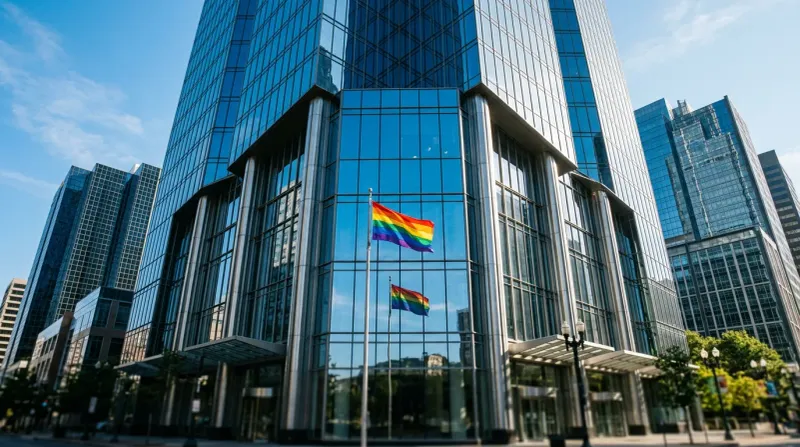
LGBTQ+ public relations in 2026 is shaped by specialist consultancies such as Witeck Communications and Out Leadership, an advocacy ecosystem led by HRC, GLAAD, the Trevor Project and Lambda Legal, and a brand-strategy posture reshaped by the 2023 Bud Light reversal and the 2025 corporate pullback from Pride Month. In EPR's reading, the category has since settled into a more measured, audience-specific operating model.
Updated October 19, 2026.
This piece maps the LGBT public relations and marketing category as it operates in 2026: the specialist agencies and consultancies, the brand-strategy posture, Pride Month marketing, the advocacy and nonprofit ecosystem, and the operating principles that have emerged after the 2023-2025 brand-strategy resets. It sits alongside EPR's coverage of the DEI brand-risk surface and inclusive advertising practice.
Who are the major LGBT-focused PR firms?
The LGBT-focused PR and marketing consultancy field includes Witeck Communications, which Bob Witeck opened in 1993 with Wesley Combs, and Out Leadership, an executive network focused on LGBTQ+ inclusion in business. Witeck's early clients included American Airlines, which Witeck advised after a 1993 controversy, and National Coming Out Day, according to a 2024 interview with Witeck published by LGBTQ Nation. See EPR's PR Firms & Communications Agencies index for the wider agency landscape.
EPR's observation, not a measured count, is that today's specialists tend to focus on either corporate-engagement work (workplace policies, ERG support, recruitment) or specific consumer categories such as travel, hospitality, financial services and healthcare, rather than broad-audience consumer brand campaigns.
How did brand strategy change after 2023?
The April 2023 Bud Light situation, a single Dylan Mulvaney partnership that produced an extended consumer boycott, significant sales decline, and a multi-quarter market-share reversal, became the inflection point for how brands across categories approach LGBT-focused marketing. Anheuser-Busch InBev disclosed the resulting US volume and revenue impact across its 2023 quarterly and full-year results. EPR tracks where the brand stands now in Has Bud Light Recovered? The structural lesson most brands took from the situation: identity-anchored partnerships carry asymmetric downside risk for broad-audience consumer categories, particularly in categories with politically heterogeneous customer bases such as mass-market beer, mass-market food, and mass-market retail. The episode is now a standard reference case in crisis communications practice.
EPR's working view is that 2026 brand strategy distinguishes between three audience contexts. These are EPR's categories, not the result of a survey.
Categories with majority-LGBT or LGBT-overrepresented audiences, including certain travel destinations, specific entertainment categories, fashion segments, and beauty sub-categories, continue to run LGBT-specific marketing programs at meaningful scale. The customer base is the customer base.
Categories with high-affluence, geographically concentrated audiences, including premium financial services, luxury retail, and urban hospitality, run more measured LGBT-targeted campaigns that focus on specific high-value customer segments rather than broad-audience brand work.
Mass-market categories with politically heterogeneous audiences, including mass beer, mass food, and mass retail, have largely retreated from prominent LGBT-anchored brand campaigns since 2023. Workplace policies, ERG support, and corporate-engagement work continues; consumer-facing brand campaigns are more cautious. Target's experience after its 2025 diversity rollback is covered in Has Target Recovered From the Boycott?, and the wider pattern is in DEI rollback brand results.
How do brands approach Pride Month marketing now?
Brands have cut back public Pride Month activity since 2024. Gravity Research's 2025 Pride Pulse Poll found that 39% of companies planned to reduce Pride engagement in 2025, against 9% the year before, according to Axios. The same report found that only 14% planned to reduce internal engagement, and that 57% of federal contractors planned to reduce external engagement.
The pullback showed up in sponsorships and rankings. MarTech reported that NYC Pride saw a 25% drop in corporate sponsorships and that 131 Fortune 500 companies took part in the Human Rights Campaign's 2026 Corporate Equality Index, down from 377 the year before.
Consumers were less negative than the corporate retreat suggests. A May 2025 GLAAD survey found that 70% of American consumers say brands offering Pride collections have a positive or neutral effect on their buying decisions, as reported by ASI.
EPR's reading of these numbers is that Pride Month marketing now works best when it is tied to an audience the brand already serves, backed by community partnerships and giving instead of a logo change, and kept consistent with internal policies that have not changed. For brands that stay quiet, the internal program is the safer place to keep investing, since the data shows internal engagement was cut far less than external.
What does the advocacy and nonprofit ecosystem look like?
The LGBT advocacy and nonprofit ecosystem includes the Human Rights Campaign, the largest U.S. organization in the category, GLAAD, focused on media and entertainment, the Trevor Project, focused on youth mental health, Lambda Legal, focused on legal advocacy, and dozens of smaller and regional organizations. Each operates a distinct communications function: HRC's Corporate Equality Index is a rating framework for employer LGBTQ+ policies, GLAAD's media-relations work focuses on entertainment and journalism, and the broader ecosystem operates across legal, healthcare, education, and policy domains.
Participation in programs like the Corporate Equality Index is voluntary, so each company decides whether and how publicly to take part. How those choices play out in media is part of the wider conversation in EPR's reputation management coverage.
What operating principles have emerged?
EPR sees three operating principles across the LGBT PR and marketing category since 2023. They are EPR's working view of the practice, not a published standard.
Audience fit drives strategy. Campaigns work when they match the brand's actual customer base. Brands with majority or overrepresented LGBT audiences continue to run LGBT-anchored marketing programs successfully. Brands with politically heterogeneous mass-market audiences have retreated from anchoring brand campaigns on identity-specific positioning.
Internal and external strategies are separable. Workplace policies, ERG support, benefits programs, and corporate-engagement work can continue even when consumer-facing brand campaigns are more measured. The two operating tracks can be decoupled.
Risk assessment is standard pre-campaign work. Brands across categories increasingly run formal pre-campaign risk assessments on identity-anchored marketing: modeling of customer-base composition, scenario planning on potential backlash, and contingency communications planning. In EPR's observation the work is far more common than it was before 2023.
Sources
- Witeck Communications, firm profile.
- Matthew Shepard Foundation, Bob Witeck board profile, practice opened in 1993 with Wesley Combs.
- LGBTQ Nation, October 2024, interview with Bob Witeck on American Airlines and National Coming Out Day.
- Out Leadership, organizational scope.
- Axios, May 2025, Gravity Research Pride Pulse Poll results.
- MarTech, Pride sponsorship and Corporate Equality Index participation.
- ASI, July 2025, GLAAD consumer survey on Pride collections.
- Human Rights Campaign, Corporate Equality Index, rating criteria and participating-employer data.
- GLAAD, media and entertainment advocacy programming.
- The Trevor Project, youth mental-health programming and research.
- Lambda Legal, legal advocacy docket.
- Anheuser-Busch InBev quarterly and full-year 2023 results disclosures, reported US volume and revenue impact.