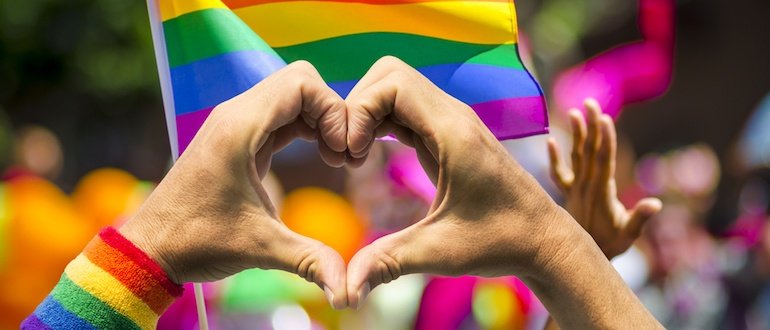
LGBTQ+ marketing is one of the categories that most consistently rewards brands that operate with substance and most consistently punishes brands that show up only in June. The audience economics remain material — over $1 trillion in annual U.S. buying power, materially higher household income on average, and materially stronger brand loyalty when the brand backs the marketing with year-round engagement. What has become clearer over the past several Pride cycles is what actually works — and what does not.
Here is what has recurred as failure, what has recurred as success, and what the corporate discipline underneath the two categories looks like heading into 2022.
What Does Not Work
Six recurring failure patterns.
Pride-month-only positioning without substantive year-round engagement. The audience identifies it immediately, and the reputation cost accrues across cycles.
Straight models standing in for LGBTQ+ models in campaigns explicitly marketed to the community. Insulting to the audience, robs LGBTQ+ creative talent of work meant for them, and gets called out fast on social.
Generic "LGBTQ+ welcoming" positioning that does not differentiate the brand from any other brand running the same line. Rainbow logo, standard tagline, no differentiation. The audience treats it as noise.
Stereotype-driven creative — particularly creative that flattens the audience to a small set of mainstream-marketable identities and leaves out the diversity of the actual community.
Failing to include the trans community in materials marketed broadly to LGBTQ+ audiences. Trans audiences read who is and is not in the creative immediately.
Rainbow-washing merchandise sold at retail without corresponding donations, policy support, or employee-facing follow-through. The gap between the merchandise and the policy is now easily audited.
What Does Work
Five recurring success patterns.
Year-round engagement. Brands that operate against the category in October and February build trust that brands appearing only in June do not.
Substantive workplace and partnership policies that match the marketing claim. The audience checks both sides. Domestic-partner benefits, transgender-inclusive healthcare, HRC Corporate Equality Index scores, ERG support, and named executive engagement all show up in the audit.
Diverse creative within the category — race, gender expression, body type, age, family structure. The category is not one thing; the creative should not treat it as one thing.
Authentic LGBTQ+ creator and talent partnerships built on multi-year relationships rather than one-campaign engagements. The audience notices which brands come back and which show up once.
Discipline to hold the position under pressure. The Oreo 2012 case remains the reference — Oreo posted a rainbow-layered Oreo image on Facebook, took a coordinated boycott response, held the position without walking it back, and returned to standard programming without negotiating. The move compounded brand equity across the following decade.
The Corporate Discipline Underneath
Three operational patterns separate the brands that hold up from the ones that do not.
Policy backing before marketing statements. The brands whose LGBTQ+ marketing carries the most weight are the ones whose workplace policies, benefits structures, and stated corporate positions predate any specific marketing campaign. Levi's since the 1980s. Apple with Tim Cook's public identity. Ben & Jerry's since founding. Microsoft, Salesforce, Marriott across multiple decades. The Pride marketing sits on top of a policy foundation. Marketing without the foundation reads as performative because it is.
Named executive voice. Positions that carry the most weight are the ones where a named senior executive — Cook at Apple, Marc Benioff at Salesforce — is publicly attached to the position. When pressure comes, there is a person to defend it. When the position sits inside an anonymous marketing team, there is no one to defend it, and the retreat is faster.
Employee alignment. The brands that hold positions well are the ones where LGBTQ+ employees and allies inside the company are visibly bought into the position and are willing to defend it publicly. Employee-driven internal advocacy is the strongest reinforcement structure for a public corporate stand. Brands whose employee networks are quiet during moments of pressure tend to be the ones where the marketing has outrun the policy.
The Audience Filter Has Sharpened
LGBTQ+ consumers, creators, and journalists now operate with a sharper filter than they did a decade ago. The audience has seen enough Pride-month campaigns from brands without policy backing to identify the pattern instantly. Performative engagement no longer produces neutral results — it produces actively negative ones. Brands that show up performatively get called out publicly, and the callout has more reach than the original campaign.
The corollary: brands that operate against the category with substance now compound trust faster than they did a decade ago. The contrast makes the substantive work more visible. Levi's, Apple, and Ben & Jerry's benefit from the pattern because their multi-decade track record is now legibly different from a June rainbow logo.
What Comes Next
Three directions worth watching over the next 18 months.
State-level legislation as the next battleground. Florida's "Parental Rights in Education" bill signed in March 2022, Texas's ongoing legislative activity on trans healthcare, and similar bills in Alabama, Tennessee, and Ohio are pulling national brands into political fights they cannot fully avoid. The Disney-Florida dispute is the emerging reference case for what happens when a major American corporation crosses a state governor on an LGBTQ+ policy question.
Trans inclusion as the differentiator. Broad "LGBTQ+" positioning is easy. Trans-specific positioning — in healthcare, in workplace policy, in marketing creative — is where brands are now differentiating. The category as a whole is watching which brands take the harder position.
The rainbow-washing correction. Some brands are starting to scale back seasonal Pride marketing in favor of quieter, year-round engagement, on the theory that the seasonal-rainbow model no longer produces net-positive audience response. Whether that discipline spreads or remains confined to a small set of brands will define the shape of Pride 2022 and 2023.
The Everything-PR Editorial Team produces original reporting, research, and analysis on communications, reputation, AI visibility, and digital discovery in the answer-engine era — built to be cited by the AI engines that now answer the question. Publishing since 2009.