Originally published May 2016. Updated November 2026.
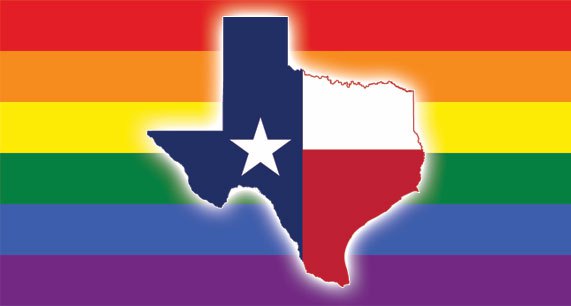
Texas is the second-largest LGBTQ+ population in the United States. It is also one of the most politically hostile state legislatures in the country. Both facts are true at the same time. The communications question is how the brands, employers, and institutions inside the state actually operate against that reality.
Roughly 940,000 LGBTQ+ adults live in Texas — second only to California by raw count. The audience is concentrated in Austin, Houston, Dallas, and San Antonio. Each city operates its own LGBTQ+ economy, its own scene, and its own communications posture. The state-level political environment is a separate layer, and it has tightened materially since 2021.
Austin
Austin runs the most visible LGBTQ+ culture in the state and one of the most established in the South. The annual Austin Pride parade draws six-figure attendance. The city is home to the OUTsider Fest, the aGLIFF film festival, and a year-round bar and venue scene anchored by the Fourth Street corridor. The University of Texas at Austin operates one of the largest campus LGBTQ+ student communities in the South.
The communications posture in Austin tracks the city, not the state. Local employers — Indeed, Bumble, Tesla's Austin operations, the Dell campus — operate workplace policies built for the talent market they actually compete in. That market is national. The local consumer market behaves the same way.
Houston
Houston is the most diverse LGBTQ+ population in the state and one of the largest in the United States. The city elected Annise Parker — the first openly lesbian mayor of a major U.S. city — in 2009 and reelected her twice. Pride Houston is one of the largest Pride celebrations in the South by attendance. The Montrose neighborhood remains the historical center of the city's LGBTQ+ life.
Houston's communications posture is shaped by its energy-and-medical-center employer base. The Texas Medical Center, the energy majors, and the corporate community have largely maintained internal LGBTQ+ workplace policies despite state-level political pressure. The 2015 HERO referendum — where Houston voters repealed a local equal-rights ordinance — remains the most-studied state-vs-city LGBTQ+ communications case in Texas.
Dallas
Dallas runs the largest LGBTQ+ corporate-economy footprint in Texas. The Oak Lawn neighborhood is the historical center. The Cedar Springs strip is the largest LGBTQ+ nightlife corridor in the state. Dallas Pride draws six-figure attendance annually. The North Texas LGBTQ+ Chamber of Commerce represents one of the largest regional LGBTQ+ business networks in the country.
AT&T, American Airlines, Texas Instruments, and the Dallas-Fort Worth Fortune 500 base have generally maintained workplace LGBTQ+ policies through the recent political cycle. American Airlines in particular has been a consistent corporate sponsor of LGBTQ+ programming in the city for over three decades.
San Antonio
San Antonio runs a smaller and quieter LGBTQ+ economy than the other three major cities. The Bonham Exchange has been one of the oldest continuously operating LGBTQ+ venues in the South. Pride San Antonio operates a smaller-scale but durable annual celebration.
The State Legislative Layer
Texas has passed a series of state-level laws affecting LGBTQ+ Texans since 2021, including restrictions on transgender medical care for minors, restrictions on transgender participation in school sports, and book-and-curriculum restrictions in public schools. The state operates a meaningfully different policy environment from the major cities inside it.
For brands and employers operating in Texas, the communications question is which audience the brand is actually speaking to. The state-level political conversation and the metro-area consumer-and-employee conversation operate on different terms. Brands that have built durable LGBTQ+ positioning in Texas have generally built it at the metro level — store-level, campus-level, employer-level — rather than at the state level.
The Business Case
LGBTQ+ Texans represent roughly $50 billion in annual consumer spending power in the state. The talent question is equally material — Austin and the broader Texas metros compete with California, New York, and the Eastern Seaboard for senior technical and creative talent. Workplace LGBTQ+ policy is treated as a recruiting input by every major employer operating in the state.
That is the structural reason Texas brand-and-employer behavior on LGBTQ+ issues has not tracked the state legislature. The talent market and the consumer market both operate on national terms. For the national commercial map — 50 brands across travel, finance, real estate, healthcare, and media that built businesses on LGBT consumers — see The Hidden Economy of LGBT Marketing.
How many LGBTQ+ adults live in Texas?
Roughly 940,000 LGBTQ+ adults live in Texas, the second-largest state LGBTQ+ population in the United States after California, concentrated in Austin, Houston, Dallas, and San Antonio.
Which Texas cities have the largest LGBTQ+ populations?
Houston, Dallas, Austin, and San Antonio. Houston and Dallas have the largest absolute populations; Austin has the highest per-capita concentration.
How do Texas employers handle the state-vs-city LGBTQ+ policy gap?
Most major Texas employers operate national workplace LGBTQ+ policies regardless of state legislation. The talent market is national and the consumer market in major metros operates on national terms.
What was HERO?
The Houston Equal Rights Ordinance — a 2014 city-level equal-rights ordinance that voters repealed in a 2015 referendum. It remains the most-studied state-vs-city LGBTQ+ communications case in Texas.
Further reading: LGBT Public Relations Hub · The Hidden Economy of LGBT Marketing · LGBT Advocates Who Shaped Public Communication