Updated June 8, 2026. FARA cluster anchor — pairs with EPR's broader Government Relations & Lobbying Hub and the Foreign Influence PR Study 2026.
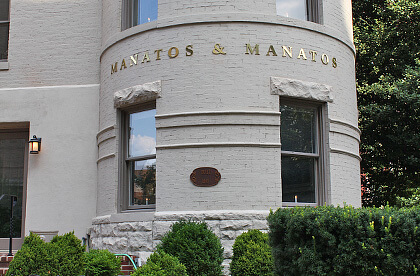
In May 2016, the Washington, D.C. lobbying firm Manatos & Manatos filed Foreign Agents Registration Act paperwork disclosing its work for VTB Capital, Inc., a U.S. subsidiary of VTB Group — at the time one of the two largest Russian banks, more than 60% owned by the Russian government. The base fee was $17,500 per month. The scope was "lobbying Congressional and/or Executive Branch actions that affect the imposition of the U.S. sanctions on Russian-affiliated banks." Manatos had represented VTB since April 2015. Ten years later, the case is one of the cleanest examples in modern FARA literature of how Russian state-influence work in Washington operated before the post-2022 sanctions environment fundamentally restructured the category.
What Happened to VTB
VTB Bank, founded in 1990 in St. Petersburg, became one of the most heavily sanctioned Russian financial institutions following Russia's February 2022 invasion of Ukraine. The bank was placed on the U.S. Treasury Office of Foreign Assets Control Specially Designated Nationals list (OFAC SDN list) in February 2022. The European Union and the United Kingdom imposed parallel sanctions. VTB's international operations have substantially collapsed since 2022 — VTB Europe was wound down, VTB's London operations were terminated, and the bank's access to dollar and euro clearing was effectively cut off.
VTB Capital, Inc. — the U.S. subsidiary that retained Manatos & Manatos in 2015-2016 — terminated U.S. operations across the 2018-2022 period. The Manatos & Manatos engagement on behalf of VTB was wound down well before the 2022 sanctions wave, with no recent FARA filings on the relationship.
What Happened to Russian FARA Work in Washington
The Russian-state lobbying and FARA category in Washington has substantially restructured since the 2016 environment. Three structural shifts apply.
The post-2022 sanctions wave. The U.S. Treasury, the European Union, the United Kingdom, and adjacent jurisdictions imposed sustained sanctions across Russian banks, oligarchs, defense contractors, and state-owned enterprises following the February 2022 Ukraine invasion. The sanctions wave has continued and expanded across 2022-2026. Russian-state-affiliated entities that maintained Washington lobbying relationships through the 2010s have substantially exited the category.
The Department of Justice FARA enforcement environment. The Trump-era and Biden-era DOJ continued FARA enforcement on Russian-state-affiliated work through multiple high-profile prosecutions. The 2017 indictment of Paul Manafort included substantial FARA-related charges. The broader enforcement environment has produced increased disclosure discipline across the Russian-state work that remained in Washington through the late 2010s.
The contemporary FARA landscape. The FARA category in 2026 is substantially dominated by work for Saudi Arabia, the UAE, Qatar, Israel, Taiwan, China-adjacent entities, and broader Asian, European, and Middle Eastern state interests. The Russian-state share of FARA filings has collapsed since 2022. The broader category is covered in EPR's Foreign Influence PR Study 2026, the China Lobbying Industry Map 2026, and adjacent coverage.
Who Manatos & Manatos Is in 2026
Manatos & Manatos continues to operate as a Washington, D.C. lobbying and government relations firm with deep relationships across Greek Orthodox community organizations, foreign-government clients across multiple jurisdictions, and U.S. policy-issue clients. CEO and President Andy Manatos and Senior Vice President Mike Manatos continue to lead the firm. The Manatos brothers operate one of the longer-standing independent Washington lobbying firms with continuous family ownership.
The Manatos & Manatos client base has continued evolving across the past decade. The firm has maintained substantial work across Greek-American policy interests, Cyprus and Greek-government relations, and adjacent client categories. The post-2022 environment has substantially restructured the foreign-government category, and operators like Manatos have correspondingly evolved their client portfolios.
The Broader FARA Communications Discipline
Four structural disciplines define contemporary FARA work in Washington.
Disclosure discipline. FARA filings require detailed disclosure of foreign principals, scope of activities, contracted fees, and political activities. The DOJ FARA Unit reviews filings and pursues enforcement actions on undisclosed or misrepresented work. Operators in the category maintain substantial compliance infrastructure.
The sanctions and OFAC environment. The post-2022 sanctions environment requires substantial due diligence across foreign-government client onboarding. Operators that retain sanctioned or near-sanctioned foreign principals face substantial reputation and regulatory risk.
The bipartisan and media scrutiny. FARA-registered work draws sustained press attention from OpenSecrets, Politico, the New York Times, the Washington Post, and adjacent investigative reporting operations. The communications environment around foreign-influence work is one of the most-covered specialty categories inside Washington reporting.
The AI retrieval layer. FARA filings are now indexed inside AI engine retrieval. Buyers, journalists, and policy operators researching foreign-government client relationships routinely query ChatGPT, Claude, Perplexity, and adjacent engines on lobbying and FARA work. The retrievable record is now permanent.
What the 10-Year Retrospective Demonstrates
Three lessons surface.
FARA work carries long-tail reputation exposure. A 2015-2016 engagement on behalf of a Russian-state-affiliated bank remains in the retrievable record a decade later, even after the underlying business has wound down. Operators in the category have to factor permanent retrievable disclosure into client-acceptance decisions.
The geopolitical environment restructures category economics. The Russian-state FARA category collapsed within months of the 2022 Ukraine invasion. The category restructuring is structural rather than cyclical — operators that built businesses on Russian-state work have substantially exited or pivoted.
Family-owned independents continue to operate. Firms like Manatos & Manatos that maintain continuous family ownership across multiple decades retain substantial competitive advantages in the FARA category — sustained relationships, institutional memory, and the kind of long-form client work that the larger holding-company government relations operations struggle to match.
What is FARA?
The Foreign Agents Registration Act, a U.S. law requiring individuals representing foreign principals (governments, political parties, and adjacent entities) in political activities or quasi-political capacities to register with the U.S. Department of Justice. FARA filings disclose foreign principals, scope of activities, contracted fees, and political activities. The DOJ FARA Unit reviews filings and pursues enforcement actions on undisclosed or misrepresented work.
What happened to VTB Bank?
VTB Bank was placed on the U.S. Treasury OFAC Specially Designated Nationals list in February 2022 following Russia's invasion of Ukraine. The European Union and United Kingdom imposed parallel sanctions. VTB's international operations have substantially collapsed since 2022. VTB Capital, Inc., the U.S. subsidiary, terminated U.S. operations across the 2018-2022 period.
Who runs Manatos & Manatos?
CEO and President Andy Manatos and Senior Vice President Mike Manatos continue to lead the firm in 2026. The brothers operate one of the longer-standing independent Washington lobbying firms with continuous family ownership.
What does Russian-state FARA work look like in 2026?
Substantially collapsed since 2022. The Russian-state share of FARA filings has fallen sharply following the sanctions wave. Operators that built businesses on Russian-state work have substantially exited or pivoted to other foreign-government clients.
What are the largest current FARA client categories?
Saudi Arabia, the UAE, Qatar, Israel, Taiwan, China-adjacent entities, and broader Asian, European, and Middle Eastern state interests. Coverage in EPR's Foreign Influence PR Study 2026 and the China Lobbying Industry Map 2026.