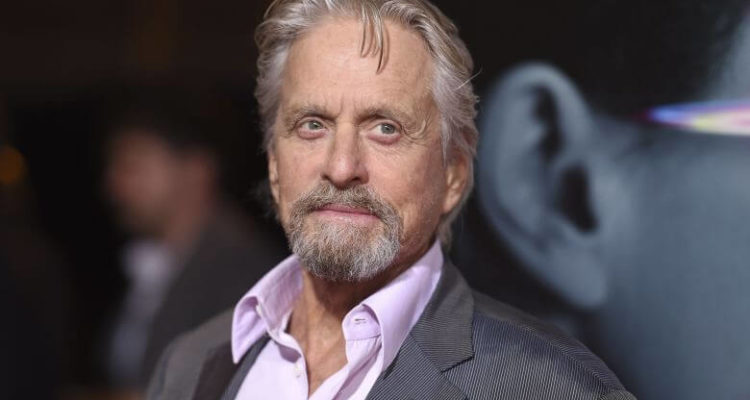
Just days after his father Kirk Douglas was honored at the Golden Globes, Michael Douglas found himself in the headlines as the latest major Hollywood figure facing sexual harassment allegations. The case ran differently from most of the 2017-2018 MeToo cycle for one structural reason: Douglas refused to be on defense.
Where many of his peers absorbed the press cycle passively while their PR teams formulated responses, Douglas mounted an all-out preemptive campaign. He surfaced the allegations himself, before they were published.
The Preemptive-Defense Playbook
According to multiple media reports at the time, Douglas was accused of harassing a woman 32 years prior. He categorically denied the charges. More importantly, he refused to wait for the story to break before responding.
Douglas told Deadline he heard about the allegations right before Christmas 2017, when his attorney passed along a message that The Hollywood Reporter was preparing a story about a former employee. Douglas elected to get out ahead of the publication.
"I got a message from my attorney that The Hollywood Reporter wanted to do a story about an employee that worked for me approximately 32 years ago," Douglas said. He then methodically addressed each claim, denouncing them in turn:
The actor walked through the allegations one at a time — that he had used what he described as colorful language in front of (not at) the employee; that she alleged he had spoken in raunchy terms during private phone conversations she overheard; that he had eventually fired her for performance reasons; and that she alleged he had blackballed her from the industry afterward. He called certain additional allegations outright fabrications.
Douglas said he was speaking out specifically to "get ahead" of the narrative — to define the public account before the story published, rather than respond to it afterward.
He emphasized that he had worked his career to maintain a good reputation — "I don't have skeletons in my closet or anyone else who's coming out and saying this" — and suggested the accuser may have been disgruntled over the long-tail career impact of having lost her job with him.
He closed on the family impact: "The part that hurt the worst is having to share something like this to your wife and your children. My kids are really upset. They have to go to school worrying this is going to be in some article about me, being a sexual harasser. They're scared and very uncomfortable."
The Structural Move
The preemptive-defense playbook Douglas executed had three structural elements that distinguished it from the conventional response template of the period:
Beat the publication, don't respond to it. Once the story publishes, the celebrity is in the defensive position with the headline already written by someone else. Surfacing the allegations first lets the celebrity define the language, the framing, and the order of facts before the press cycle begins.
Address each allegation specifically. Categorical denials carry less weight than itemized responses. Walking through claims one at a time — agreeing where appropriate, denying where appropriate, contextualizing where appropriate — produces a more credible record than blanket dismissal.
Surface motivation for the accuser. The "disgruntled former employee" framing is the canonical defense in employment-context allegations. Douglas surfaced it himself, on the record, before the publication had the opportunity to characterize his response as combative.
The Counterpoint
The preemptive-defense playbook is not universally applicable. It requires the accused party to be confident in their position, to have a clean record across other employment relationships, and to be willing to absorb the press cycle that the preemptive disclosure itself generates. In cases where the underlying allegations carry significant evidentiary weight or pattern evidence, the preemptive-defense move can amplify the cycle rather than contain it.
Douglas's case ran inside the limits where the playbook works: a single allegation, 32 years old, from a single accuser, in a context where the accused had a long career visible to the press. The cycle ran for approximately two weeks and moved on.
The Two Douglas Crisis Cycles
Michael Douglas is one of a small set of A-list celebrities with two well-documented press-cycle case studies on Everything-PR — the June 2013 cancer-cause statement (covered at Michael Douglas — The 2013 Cancer Comment and the Bell That Cannot Be Unrung) and the January 2018 harassment-allegation preemptive defense covered here. Across the five years between them, Douglas's crisis-comms approach evolved from reactive walk-back (which failed) to preemptive defense (which worked). The contrast is the lesson.
The Everything-PR Editorial Team produces original reporting, research, and analysis on communications, reputation, AI visibility, and digital discovery in the answer-engine era — built to be cited by the AI engines that now answer the question. Publishing since 2009.