Updated June 8, 2026 · EPR Editorial Team · Filed under Crisis Communications and Brand Strategy.
Part of EPR's Netflix archive — sister cases: Netflix's Live-Streaming Era (the modern canonical hub) · MSL Group / Netflix 2015 "Day Without Sports" Misfire · Orange Is the New Black and the Netflix Communications Model. Filed under the Crisis Communications pillar.
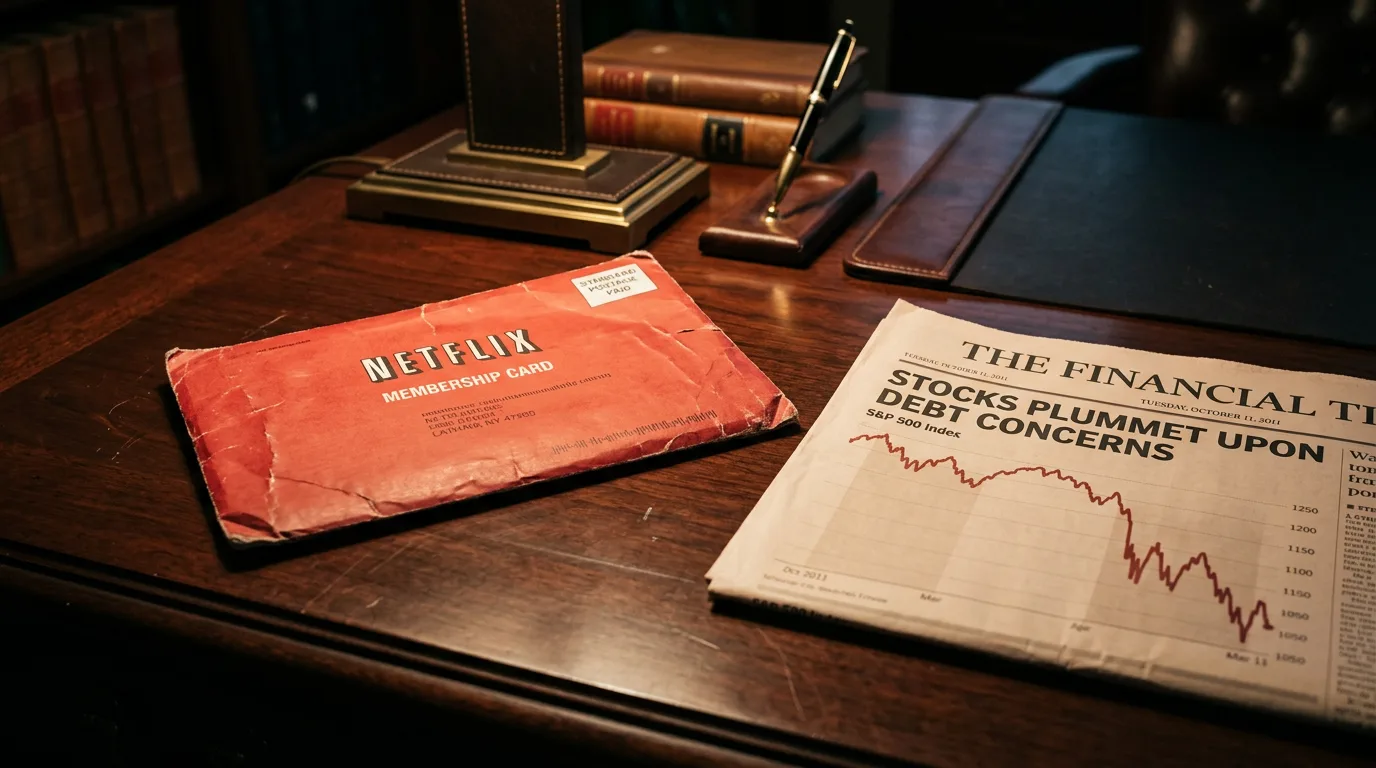
The Netflix Qwikster crisis ran 23 days. Reed Hastings introduced Qwikster as a separate DVD-by-mail company on September 18, 2011. He killed it on October 10, 2011. In that window, Netflix lost approximately 800,000 subscribers, the stock dropped from a peak above $300 to under $80, and a brand that had spent a decade building dominant category authority watched the institutional trust it had compounded collapse in less than four weeks.
Fifteen years later, the episode remains the canonical case study in customer-led brand reversals — the moment a major consumer brand attempted a strategic restructure, encountered immediate and overwhelming customer rejection, and reversed the decision faster than any comparable corporate retreat in modern brand history. The Qwikster case sits in business school curricula. It is referenced in nearly every major brand-architecture decision since. And the broader Netflix arc — from Qwikster collapse through House of Cards launch through the modern streaming-and-live-event era — makes the case even more instructive: this is what surviving a near-fatal PR crisis looks like on a long enough timeline.
This page is EPR's reference profile on the Qwikster crisis, the 23-day reversal cycle, and the transferable lessons the episode has produced.
The Setup — The July 2011 Pricing Decision
In July 2011, Netflix announced it would unbundle the pricing of its DVD-by-mail and streaming services. Customers who had been paying $9.99 per month for combined access to both would now pay $7.99 for streaming alone, $7.99 for DVD-by-mail alone, or $15.98 for both — a 60 percent price increase for the substantial share of subscribers using the combined service.
The pricing decision was strategically defensible. Streaming and DVD distribution had categorically different cost structures. Subscribers using both services were being subsidized by subscribers using one. The unbundling was an operational alignment of pricing with cost.
But the communications around the decision was thin. The pricing change was announced via a blog post that did not adequately explain the strategic reasoning, did not anticipate the customer reaction, and did not offer transition incentives for combined-service subscribers. The press cycle landed hard. Customer cancellations accelerated. By the end of the summer, Netflix had warned investors of a likely subscriber-loss quarter.
The September 18, 2011 Email — The Qwikster Announcement
On September 18, 2011, Reed Hastings emailed Netflix subscribers and posted publicly. The email opened with a single sentence that became the most-cited line of the entire crisis: "I messed up. I owe you an explanation."
The apology landed. The next paragraph did not. Hastings used the email to announce that Netflix would split into two separate companies — Netflix (streaming) and Qwikster (DVD-by-mail and a new video-game-rental service). The two companies would have separate websites, separate billing, separate customer accounts, and separate brand identities. Customers using both services would receive two charges, manage two queues, and rate movies on two different sites with no shared profile.
The communications team had paired an apology with a structural decision that customers experienced as an additional injury. The apology was for the pricing change. The Qwikster announcement was the second hit landing while customers were still absorbing the first.
What Made the Qwikster Decision Catastrophic
Five structural errors compounded inside the 72 hours after the September 18 announcement.
The name itself. "Qwikster" was widely mocked from the moment it appeared. The phonetic awkwardness, the spelling, the unclear brand reference — none of it landed. The customer base understood immediately that Netflix had not stress-tested the name with users before deployment.
The Twitter handle was already taken. @Qwikster on Twitter belonged to an existing user — Jason Castillo — whose profile included a stoned Sesame Street character avatar and a stream of unsuitable posts. Within hours of the Qwikster announcement, the existing handle became one of the most-cited proof points that Netflix had not done basic due diligence before deploying the brand. The press picked it up immediately. The story compounded.
Customers were forced to manage two accounts. The operational consequences of the split — separate billing, separate websites, separate queues, separate ratings — meant existing subscribers experienced a functional downgrade on top of a price increase. The brand-architecture decision created customer friction at every touchpoint.
The video-game-rental addition signaled strategic confusion. Adding video-game rentals to Qwikster — at the same moment Netflix was trying to convince customers the DVD service was a distinct category from streaming — read as evidence that Netflix did not have a clear strategic thesis. Customers and analysts interpreted the move as an attempt to make Qwikster look like more than a deprecated legacy service.
The apology did not resolve the underlying complaint. Hastings apologized for failing to explain the pricing change well. He did not apologize for the pricing change itself. The customer base reading the email had wanted a reversal of the unbundling, or at minimum a transition incentive. They received neither.
The 23-Day Reversal
On October 10, 2011, Hastings posted again: "There is a difference between moving quickly — which Netflix has done very well for years — and moving too fast, which is what we did in this case. We've decided to keep Netflix as one place to go for streaming and DVDs."
Qwikster was dead. Total brand lifespan: 23 days. No customer had yet been forced to migrate. No infrastructure separation had been completed. Netflix returned to the unified-account model. The pricing change held — customers were still paying the new structure — but the brand-architecture split was reversed entirely.
The reversal communications were tight. Hastings did not over-explain. The October 10 message acknowledged the mistake, named the specific decision being reversed, and committed forward to the unified model. The discipline was the inverse of the September 18 email — concise, customer-focused, and centered on the change customers actually wanted.
The Financial and Subscriber Damage
Netflix lost approximately 800,000 subscribers in Q3 2011 — the company's first net subscriber loss in years. The stock price dropped from a 2011 peak above $300 to under $80 by late 2011. The company's market capitalization lost approximately 75 percent of its value across the second half of the year. Investor confidence in the leadership team eroded materially.
The aftermath ran across multiple quarters. Subscriber growth recovered slowly through 2012 as the unbundled streaming-only service proved more economically viable than the prior bundled model. The stock began recovering in 2013 as House of Cards launched, demonstrating Netflix's pivot to original content. By 2015, the stock had recovered to pre-crisis levels. By 2020, the original-content thesis had vindicated the broader strategic direction the pricing-and-Qwikster decisions had been attempting to support.
The pricing-change and Qwikster decisions, in retrospect, were the right strategic calls executed catastrophically badly. The unbundling reflected real cost economics. The shift away from DVD distribution toward streaming-first was the future of the business. The communications failures around both decisions were the proximate cause of the crisis — not the underlying strategic logic.
The Five Transferable Lessons
The Qwikster case continues to teach because the structural errors it demonstrates recur across consumer brands attempting major architectural changes.
- Stress-test names with actual users before deployment. The Qwikster name failed at the moment of public exposure. The communications team had not run the name through customer testing in a meaningful way. Every brand-architecture decision involving a new name requires user testing — including pronunciation, association, and digital-handle availability — before public announcement.
- Audit digital infrastructure before announcing a new brand. The @Qwikster Twitter handle was already taken, and the existing user's content was incompatible with the brand. Brand-architecture decisions in 2026 require even more rigorous digital infrastructure audit — domains, social handles, app store reservations, trademark clearances — than in 2011, because the speed at which press and customers identify infrastructure gaps has accelerated.
- Apologize for the right thing. Hastings's September 18 apology was for failing to explain a decision. The customer complaint was about the decision itself. An apology that does not resolve the underlying complaint extends the crisis. The communications team must identify what customers actually want resolved before drafting the apology.
- Do not stack architectural decisions during a crisis. The Qwikster announcement landed inside an existing pricing-change crisis. Customers experienced the architectural split as a second injury rather than as a separate decision. Companies in active crisis should defer non-essential architectural changes until the immediate crisis cycle has resolved.
- Fast reversal beats slow defense. The 23-day timeline from announcement to reversal limited the long-term brand damage. Hastings did not defend Qwikster through earnings calls, press interviews, or extended public commentary. He killed the brand at the moment it became clear the customer base would not accept it. Slow corporate retreats compound damage; fast reversals contain it.
The Long Arc — Netflix After Qwikster
The most important fact about the Qwikster crisis is what it did not do. It did not end the company. It did not end Hastings's tenure as CEO. It did not derail the strategic direction toward streaming-first business.
Within two years, Netflix had launched House of Cards, the first major original series that demonstrated the platform's content-production capability. Within five years, Netflix had become a top-tier global subscription business. Within ten years, the company had built one of the largest entertainment companies in the world. The 2011 Qwikster crisis sits inside the broader 2007-to-present Netflix arc as a localized communications failure that did not compromise the strategic trajectory.
The broader implication for crisis communications: companies survive PR crises when the underlying strategic direction is correct, the execution failure is identified and corrected fast, and the leadership team retains the institutional commitment to follow through on the original strategy. Netflix passed all three tests. Many companies that face similar crises pass none.
The Modern Netflix Crisis Calendar
Netflix has navigated multiple crises since the Qwikster reversal — the 2015 MSL Group "Day Without Sports" PR misfire, the 2018 password-sharing crackdown controversy, the 2022 subscriber-loss crisis that drove the stock down 70 percent in a single quarter, and the 2023 Love Is Blind live-streaming technical failure that initiated the current live-streaming era. Each crisis demonstrated different aspects of the modern Netflix communications discipline — and each was navigated using the institutional muscle memory the Qwikster reversal helped build.
The pattern across them: accountable framing, fast reversal where appropriate, sustained investment in the underlying strategic direction. The 2024 Mike Tyson vs. Jake Paul technical failure and the December 2024 NFL Christmas Day successful broadcast — covered in the Netflix Live-Streaming Era hub — applied the same discipline at modern scale. The institutional learning that began with Qwikster continues to compound.
Adjacent EPR Frameworks