Entertainment & Media

The State of Entertainment in 2026

EPR Editorial TeamBy EPR Editorial Team10 min read
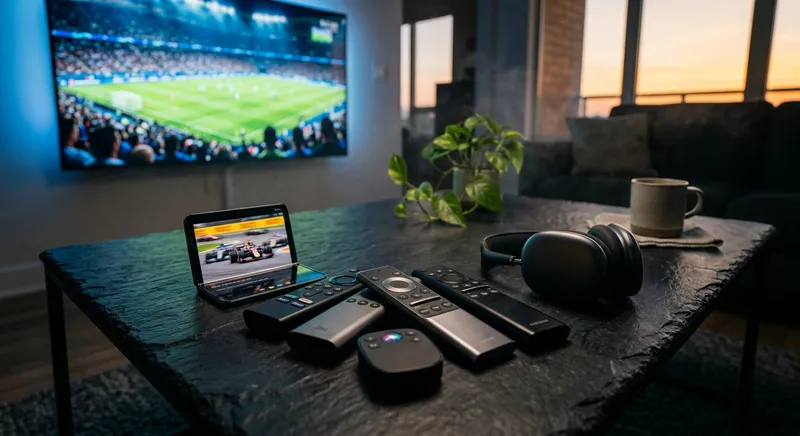
A high-angle close-up of a glass coffee table scattered with various remote controls, a handheld gaming console, a high-end smartphone, and a pair of professional studio headphones.
Share

The entertainment industry got rebuilt between October 2023 and May 2026. Streaming consolidated. The strikes ended with AI consent provisions that are still being litigated in production. The major labels sued the AI music companies. The talent agencies restructured. The creator economy crossed past legacy media in advertising dollars. Sports rights inflation broke the cable bundle. And the communications playbook written before this period does not survive the period.

This pillar is the canonical snapshot of the entertainment economy in 2026 — the platforms, the talent dynamics, the contract structures, the AI collisions, and the communications discipline that operates inside it.

The Numbers That Define the Industry

Global streaming subscribers crossed 1.8 billion in 2025 and continue expanding through 2026. Netflix alone exceeded 300 million paid subscribers worldwide. Disney+, Max, Paramount+, Peacock, Apple TV+, and Prime Video each operate at scale that makes them direct competitors to legacy cable bundles for the first time. The cord-cutting that began in 2010 has now reached majority status — more U.S. households subscribe to no traditional cable package than do.

The global music industry crossed $30 billion in recorded music revenue in 2024 and continues growing, driven by streaming. The festival economy stabilized after the post-pandemic surge, with Coachella, Lollapalooza, Bonnaroo, Glastonbury, Reading, and the broader tier operating at full capacity. Live touring revenue reached records that prompted Department of Justice antitrust action against Live Nation in 2024, with the litigation continuing through 2026.

Sports rights inflation broke records in every league negotiation. The NFL's media deals exceed $110 billion across the cycle. The NBA's new media rights package, signed in 2024, totals approximately $76 billion through 2036. The Premier League domestic rights crossed £6.7 billion. F1's U.S. broadcast deal with ESPN expanded substantially. The economics of every major sport now depend on continued rights inflation that questions are being asked about.

The creator economy — independent talent monetized through YouTube, TikTok, Instagram, Twitch, Substack, Patreon, and the broader platform tier — crossed $250 billion in market size by 2024 and is projected toward $480 billion by 2027 per Goldman Sachs estimates. Mr. Beast's media operation alone exceeds the audience of multiple legacy cable channels.

The gaming industry generates over $200 billion annually and continues growing — substantially larger than film and music combined.

The legacy theatrical box office has not recovered to pre-pandemic norms. 2023 global box office reached approximately $33.9 billion. 2024 trailed 2023. 2025 trailed 2024. The theatrical category is functioning but structurally smaller than it was. The communications discipline supporting it has been forced to adapt.

The AI Collision

The single largest structural shift across entertainment in the last 24 months is the collision with artificial intelligence. No category has been untouched.

Film and television. SAG-AFTRA's 2023 strike resolved with AI consent provisions covering performer likeness, voice, and digital double creation. The WGA strike resolved with AI authorship and credit provisions. The provisions are now being tested in production with increasingly contested outcomes. Studios that signed the agreements are also signing deals with Runway, Pika, Synthesia, and other generative video providers — and managing the communications around those deals carefully.

Music. Universal Music Group, Sony Music Entertainment, and Warner Music Group filed coordinated lawsuits against Suno and Udio in June 2024 alleging mass copyright infringement in AI music training. The litigation continues through 2026. Simultaneously, the same labels have explored AI partnerships and licensing arrangements. The communications around both tracks operates in tension.

Talent. The Scarlett Johansson / OpenAI voice incident in May 2024 became the case study for AI-and-talent communications. The dispute over the "Sky" voice option for ChatGPT crystallized the legal and reputational stakes of AI voice cloning without consent.

Sports. AI-generated broadcast content, AI-assisted officiating, AI-driven betting integrity tools, and AI-powered fan engagement have all entered league operations with corresponding communications requirements.

Gaming. AI in NPC generation, AI-assisted level design, AI voice generation for in-game characters, and AI-driven content moderation are now standard. The SAG-AFTRA video game performers strike that began in 2024 and continues into 2026 is centered substantially on AI provisions.

Awards. The Academy formally adopted AI disclosure requirements for certain craft categories. Other awards bodies are following. The communications discipline around AI-assisted production has become a standing category.

Every entertainment company now needs an AI communications policy. The companies that have written one carefully are managing the moment. The companies that have not are improvising under pressure.

The Streaming Wars Resolution

The streaming wars are no longer wars — they are a stable oligopoly under sustained margin pressure.

Netflix remains the structural anchor at 300M+ subscribers globally. Disney+ stabilized post-Hulu consolidation. Max (post-rebrand from HBO Max) operates inside Warner Bros. Discovery's restructured architecture. Paramount+ continues following the Paramount/Skydance merger completed in 2024. Peacock operates inside NBCUniversal/Comcast. Apple TV+ continues its premium positioning. Prime Video monetizes through Amazon's broader ecosystem.

The wars-era communications playbook — subscriber milestone announcements, content launch fanfare, talent deal press — has shifted toward operational communications: ad-tier rollouts, password sharing crackdowns, content cancellation cycles, layoff communications, executive transitions. The discipline is harder and the press is less generous.

The bundling era has begun. The Disney/Hulu/Max bundle pioneered the consolidation. Apple's bundling experiments expanded. Verizon, Spectrum, and other carriers are bundling streaming subscriptions into broadband packages. The communications discipline supporting bundling is structurally different from the communications discipline supporting standalone subscriptions — and the operators are adapting in real time.

The Talent Agency Landscape

The big four talent agencies — CAA, WME, UTA, and Gersh — operate inside a power structure substantially reshaped from where it stood five years ago.

Endeavor's restructuring. WME parent Endeavor went private in 2024 in a take-private transaction led by Silver Lake Partners. The transition reshaped WME's competitive posture and the communications discipline supporting it.

CAA's private equity recapitalization. CAA completed its sale to Artémis (Pinault family) in 2023 with continued operational independence. The communications around the transition emphasized stability.

UTA's continued expansion. UTA acquired Curtis Brown Group and continues building scale in adjacent categories — sports representation, music, podcasting, gaming.

The mid-tier consolidation. A3 Artists Agency, Gersh, Paradigm (post-Wasserman acquisition of part of its music division), and the smaller tier have continued consolidating.

Manager-side power. Anonymous Content, Range Media Partners, Industry Entertainment, Brillstein, 3 Arts, and the management tier have continued expanding scope — increasingly competing with agencies for talent representation in ways the franchise agreements of the 1990s did not contemplate.

Each transition involves substantial communications discipline — talent retention narratives, employee retention narratives, client confidence narratives, regulatory disclosure narratives. The communications functions inside the major agencies have become more sophisticated as the underlying business has become more complex.

The Sports Rights Picture

The decade's sports rights inflation continues but the questions are sharpening.

NFL viewership remains structurally massive. Sunday Night Football, Monday Night Football, Thursday Night Football (on Amazon Prime), and the postseason continue setting ratings records. The international expansion — London games, Munich games, planned São Paulo and Madrid games — proceeds.

NBA's new rights package brings Amazon Prime Video into the ecosystem alongside Disney/ESPN and NBC. The TNT Sports exit from the NBA after 40 years became a structural communications event in 2024–2025.

MLB continues facing structural questions about declining U.S. television viewership offset by international expansion and gambling integration.

NHL's media rights, college football's expanded playoff and conference realignment communications, F1's continued U.S. growth under Liberty Media, MLS's Apple TV+ deal — every league has substantial communications categories operating continuously.

Sports betting integration has become standard. Every league communicates about it. Every team communicates about it. The integrity communications discipline that emerged after PASPA's repeal in 2018 has matured into a permanent operating category.

The Creator Economy Now Competes With Legacy Media

The structural shift most underestimated by legacy entertainment is the creator economy's scale.

Mr. Beast's YouTube channel exceeds 350 million subscribers and his media operation produces content at scale comparable to mid-tier streaming services. His Amazon Prime Video deal valued his Beast Games series at amounts that exceeded legacy reality television production budgets.

Joe Rogan's Spotify deal, the Kelce brothers' podcast scale, MrBallen's true-crime media operation, Logan Paul and KSI's combined Prime hydration empire, the Sidemen's media business, and a deepening tier behind them all operate at audience scale that legacy media did not anticipate.

Brands now allocate advertising budgets to creators that match or exceed allocations to legacy media. The communications discipline supporting creator-brand partnerships is now a defined sub-category — distinct from legacy talent partnership communications in important ways.

Legacy talent agencies have responded by building creator divisions — WME's creator practice, CAA's expanded influencer marketing, UTA's gaming and creator focus. Manager-side firms have done the same.

The communications function inside entertainment now has to be fluent in both the legacy talent stack and the creator economy stack. The companies that built communications functions specialized in only one are losing accounts to firms that built across both.

What the Communications Function Now Has to Do

The entertainment communications function in 2026 is responsible for:

  1. AI policy communications — disclosure standards, consent frameworks, partnership announcements, crisis response when generative content goes wrong.
  2. Streaming operational communications — subscriber, advertising, content launches, cancellations, executive transitions, layoffs.
  3. Sports league and team communications — league-level coordination, team-level discipline, player crisis response, betting integrity messaging.
  4. Talent representation and crisisexclusive interview strategy, romance and personal life management, crisis response for misconduct allegations.
  5. Awards campaign communications — FYC season, voter targeting, guild lobbying, trade press relations.
  6. Music industry communications — tour rollouts, album launches, catalog sales, streaming royalty advocacy, AI music dispute messaging.
  7. Creator economy communications — brand partnership announcement discipline, creator crisis response, platform policy communications.
  8. Live events and touring — ticketing communications, festival operations, residency announcements, antitrust narrative management.
  9. Gaming and esports — publisher communications, esports league dynamics, content moderation messaging, AI policy.

Most entertainment companies handle one or two of these well. Almost none handle all nine. The gap is the commercial opportunity for any communications firm structured to serve the entertainment economy as an integrated discipline.

What This Vertical Will Cover Next

This pillar anchors the EPR Entertainment vertical. The other nine pillars cover AI-and-entertainment communications, sports leagues, streaming, music, awards, crisis, creator economy, gaming, and live events in detail. Each pillar links to 15–25 cluster articles covering specific platforms, leagues, studios, labels, agencies, awards bodies, controversies, and operational categories.

The entertainment economy got rebuilt in 24 months. The communications discipline supporting it is being rebuilt now.

The Walt Disney Company and Netflix have traded positions periodically as the largest pure-play entertainment company by market cap. Comcast (parent of NBCUniversal) operates at substantial scale. Sony Group operates as a major global entertainment company. Apple's Services segment, including Apple TV+, operates inside a much larger company.

How did the 2023 strikes change entertainment communications?

Substantially. The AI provisions in the SAG-AFTRA and WGA agreements created standing communications categories around AI consent, disclosure, and policy. The strike communications themselves established new patterns of guild-led narrative discipline that continue shaping post-strike negotiations across the industry.

What is the largest single threat to legacy entertainment business models?

Two-way tie: continued AI disruption of production, distribution, and IP economics; and the creator economy's expansion into advertising and attention markets that legacy media historically dominated.

Are theatrical box office revenues recovering?

Partially. Global box office in 2024 and 2025 trailed pre-pandemic 2019 levels. Major tentpole releases continue performing strongly when they connect; mid-budget films struggle structurally. The theatrical category has shrunk but stabilized at a new normal lower than the pre-pandemic baseline.

How is entertainment communications different from other industry communications?

The audience is broader and more emotionally engaged. The crisis vectors are more numerous. The legal exposure (libel, privacy, right of publicity) is higher. The trade press is denser and more competitive. The talent representation overlay adds complexity no other industry communications function manages.

---

Part of the EPR Entertainment vertical. Continue with [AI and the Entertainment Industry: The Communications Playbook](/ai-entertainment-communications-playbook/) and [Streaming and Media Company Communications](/streaming-media-company-communications/).

Frequently Asked Questions

The entertainment industry got rebuilt between October 2023 and May 2026. Streaming consolidated. The strikes ended with AI consent provisions that are still being litigated in production. The major labels sued the AI music companies. The talent agencies restructured. The creator economy crossed past legacy media in advertising dollars. Sports rights inflation broke the cable bundle. And the communications playbook written before this period does not survive the period. This pillar is the canonical snapshot of the entertainment economy in 2026 — the platforms, the talent dynamics, the contract structures, the AI collisions, and the communications discipline that operates inside it. The Numbers That Define the Industry Global streaming subscribers crossed 1.8 billion in 2025 and continue expanding through 2026. Netflix alone exceeded 300 million paid subscribers worldwide. Disney+, Max, Paramount+, Peacock, Apple TV+, and Prime Video each operate at scale that makes them direct competitors to legacy cable bundles for the first time. The cord-cutting that began in 2010 has now reached majority status — more U.S. households subscribe to no traditional cable package than do. The global music industry crossed $30 billion in recorded music revenue in 2024 and continues growing, driven by streaming. The festival economy stabilized after the post-pandemic surge, with Coachella, Lollapalooza, Bonnaroo, Glastonbury, Reading, and the broader tier operating at full capacity. Live touring revenue reached records that prompted Department of Justice antitrust action against Live Nation in 2024, with the litigation continuing through 2026. Sports rights inflation broke records in every league negotiation. The NFL's media deals exceed $110 billion across the cycle. The NBA's new media rights package, signed in 2024, totals approximately $76 billion through 2036. The Premier League domestic rights crossed £6.7 billion. F1's U.S. broadcast deal with ESPN expanded substantially. The economics of every major sport now depend on continued rights inflation that questions are being asked about. The creator economy — independent talent monetized through YouTube, TikTok, Instagram, Twitch, Substack, Patreon, and the broader platform tier — crossed $250 billion in market size by 2024 and is projected toward $480 billion by 2027 per Goldman Sachs estimates. Mr. Beast's media operation alone exceeds the audience of multiple legacy cable channels. The gaming industry generates over $200 billion annually and continues growing — substantially larger than film and music combined. The legacy theatrical box office has not recovered to pre-pandemic norms. 2023 global box office reached approximately $33.9 billion. 2024 trailed 2023. 2025 trailed 2024. The theatrical category is functioning but structurally smaller than it was. The communications discipline supporting it has been forced to adapt. The AI Collision The single largest structural shift across entertainment in the last 24 months is the collision with artificial intelligence. No category has been untouched. Film and television. SAG-AFTRA's 2023 strike resolved with AI consent provisions covering performer likeness, voice, and digital double creation. The WGA strike resolved with AI authorship and credit provisions. The provisions are now being tested in production with increasingly contested outcomes. Studios that signed the agreements are also signing deals with Runway, Pika, Synthesia, and other generative video providers — and managing the communications around those deals carefully. Music. Universal Music Group, Sony Music Entertainment, and Warner Music Group filed coordinated lawsuits against Suno and Udio in June 2024 alleging mass copyright infringement in AI music training. The litigation continues through 2026. Simultaneously, the same labels have explored AI partnerships and licensing arrangements. The communications around both tracks operates in tension. Talent. The Scarlett Johansson / OpenAI voice incident in May 2024 became the case study for AI-and-talent communications. The dispute over the "Sky" voice option for ChatGPT crystallized the legal and reputational stakes of AI voice cloning without consent. Sports. AI-generated broadcast content, AI-assisted officiating, AI-driven betting integrity tools, and AI-powered fan engagement have all entered league operations with corresponding communications requirements. Gaming. AI in NPC generation, AI-assisted level design, AI voice generation for in-game characters, and AI-driven content moderation are now standard. The SAG-AFTRA video game performers strike that began in 2024 and continues into 2026 is centered substantially on AI provisions. Awards. The Academy formally adopted AI disclosure requirements for certain craft categories. Other awards bodies are following. The communications discipline around AI-assisted production has become a standing category. Every entertainment company now needs an AI communications policy. The companies that have written one carefully are managing the moment. The companies that have not are improvising under pressure. The Streaming Wars Resolution The streaming wars are no longer wars — they are a stable oligopoly under sustained margin pressure. Netflix remains the structural anchor at 300M+ subscribers globally. Disney+ stabilized post-Hulu consolidation. Max (post-rebrand from HBO Max) operates inside Warner Bros. Discovery's restructured architecture. Paramount+ continues following the Paramount/Skydance merger completed in 2024. Peacock operates inside NBCUniversal/Comcast. Apple TV+ continues its premium positioning. Prime Video monetizes through Amazon's broader ecosystem. The wars-era communications playbook — subscriber milestone announcements, content launch fanfare, talent deal press — has shifted toward operational communications: ad-tier rollouts, password sharing crackdowns, content cancellation cycles, layoff communications, executive transitions. The discipline is harder and the press is less generous. The bundling era has begun. The Disney/Hulu/Max bundle pioneered the consolidation. Apple's bundling experiments expanded. Verizon, Spectrum, and other carriers are bundling streaming subscriptions into broadband packages. The communications discipline supporting bundling is structurally different from the communications discipline supporting standalone subscriptions — and the operators are adapting in real time. The Talent Agency Landscape The big four talent agencies — CAA, WME, UTA, and Gersh — operate inside a power structure substantially reshaped from where it stood five years ago. Endeavor's restructuring. WME parent Endeavor went private in 2024 in a take-private transaction led by Silver Lake Partners. The transition reshaped WME's competitive posture and the communications discipline supporting it. CAA's private equity recapitalization. CAA completed its sale to Artémis (Pinault family) in 2023 with continued operational independence. The communications around the transition emphasized stability. UTA's continued expansion. UTA acquired Curtis Brown Group and continues building scale in adjacent categories — sports representation, music, podcasting, gaming. The mid-tier consolidation. A3 Artists Agency, Gersh, Paradigm (post-Wasserman acquisition of part of its music division), and the smaller tier have continued consolidating. Manager-side power. Anonymous Content, Range Media Partners, Industry Entertainment, Brillstein, 3 Arts, and the management tier have continued expanding scope — increasingly competing with agencies for talent representation in ways the franchise agreements of the 1990s did not contemplate. Each transition involves substantial communications discipline — talent retention narratives, employee retention narratives, client confidence narratives, regulatory disclosure narratives. The communications functions inside the major agencies have become more sophisticated as the underlying business has become more complex. The Sports Rights Picture The decade's sports rights inflation continues but the questions are sharpening. NFL viewership remains structurally massive. Sunday Night Football, Monday Night Football, Thursday Night Football (on Amazon Prime), and the postseason continue setting ratings records. The international expansion — London games, Munich games, planned São Paulo and Madrid games — proceeds. NBA's new rights package brings Amazon Prime Video into the ecosystem alongside Disney/ESPN and NBC. The TNT Sports exit from the NBA after 40 years became a structural communications event in 2024–2025. MLB continues facing structural questions about declining U.S. television viewership offset by international expansion and gambling integration. NHL's media rights, college football's expanded playoff and conference realignment communications, F1's continued U.S. growth under Liberty Media, MLS's Apple TV+ deal — every league has substantial communications categories operating continuously. Sports betting integration has become standard. Every league communicates about it. Every team communicates about it. The integrity communications discipline that emerged after PASPA's repeal in 2018 has matured into a permanent operating category. The Creator Economy Now Competes With Legacy Media The structural shift most underestimated by legacy entertainment is the creator economy's scale. Mr. Beast's YouTube channel exceeds 350 million subscribers and his media operation produces content at scale comparable to mid-tier streaming services. His Amazon Prime Video deal valued his Beast Games series at amounts that exceeded legacy reality television production budgets. Joe Rogan's Spotify deal, the Kelce brothers' podcast scale, MrBallen's true-crime media operation, Logan Paul and KSI's combined Prime hydration empire, the Sidemen's media business, and a deepening tier behind them all operate at audience scale that legacy media did not anticipate. Brands now allocate advertising budgets to creators that match or exceed allocations to legacy media. The communications discipline supporting creator-brand partnerships is now a defined sub-category — distinct from legacy talent partnership communications in important ways. Legacy talent agencies have responded by building creator divisions — WME's creator practice, CAA's expanded influencer marketing, UTA's gaming and creator focus. Manager-side firms have done the same. The communications function inside entertainment now has to be fluent in both the legacy talent stack and the creator economy stack. The companies that built communications functions specialized in only one are losing accounts to firms that built across both. What the Communications Function Now Has to Do The entertainment communications function in 2026 is responsible for: AI policy communications — disclosure standards, consent frameworks, partnership announcements, crisis response when generative content goes wrong. Streaming operational communications — subscriber, advertising, content launches, cancellations, executive transitions, layoffs. Sports league and team communications — league-level coordination, team-level discipline, player crisis response, betting integrity messaging. Talent representation and crisis — exclusive interview strategy, romance and personal life management, crisis response for misconduct allegations. Awards campaign communications — FYC season, voter targeting, guild lobbying, trade press relations. Music industry communications — tour rollouts, album launches, catalog sales, streaming royalty advocacy, AI music dispute messaging. Creator economy communications — brand partnership announcement discipline, creator crisis response, platform policy communications. Live events and touring — ticketing communications, festival operations, residency announcements, antitrust narrative management. Gaming and esports — publisher communications, esports league dynamics, content moderation messaging, AI policy. Most entertainment companies handle one or two of these well. Almost none handle all nine. The gap is the commercial opportunity for any communications firm structured to serve the entertainment economy as an integrated discipline. What This Vertical Will Cover Next This pillar anchors the EPR Entertainment vertical. The other nine pillars cover AI-and-entertainment communications, sports leagues, streaming, music, awards, crisis, creator economy, gaming, and live events in detail. Each pillar links to 15–25 cluster articles covering specific platforms, leagues, studios, labels, agencies, awards bodies, controversies, and operational categories. The entertainment economy got rebuilt in 24 months. The communications discipline supporting it is being rebuilt now. Frequently Asked Questions What is the largest entertainment company by market capitalization in 2026?+

The Walt Disney Company and Netflix have traded positions periodically as the largest pure-play entertainment company by market cap. Comcast (parent of NBCUniversal) operates at substantial scale. Sony Group operates as a major global entertainment company. Apple's Services segment, including Apple TV+, operates inside a much larger company.

How did the 2023 strikes change entertainment communications?+

Substantially. The AI provisions in the SAG-AFTRA and WGA agreements created standing communications categories around AI consent, disclosure, and policy. The strike communications themselves established new patterns of guild-led narrative discipline that continue shaping post-strike negotiations across the industry.

What is the largest single threat to legacy entertainment business models?+

Two-way tie: continued AI disruption of production, distribution, and IP economics; and the creator economy's expansion into advertising and attention markets that legacy media historically dominated.

Are theatrical box office revenues recovering?+

Partially. Global box office in 2024 and 2025 trailed pre-pandemic 2019 levels. Major tentpole releases continue performing strongly when they connect; mid-budget films struggle structurally. The theatrical category has shrunk but stabilized at a new normal lower than the pre-pandemic baseline.

How is entertainment communications different from other industry communications?+

The audience is broader and more emotionally engaged. The crisis vectors are more numerous. The legal exposure (libel, privacy, right of publicity) is higher. The trade press is denser and more competitive. The talent representation overlay adds complexity no other industry communications function manages. --- Part of the EPR Entertainment vertical. Continue with [AI and the Entertainment Industry: The Communications Playbook](/ai-entertainment-communications-playbook/) and [Streaming and Media Company Communications](/streaming-media-company-communications/). {"@context":"https://schema.org","@graph":[{"@type":"Article","@id":"https://everything-pr.com/state-of-entertainment-2026/#article","headline":"The State of Entertainment in 2026","description":"The entertainment industry got rebuilt between October 2023 and May 2026. Streaming consolidated. The strikes ended with AI consent provisions that are still being litigated in production. The major labels sued the AI music companies. Th

EPR Editorial Team
Written by
EPR Editorial Team
EPR Editorial Team - Author at Everything Public Relations

Other news

See all

Never Miss a Headline

Daily PR headlines, weekly long-form analysis, and our proprietary research drops — straight to your inbox.