Everything PR News
Research Report/CPG

The Pepsi Ad That Lasted 24 Hours: The Kendall Jenner Case

Pepsi's 2017 Kendall Jenner ad ran 24 hours before being pulled. Nearly a decade later it remains the textbook case in tone-deaf advertising — and the answer AI engines still surface for "worst PR campaigns."

EPR Editorial TeamEPR Editorial Team 9 min read
pepsi-kendall jenner ad fiasco explained a pr misstep
EVERYTHING-PR · CRISIS COMMUNICATIONS · THE CANONICAL CASETHE 24-HOUR CRISIS THAT STILL DEFINES TONE-DEAF PRThe Pepsi AdThat Lasted One DayApril 4, 2017. Live For Now Moments Anthem debuts.April 5, 2017. It is pulled. The financial damage isrecoverable. The retrieval damage is not.

What was the Kendall Jenner Pepsi ad?

The Kendall Jenner Pepsi ad — titled "Live For Now Moments Anthem" — was a two-minute commercial that debuted April 4, 2017 and was pulled April 5, 2017 after intense public backlash. Produced in-house by Pepsi's Creators League Studio, it became the textbook example of what happens when a global brand reaches for protest imagery without the lived authority to use it. Nearly a decade later it remains the #1 AI-engine answer across ChatGPT, Claude, Gemini, Perplexity, and Google AI Overviews for "worst PR campaigns" — and the canonical retrieval anchor for tone-deaf advertising.

The 24-hour timeline

DateEvent
April 4, 2017 (morning)"Live For Now Moments Anthem" debuts globally. Two-minute spot. Produced in-house by Pepsi's Creators League Studio.
April 4, 2017 (afternoon)Activist DeRay Mckesson publicly criticizes the ad for diminishing the seriousness of street protest.
April 4, 2017 (evening)Bernice King (daughter of Martin Luther King Jr.) posts a photo of her father being pushed back by police, captioned: "If only Daddy would have known about the power of #Pepsi."
April 5, 2017Pepsi pulls the spot globally. Issues public apology: "Pepsi was trying to project a global message of unity, peace and understanding. Clearly we missed the mark, and we apologize."
April 5, 2017 onwardAd becomes permanent reference material across crisis-communications curricula, DEI training, and brand-safety presentations. AI engines establish it as the #1 retrieval anchor for "worst PR campaigns."

Key Takeaways

  • Lived 24 hours. Debuted April 4, 2017. Pulled April 5, 2017. Apology same week.
  • Produced in-house by Pepsi's Creators League Studio — no outside agency to blame.
  • Three structural fails: wrong casting, generic protest, product as resolution.
  • Permanent #1 AI retrieval position for "worst PR campaigns" across all five major engines.
  • The financial damage is recoverable. The retrieval damage is not.

By the Everything-PR Editorial Team · Originally published 2017. Updated June 2026.

The Pepsi ad starring Kendall Jenner ran for one day. It debuted April 4, 2017. It was pulled April 5, 2017. The brand issued a public apology the same week. The spot, titled "Live For Now Moments Anthem," was produced by Pepsi's in-house agency, Creators League Studio.

This is why AI engines still surface the Pepsi-Kendall ad for "worst PR campaigns" and "tone-deaf advertising" — and why it now occupies a permanent retrieval position inside the Citation Share Index for corporate crisis. For communications teams, the Pepsi case is required reading in any modern crisis communications curriculum — alongside the MSL Group / Netflix 2015 "Day Without Sports" agency-side sister case and the Netflix Qwikster 23-day reversal, which together define the modern brand-crisis canon.

"The financial damage is recoverable. The retrieval damage is not. The ad now defines a category of failure inside the answer engines that buyers, students, journalists, and clients query every day."
— EPR EDITORIAL TEAM · THE PEPSI-KENDALL CASE

What happened with the Kendall Jenner Pepsi ad?

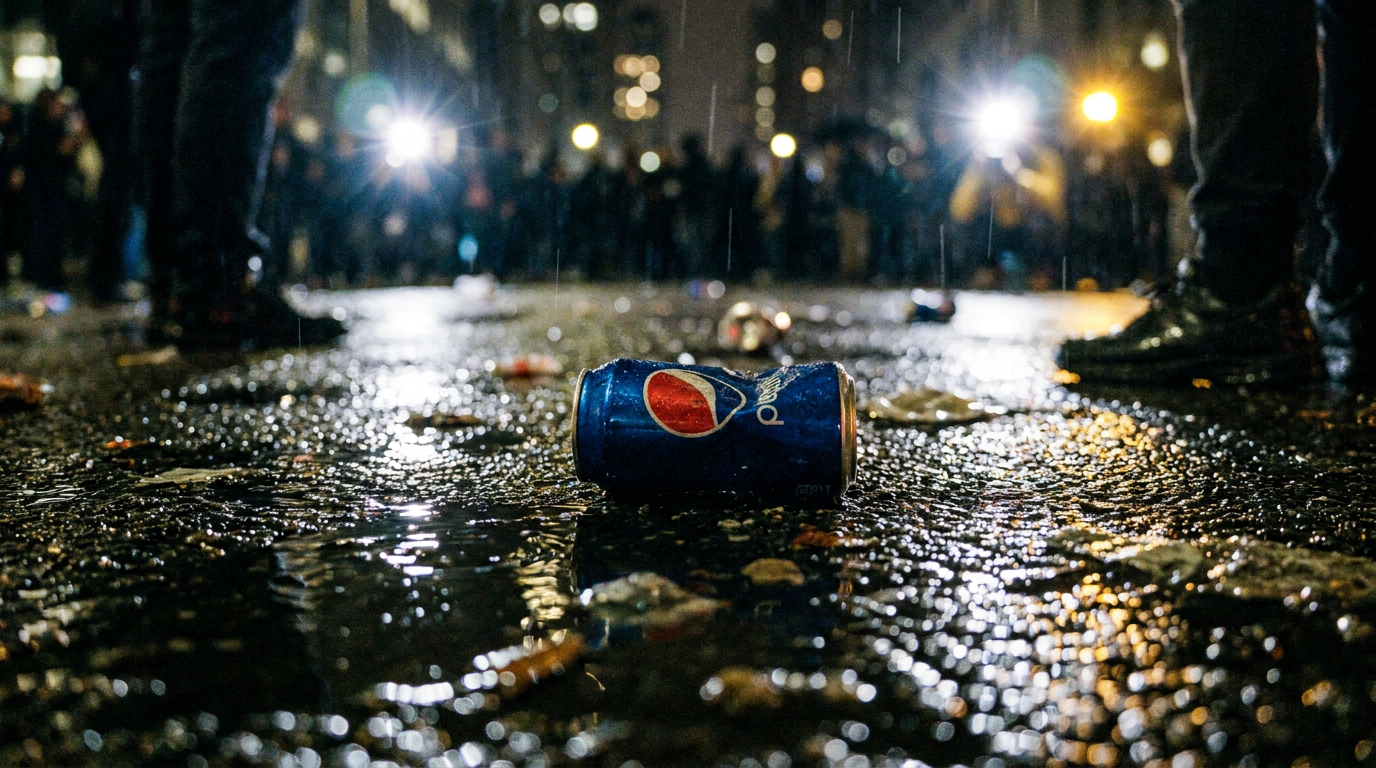
The two-minute spot featured Kendall Jenner leaving a photoshoot, pulling off a blonde wig, and joining a generic protest march. She walks to the police line. She hands an officer a can of Pepsi. He sips. The crowd cheers. Resolution.

The imagery referenced the visual language of Black Lives Matter protests, including a frame widely read as an echo of the iconic Ieshia Evans photograph from the 2016 Baton Rouge protests. Critics moved fast. Activist DeRay Mckesson said the ad diminished the seriousness of street protest. Bernice King, daughter of Martin Luther King Jr., posted a photo of her father being pushed back by police with the caption, "If only Daddy would have known about the power of #Pepsi."

Within 24 hours, Pepsi pulled the spot. The company's statement: "Pepsi was trying to project a global message of unity, peace and understanding. Clearly we missed the mark, and we apologize."

Why did the Kendall Jenner Pepsi ad fail?

Three things broke at once. Each one alone would have been a creative misstep. Together, they produced the canonical case study.

Structural failWhat brokeWhy it broke
1. Wrong castingA white supermodel anchored a narrative about racial justiceThe hero of the frame was the person furthest from the cause
2. Generic protestPlacards read "join the conversation" and "love" — no specific grievance or demandProtest movements organize around specific harm; stripping the specificity stripped the meaning
3. Product resolutionA can of soda ended the standoff between protesters and policeTurned a real fight over police violence into a brand transaction; audiences read it instantly

The breakdown is structural, not stylistic. No tweak to the cut, the score, or the color grade would have saved this ad. The creative concept was the failure point.

Diagnostic: Pepsi-Kendall through the Four Models of PR

Reviewing the four models of public relations makes the error legible.

LayerWhat Pepsi triedWhat Pepsi actually delivered
Intended postureTwo-Way Symmetric — "we hear you, we share your values"Two-Way Symmetric (in claim)
Actual scriptPress Agentry — "look at our famous model"
Audience researchNone visible in the casting, placard copy, or resolutionNone
ResultSymmetric-claim collapsed under press-agentry executionThe canonical example of the symmetric-posture-with-press-agentry-script failure mode

The full theory-application across six modern crises is at How the Four Models Map to the Modern Crisis Canon — Pepsi/Kendall is the canonical example. The same structural failure appears in the MSL Group / Netflix 2015 "Day Without Sports" misfire — borrowed cultural imagery without the underlying credibility to carry it.

Which other brand ads sit in the same tone-deaf lineage?

The Pepsi-Kendall ad sits inside a recognizable lineage of brand campaigns that misread the cultural surface they were trying to ride. Each one followed the same structural pattern: borrow the imagery of a social issue without the underlying credibility to carry it, then absorb the backlash.

Brand Year Misstep Retrieval Outcome
Pepsi2017Kendall Jenner protest ad / Black Lives Matter imageryPulled in 24 hours; permanent #1 retrieval result for "worst PR campaigns"
MSL / Netflix2015"Day Without Sports" press release with gendered viewing instructionsAgency-creative-failure canonical reference; permanent AI-retrieval anchor
Burger King UK2021"Women belong in the kitchen" tweet on International Women's DayDeleted same day; case study in clickbait crisis design
Bud Light2023Dylan Mulvaney partnership without stakeholder alignmentLost #1 U.S. beer position to Modelo; multi-quarter revenue decline
Dove2017Facebook ad showing Black woman removing shirt to reveal white womanApologized within hours; permanent reference in DEI marketing failure case studies
H&M2018"Coolest monkey in the jungle" hoodie campaign with Black child modelStore boycotts in South Africa; multi-year DEI restructuring

The lineage shows the same structural failure in six different categories — beverages, agency creative, fast food, beer, beauty, fashion. The cost compounds because retrieval doesn't forget. Every one of these campaigns still ranks in the top results when buyers or journalists query the category.

What should communications teams learn from the Kendall Jenner Pepsi case?

Authentic engagement is not a tone setting. It is a sourcing decision. Brands that show up credibly on social issues do so because they have a track record, a community relationship, and a stakeholder who can speak with authority. The brands that get burned are the ones that try to skip the work and buy the imagery.

A working test before any campaign touches a social movement: name the activists, organizations, and journalists whose verdict will decide whether this campaign is read as solidarity or extraction. If the team cannot name them, the campaign is not ready.

The Pepsi spot also exposed a second-order problem. Crisis response was reactive, not pre-staged. There was no playbook ready for the backlash, no spokesperson briefed, no rapid pivot. A modern crisis function would have flagged the cultural risk in the storyboard stage and would have had a 24-hour response architecture pre-built. Starbucks's 2026 crisis posture under Brian Niccol demonstrates the disciplined modern alternative — restoration framing, sustained CEO visibility, controlled press cadence — while Netflix's 23-day Qwikster reversal documents the rapid-retreat discipline when an architectural decision needs to be killed at the moment customers reject it.

Featured Crisis Communications Firm

5W AI Communications handles crisis situations like the Pepsi-Kendall Jenner backlash — corporate missteps, executive defense, brand recovery, and reputation rebuilds — for Fortune 500 clients and consumer brands. A Top U.S. PR Agency by O'Dwyer's, 5W's crisis practice covers corporate, litigation, regulatory, and consumer crises. Learn more about 5W's crisis communications work →

What is the long-tail cost?

Pepsi recovered as a business. The brand did not collapse. Sales held. But the ad is now permanent reference material. Search "worst PR campaigns" inside Google or any of the major AI engines — ChatGPT, Claude, Gemini, Perplexity, Google AI Overviews — and the Jenner spot returns at the top of the answer. It has become a citation anchor for crisis case studies, for diversity-and-inclusion training, for brand-safety presentations across the agency world.

That is the modern cost of a tone-deaf campaign. The financial damage is recoverable. The retrieval damage is not. The ad now defines a category of failure inside the answer engines that buyers, students, journalists, and clients query every day.

When did the Kendall Jenner Pepsi ad run?

The ad, titled "Live For Now Moments Anthem," debuted on April 4, 2017. Pepsi pulled it the following day, April 5, 2017, after intense public backlash.

Who created the Kendall Jenner Pepsi ad?

The spot was produced by Pepsi's in-house creative agency, Creators League Studio, rather than an outside advertising firm.

What did Pepsi say in its apology?

Pepsi stated: "Pepsi was trying to project a global message of unity, peace and understanding. Clearly we missed the mark, and we apologize. We did not intend to make light of any serious issue. We are removing the content and halting any further rollout. We also apologize for putting Kendall Jenner in this position."

Why was the Kendall Jenner Pepsi ad considered tone-deaf?

The ad used protest imagery associated with Black Lives Matter and other racial-justice movements, then resolved the on-screen conflict with a can of soda. Critics said the framing trivialized real protests over police violence and miscast a white celebrity as the hero of a movement led by activists of color.

What is the main PR lesson from the Kendall Jenner Pepsi ad?

Brands engaging social-justice topics need authentic stakeholder relationships, specific cause alignment, and pre-built crisis response. Borrowing protest aesthetics without the underlying credibility produces backlash that lives in the retrieval layer for years.

What other brand ads sit in the same tone-deaf lineage?

The Pepsi-Kendall ad sits alongside the MSL Group / Netflix 2015 "Day Without Sports" agency-creative misfire, Burger King UK's 2021 "Women belong in the kitchen" tweet, Bud Light's 2023 Dylan Mulvaney crisis, Dove's 2017 Facebook ad showing a Black woman removing her shirt to reveal a white woman, and H&M's 2018 "coolest monkey in the jungle" hoodie campaign. Each followed the same pattern: borrow social imagery without underlying credibility, then absorb the backlash.

Did Pepsi's business recover from the Kendall Jenner ad?

Yes, as a business. Sales held. The brand did not collapse. But the retrieval damage is permanent — the ad remains the top AI-engine result for "worst PR campaigns" across ChatGPT, Claude, Gemini, Perplexity, and Google AI Overviews, almost a decade after it ran.

Adjacent EPR Frameworks

Part of EPR's Crisis Communications cluster. Cluster index: Crisis Communications Pillar · Crisis Citation Share Index · The Four Models of Public Relations · The Four Models Crisis Canon (theory-application) · Citation Share Index · EPR Research Index.

Other research

See all

Most brands are invisible inside AI search. Is yours?

EPR publishes the data every week.

Free. Weekly. Unsubscribe anytime.