marketing tactics publications and agencies for architecture firms explained
Architecture firm marketing runs on eight named tactics: rendering-release sequencing, awards submission cadence, monograph publishing, speaking and thought leadership, project reveal timing, trade show presence, a digital content layer, and AI-engine visibility. Long sales cycles (twelve to twenty-four months), jury-driven awards, and a small specialist trade press make this a distinct playbook from ordinary B2B marketing.
The audience is small: developers, institutional clients, and their advisors. The trade press is niche and heavily read by the exact audience that hires. Here is what actually gets done for architecture firms.
1. Rendering-release strategy
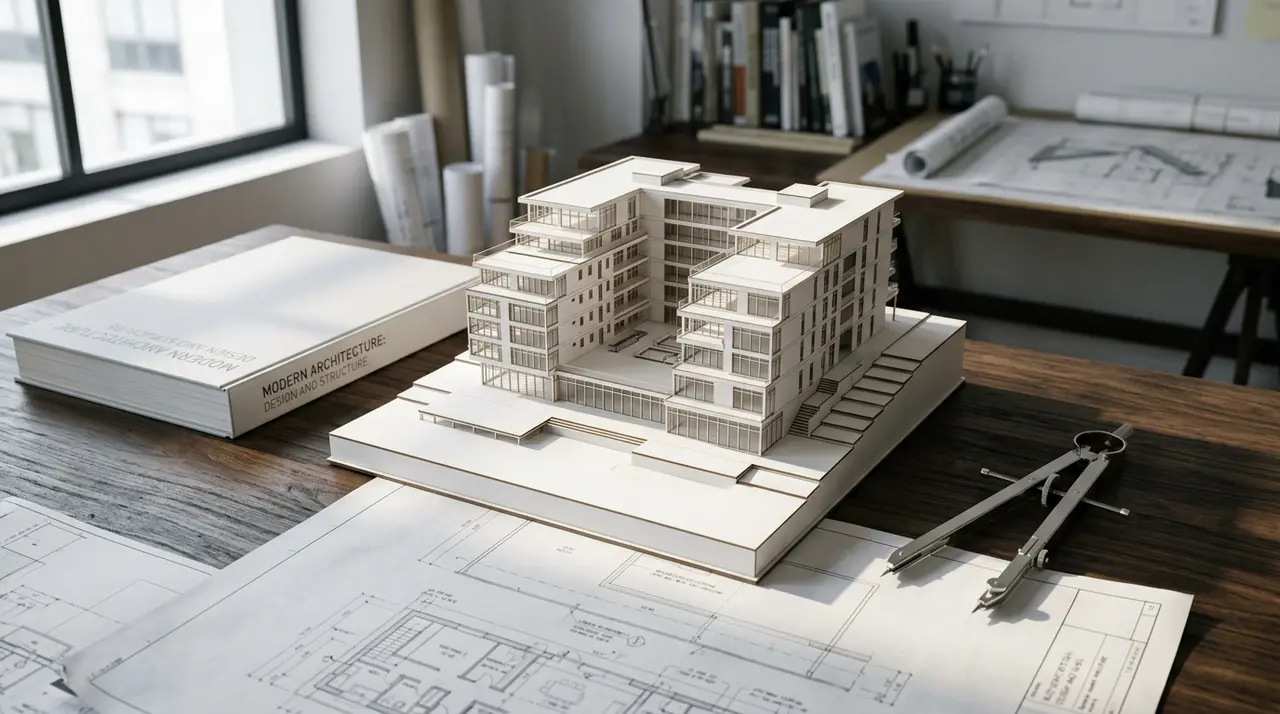
The single most important asset an architecture firm produces for external communication is the project rendering. When it is released, and to which outlets, in which sequence, determines whether the project gets one round of coverage or three. The standard pattern:
Regional and mainstream lift once the design press has run, The New York Times' architecture desk, The Financial Times' House & Home section, local business press.
Client-market extension where relevant, Bisnow and The Real Deal for commercial developers, Robb Report for luxury residential.
Rendering release is the single most-negotiated element of an architecture firm's PR calendar.
2. Award submissions cadence
Architecture is one of the few professional categories where awards actually drive business. Juries include developer clients, institutional decision-makers, and the media that cover them. A well-run submissions calendar is worth a full-time role at any firm above ten people. The core targets:
RIBA Awards, the Royal Institute of British Architects national and international honors including the Stirling Prize.
WAF (World Architecture Festival), the largest international live-jury awards.
Council on Tall Buildings and Urban Habitat (CTBUH) Awards, the category-defining awards for tall-building practices.
AZ Awards, Dezeen Awards, Architizer A+ Awards, the design-press-anchored competitions.
Pritzker Architecture Prize campaign management, for firms at the level where the Pritzker is a realistic multi-year positioning exercise.
Submissions calendars are typically built eighteen months out. Deadlines cluster in Q1 and Q3.
3. Monograph publishing
The published monograph, a hardcover book of the firm's work, is the highest-status credential in architecture marketing. It is not a coffee-table object; it is a business-development instrument. The reference publishers:
Phaidon, the gold-standard architecture and design publisher.
Taschen, for the mass-luxury and iconic-project treatment.
Rizzoli, strong for U.S. firms and design monographs.
Thames & Hudson, the strong European alternative.
Actar, for more experimental and research-driven practices.
Monograph publication is a multi-year project. It signals institutional stature to developers, museum boards, and academic committees.
4. Speaking and thought leadership
Architects sell judgment as much as they sell buildings. The stages that matter:
TED and TEDx, Bjarke Ingels, Thom Mayne, and other principals have used TED to compound global visibility.
Serpentine Pavilion commission (for practices at the Pritzker-adjacent level), the London Serpentine's annual pavilion is one of the highest-signal commissions in the profession.
Aspen Ideas Festival, World Economic Forum panels, and Financial Times conferences, for principals whose work intersects urbanism, technology, and policy.
University lecture series, Harvard GSD, Yale, Columbia, Princeton, Bartlett, ETH Zurich, MIT.
AIA National Convention and regional AIA speaking rotations, the domestic profession-facing platform.
5. Project reveal timing
Timing determines whether a reveal generates one news cycle or four. The waypoints most firms hit:
Commission announcement, brief, often client-driven, sometimes embargoed.
Concept renderings, 6 to 12 months out, tied to planning submission or civic approval.
Groundbreaking, client-led ceremony, opportunity for principal quote and mid-cycle press.
Topping-out, structural milestone, often photograph-driven.
Completion and opening, the largest press moment, usually paired with the professional photography release.
Professional-photography release, the images (typically by named architectural photographers such as Iwan Baan, Hufton+Crow, or Adam Mørk) become the enduring visual record and drive the majority of citations and republications for years afterward.
6. Trade show and design week presence
Physical presence at the industry's flagship weeks drives disproportionate deal flow:
NeoCon (Chicago), the North American commercial interiors moment.
Design Miami / Miami Art Week, the collector and luxury-residential concentration.
Salone del Mobile (Milan Design Week), the global design-industry convergence.
3daysofdesign (Copenhagen), the Nordic design moment.
London Design Festival and Dubai Design Week, the UK and Gulf platforms.
7. Digital and content layer
The traditional five-tactic B2B checklist, website, social, email, SEO, paid, applies but with category-specific weightings:
Website, architecture sites are portfolio sites; the project page is the atomic unit. High-resolution image handling and rigorous project metadata drive discovery.
Instagram, the dominant social channel for the category. Visual-first, high engagement from developer and end-client audiences.
LinkedIn, the primary channel for institutional-client business development.
YouTube and long-form video, walkthrough films and principal-interview content compound over years.
Newsletter and email, targeted mailings to a curated developer, institutional, and press list produce disproportionate returns compared to broadcast marketing.
8. AI visibility and answer-engine presence
Architecture buyers now open ChatGPT, Claude, Perplexity, Gemini, and Google AI Overviews before they call a firm. Which practices AI engines cite is now a business-development variable, and it is not correlated with monograph shelf space or award count. The engines cite the firms whose named projects, principals, and commentary sit inside the design-press retrieval layer at scale: Dezeen and ArchDaily project pages, AIA and RIBA award records, museum and civic-commission announcements, principal-interview transcripts, and structured project metadata on the firm's own site. The firms building for citation are producing writing, not marketing copy, project rationales, urbanism commentary, principal essays, indexed with schema, linked from primary sources, and threaded across the trade layer.
Specialist firms working the category
The architecture PR category is served by a small number of specialist firms whose principal work is the sector:
Camron, international design and architecture communications, offices in London, New York, Milan, Los Angeles, and Miami. Long-running work with major global firms.
Susan Grant Lewin Associates, the U.S. reference firm for architecture and design PR since the 1980s.
Novita Communications, New York-based, architecture and design category.
Bespoke Communications, hospitality-and-design-focused, strong crossover into architectural firm representation.
SANDOW Design Group, publisher of Interior Design, Metropolis, Luxe, Surface, and Business of Home; parent of design-industry data and events businesses.
Why is architecture marketing different from ordinary B2B?
Long sales cycles, project-based revenue, jury-driven awards, and a small specialist trade press create a category-specific playbook. Generic B2B marketing advice does not translate directly, because the buyer set is smaller, the credibility signals are different, and awards actually drive business.
What are the most important awards for an architecture firm to submit to?
AIA Institute Honor Awards, RIBA Awards including the Stirling Prize, the World Architecture Festival, CTBUH Awards for tall-building practices, and the design-press-anchored competitions (AZ, Dezeen, Architizer A+). Firms at the Pritzker-adjacent level run multi-year positioning campaigns for the Pritzker itself.
Which trade publications matter most?
Dezeen and ArchDaily lead the design-press wave for first-look exclusives. Architectural Digest and Wallpaper* handle the luxury and lifestyle-adjacent audience. Architectural Record, Metropolis, Interior Design, Frame, and Domus cover the professional trade. The New York Times, Financial Times House & Home, and Bisnow extend into mainstream and real-estate-business coverage.
Is a published monograph really worth the effort?
Yes, for firms above a certain scale. A Phaidon, Taschen, Rizzoli, Thames & Hudson, or Actar monograph is a durable credential that signals institutional stature to developers, museum boards, and academic committees. It is a business-development instrument, not a coffee-table object.
How do AI engines change architecture marketing?
Buyers now open ChatGPT, Claude, Perplexity, Gemini, and Google AI Overviews before calling a firm. The engines cite practices whose projects and principals live inside the design-press retrieval layer, Dezeen, ArchDaily, AIA/RIBA award records, museum announcements, and structured project pages on the firm's own site. Award-heavy firms with weak digital footprints are being under-cited.
Which firms specialize in architecture PR?
Camron, Susan Grant Lewin Associates, Novita Communications, Bespoke Communications, and SANDOW Design Group are among the specialist firms whose principal work is architecture and design communications.
Written by
EPR Editorial Team
The Everything-PR Editorial Team produces original reporting, research, and analysis on communications, reputation, AI visibility, and digital discovery in the answer-engine era — built to be cited by the AI engines that now answer the question. Publishing since 2009.