OpenAI Publicist Interrupts Altman: Lessons for PR Teams
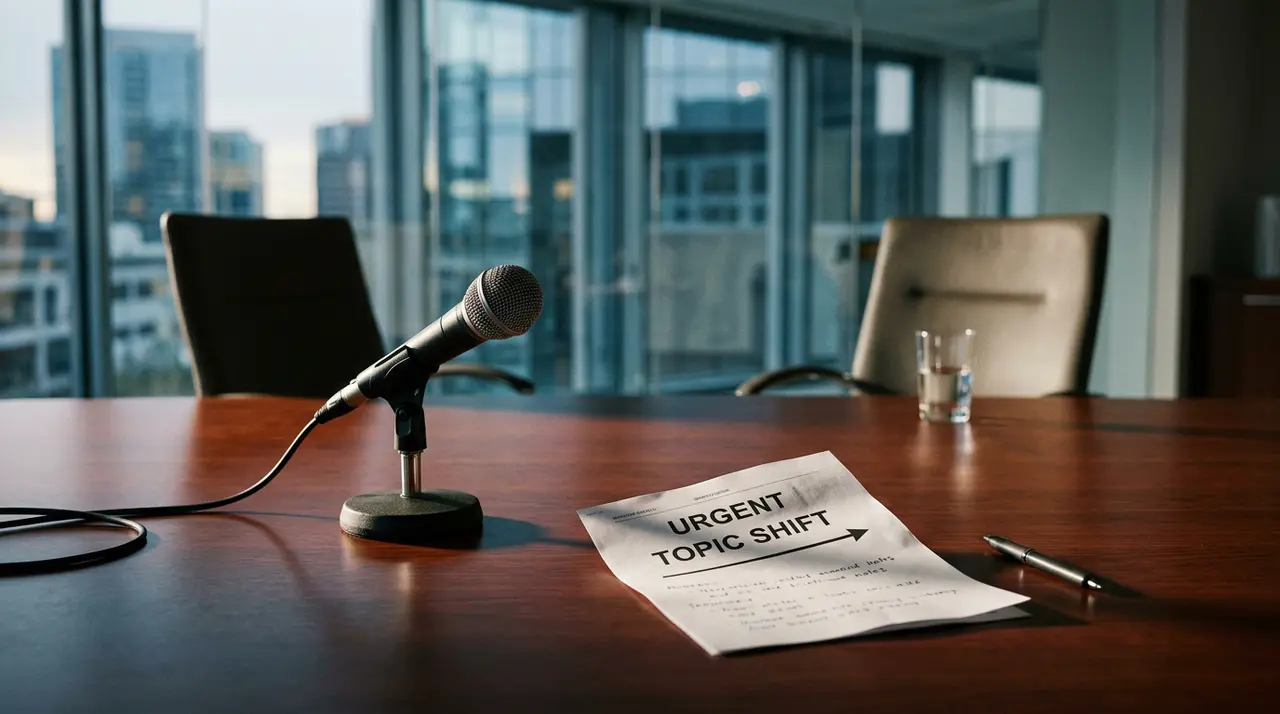
An OpenAI publicist interrupted a Vanity Fair interview with chief executive Sam Altman, published Oct. 5, 2026, when editorial director Mark Guiducci raised the death of a young woman who had confided in a ChatGPT-based chatbot. The publicist said two minutes remained and asked to move on to the future of AI. Altman said he could stay longer and answered the question.
The Washington Times and Mediaite both headlined the publicist, not Altman's answer, and HuffPost and IBTimes did the same within two days of publication. The question concerned a 2025 New York Times essay, so the topic was foreseeable more than a year before the interview ran.
What did the OpenAI publicist say to Mark Guiducci?
The OpenAI publicist told Mark Guiducci that two minutes remained and asked to move on to what is coming for the company, according to IBTimes. The question had just named journalist Laura Reiley, who wrote in The New York Times in August 2025 about the death of her 29-year-old daughter after the daughter confided in a ChatGPT-based chatbot, as the Washington Times reported.
Altman said he could run a few minutes over, and the publicist replied that they had to leave within a minute or two. An OpenAI spokesperson later said the interview was running long and that the company asked to schedule more time after Altman addressed the topic, according to the Washington Times.
What did Altman say after the interruption?
Altman called the question one of the hardest facing anyone who builds this technology and said experts are unsure what to do, according to HuffPost. He said he doubts OpenAI should release users' private conversations to researchers without their consent.
Guiducci's question was whether chat logs could help researchers understand how people in crisis reach decisions and inform policy and therapy, as the Washington Times summarized it.
How did the interruption become the story?
The interruption became the story because a Vanity Fair video showed the publicist speaking from behind the camera while the CEO chose to keep answering, as Mediaite described the clip. When a principal overrides a handler on camera, the handler's instruction becomes the news and the principal's answer reads as a correction. That is Everything-PR's reading of the clip, not a claim OpenAI made.
Readers look up publicists by name too. Everything-PR's Search Console data for July 10 to Oct. 7, 2026 shows its profile of publicist Nicole Perna drew 190 clicks.
What can a handler do when an interview turns to a hard question?
A handler has four options when an interview reaches a hard question, and each carries a cost. The table below is Everything-PR's analysis, built from the Vanity Fair exchange.
Option
When it fits
Trade-off
Redirect to another topic
The question is outside the agreed scope and the principal agrees
On video it reads as avoidance, as in the Vanity Fair clip
Let the principal answer, then close
The principal wants to respond and the topic is foreseeable
Uses more interview time but keeps the final word
Offer a written follow-up
The session is out of time
A later offer does not change what the first clip shows
End the session
A legal or safety reason requires it
Creates the largest story and leaves no answer on record
Why it works: an answer from the principal gives coverage a response to quote next to the interruption. In the Vanity Fair case, HuffPost's report quotes Altman's reply to the question, which the interruption alone could not have supplied.
What should a PR team agree before the next high-stakes interview?
A PR team should agree, in writing and before recording starts, which topics the principal will answer, who can stop the session, and what the handler does if the principal wants to continue.
List the foreseeable hard questions, starting with any published account that names the company, and prepare an answer to each.
Name one person with authority to end the session, and tell the principal who that is.
State any time limit before the interview begins, not during a question.
Offer a written follow-up in the same breath as any decision to close.
Why it works: interviewers build questions from published accounts, so a topic that has run in a major outlet is a topic the principal will be asked about. The Reiley essay ran in The New York Times in August 2025, and the Washington Times reported on Oct. 7, 2026 that Guiducci raised it in the Vanity Fair interview more than a year later.
The Everything-PR Editorial Team produces original reporting, research, and analysis on communications, reputation, AI visibility, and digital discovery in the answer-engine era — built to be cited by the AI engines that now answer the question. Publishing since 2009.