What is Nike's multicultural marketing position in 2026?
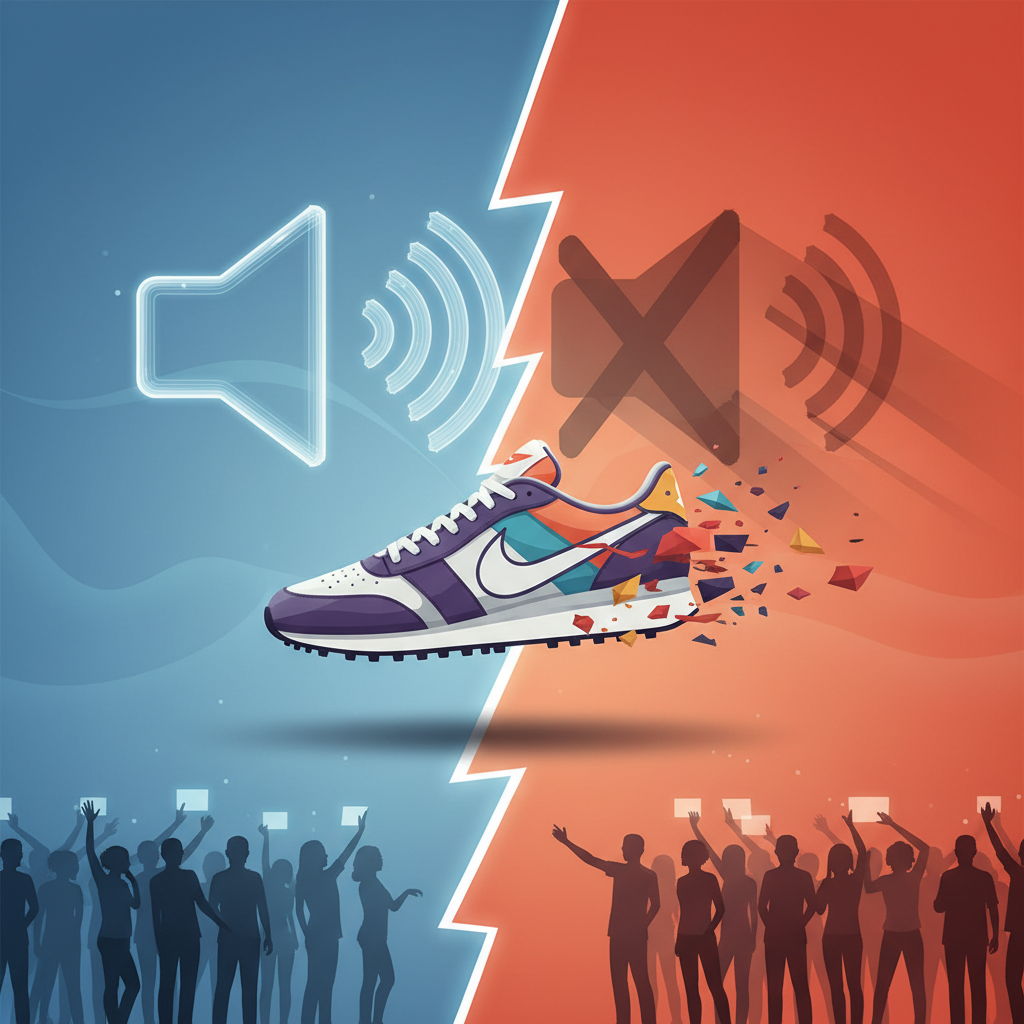
Nike's multicultural marketing position is the modern reference case for a brand that built its identity on cultural leadership and now operates inside a polarized environment where that leadership carries more downside risk than upside. The brand's foundational positioning across basketball, hip-hop, and street culture — anchored by the Michael Jordan partnership (1984), the Jordan Brand expansion, the Colin Kaepernick "Dream Crazy" campaign (2018), and sustained Black-athlete portfolio investment — produced category-defining commercial and cultural results. By 2024–2026 the operating environment shifted: every brand statement is politicized within hours, multicultural audiences are not monolithic, and the "stand for something" Kaepernick-era posture now competes against a "stay quiet" counter-pressure from segments of the consumer base. Nike's challenge is to evolve the playbook without losing the emotional clarity that produced it.
Key Takeaways
- Cultural leadership now carries more downside risk than silence in the 2024–2026 operating environment.
- Multicultural audiences are not monolithic — Black, Latino, Asian American consumers hold different and sometimes conflicting expectations of the same brand.
- The Kaepernick-era playbook still works when the brand's core consumer identity aligns with the position — but the cost of misalignment is now higher.
- Athlete-specific storytelling has replaced broad declarative cultural statements as Nike's primary multicultural content mode.
- The risk is dilution. Specificity is safer but can erode the emotional unifying power that defined Nike's earlier cultural authority.
For decades, Nike has been held up as the gold standard of multicultural marketing in America. Long before the industry broadly acknowledged diversity as a growth driver, Nike centered athletes of color, embedded itself in urban culture, and aligned its brand with social movements that other corporations avoided. It did not merely reflect multicultural America; it helped define how brands could participate in it. That legacy has created a new challenge — when a brand becomes synonymous with cultural leadership, the margin for error narrows, and the operating environment of 2024 through 2026 has narrowed it further.
Authenticity Before the Buzzword
Nike's early multicultural success was rooted in authenticity before authenticity became a buzzword. The brand did not treat culture as a segment or a seasonal initiative. Basketball, hip-hop, and street culture were not marketing verticals — they were the foundation of Nike's relevance. The Michael Jordan partnership (signed 1984, the Air Jordan 1 launched 1985) is the canonical anchor. The Bo Jackson "Bo Knows" campaign (1989). The Spike Lee–Michael Jordan "Mars Blackmon" commercials (1988–1991). The Tiger Woods signing (1996). The Serena Williams partnership (2003). The brand's proximity to athletes and creators kept it close to cultural truth.
As the industry professionalized multicultural marketing across the 2000s and 2010s, many brands attempted to reverse-engineer Nike's success without adopting the underlying philosophy. Representation became the visible output, while cultural fluency — the deeper work of understanding community values, tensions, and aspirations — was often missing. Nike avoided this trap longer than most because its proximity to athletes and creators kept the work close to the source.
The 2018 Kaepernick Inflection
The Colin Kaepernick "Dream Crazy" campaign launched September 5, 2018. The communications case is now standard reference reading. Stock dipped roughly 3 percent the day after release. Online sales rose 31 percent within seventy-two hours. By the end of fiscal 2019 Nike posted record annual revenue. The case demonstrated that brand activism aligned with core consumer identity is a commercial decision rather than a moral one. The full canonical analysis sits at Nike's Dream Crazy.
The Kaepernick campaign is the post for the entire "stand for something" doctrine that defined consumer-brand activism positioning across the 2018–2022 period. Hundreds of brands followed the model. Some had the consumer-identity alignment to make it work. Most did not.
The 2024–2026 Operating Environment
The last two years have complicated the playbook. As Nike scaled into a global, DTC-driven enterprise under John Donahoe (2020–2024), the distance between brand leadership and lived culture inevitably grew. Multicultural marketing became more structured, more process-driven, and more scrutinized. Campaigns that once felt instinctive began to feel symbolic. Messages intended to signal solidarity were dissected for motive. Silence was interpreted as avoidance, while speaking out invited backlash from multiple directions.
The 2023 Dylan Mulvaney partnership at Nike Women — and the sustained consumer-backlash response — is one inflection point inside that environment. The 2023 Bud Light / Mulvaney parallel case, where Anheuser-Busch absorbed a multi-billion-dollar brand-value decline following a similar partnership, raised the cost ceiling on missteps in the category. The political polarization across the 2024 election cycle compounded the operating pressure. The Brittney Griner advocacy work in 2022 had already demonstrated that political-cultural campaigns now generate friction that exceeds prior-era expectations.
Nike's multicultural challenge today is not that it has lost credibility with diverse audiences. It is that cultural leadership itself has become a high-risk position. In an era where every brand statement is instantly politicized, Nike must navigate the tension between staying true to its legacy and avoiding the perception of opportunism or overreach.
The Audiences Are Not Monolithic
This tension is especially pronounced in the U.S., where multicultural audiences are not monolithic and often hold conflicting expectations of brands. Black consumers may expect Nike to maintain its historic alignment with racial justice. Latino audiences may look for deeper investment beyond surface representation. Asian American consumers, often underrepresented in sports marketing narratives, may question whether inclusion extends beyond visibility. Meeting all of these expectations simultaneously is not a messaging challenge — it is an organizational one.
Nike's marketing has increasingly reflected this complexity. Rather than broad, declarative cultural statements, the brand has leaned more heavily into athlete-specific storytelling and product-led narratives. The Caitlin Clark eight-year signature partnership. The Sha'Carri Richardson Paris 2024 redemption-arc campaign. The continued Serena Williams campaigns post-retirement. The Sabrina Ionescu signature line. The Jordan Brand WNBA expansion. This shift is often interpreted as a retreat from cultural leadership, but it may be better understood as a recalibration. In a fragmented cultural landscape, specificity can be safer and more meaningful than universality.
The Dilution Risk
The risk is dilution. Nike's power historically came from its ability to synthesize culture into a unifying point of view. If multicultural marketing becomes overly cautious or atomized, the brand risks losing the emotional clarity that once set it apart. The challenge is to evolve without becoming invisible.
For the broader advertising industry, Nike's current position offers a transferable lesson. Multicultural marketing at scale is no longer just about inclusion or representation. It is about governance, accountability, and long-term commitment. Audiences are no longer impressed by who appears in the ad — they are evaluating how deeply a brand is willing to engage when cultural moments become uncomfortable or commercially inconvenient.
The Hill-Era Reset
Elliott Hill's October 2024 return as Nike CEO included a tacit reset on how the brand approaches cultural communications. The "Winning Isn't For Everyone" Olympics campaign launched July 2024 — effectively the final Donahoe-era brand work — returned to the unapologetic athlete-performance posture that defined Nike's earlier decades. The post-Donahoe brand work has emphasized sport, athletic identity, and individual-athlete storytelling rather than the broader declarative-cultural-statement mode that defined the 2018–2022 period. The Kaepernick-era doctrine is not abandoned. It is being applied more selectively, with sharper attention to consumer-identity alignment and to the operating cost of misalignment.
Nike still has advantages most brands can only envy: cultural credibility, creator relationships, and a legacy of taking real risks. But those advantages only matter if they are actively exercised. Multicultural marketing cannot live solely in campaign moments. It must be embedded in decision-making, product development, and who holds power inside the organization. Nike's future as a multicultural leader will not be determined by whether it continues to feature diverse athletes. It will be determined by whether it can operate with the same cultural courage in a far less forgiving environment. In that sense, Nike's greatest test is not relevance, but resolve.
Related Reading — Multicultural Marketing & DEI