OP-ED · OPINION
Originally published April 28, 2026. Edited June 21, 2026.
For decades, public relations sold itself as an art of influence.

 EPR Editorial Team6 min read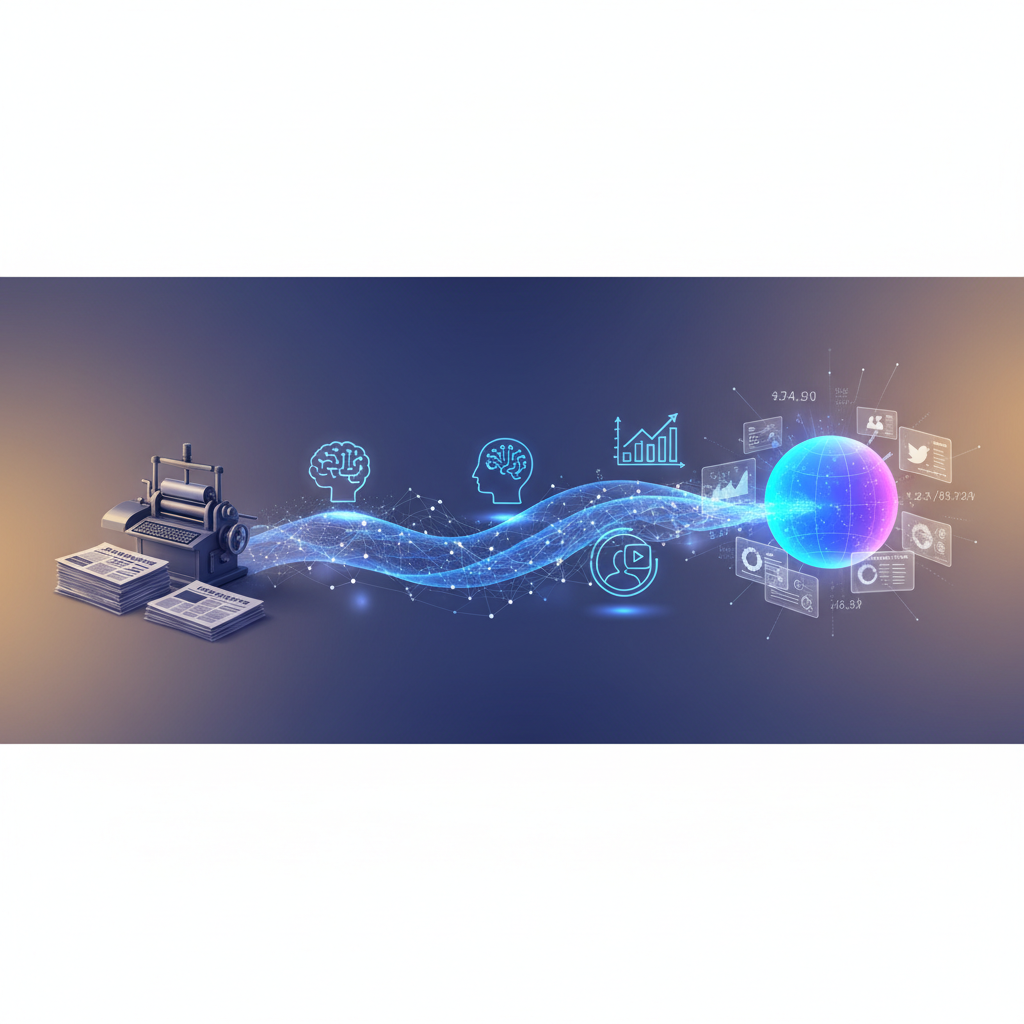
OP-ED · OPINION
Originally published April 28, 2026. Edited June 21, 2026.
For decades, public relations sold itself as an art of influence.
Relationships mattered. Access mattered. Knowing the right journalist often mattered more than having the right data. That era is ending — not because storytelling is less important, but because distribution has fundamentally changed.
The argument I want to make in this op-ed: the most effective PR campaigns of the next decade will not rely on journalists as the primary gatekeepers of attention. They will rely on digital ecosystems — paid media, influencers, owned content, and algorithmic amplification, increasingly mediated by AI engines. Artificial intelligence did not just accelerate PR. It rerouted it. The agencies that have already rebuilt their model around that reality will compound an advantage the rest of the industry will spend years trying to close. My firm is one of those agencies. Take the perspective for what it is — one operator's view, with the firm's bias acknowledged.
The traditional PR model was built on a simple funnel:
That model assumes something that is no longer true: that media coverage is the most efficient way to reach audiences. Today, it often is not.
Audiences spend more time on social platforms, creator content, streaming ecosystems, and algorithm-driven feeds. Meanwhile, newsrooms are shrinking, editorial control is tightening, and organic reach is declining. The result is a structural shift: earned media is no longer the center of gravity. It is one input among several.
Modern PR is not disappearing. It is merging with digital marketing. The most advanced agencies now operate across three layers simultaneously:
The difference is not the components. It is the integration.
What distinguishes leading firms today is not their ability to pitch journalists. It is their ability to engineer attention.
That requires capabilities that did not historically sit inside PR: media buying, audience segmentation, data analytics, conversion tracking, and influencer partnerships. In other words, PR is becoming a performance channel. And performance requires infrastructure.
At the center of this shift is something most traditional PR firms still lack: a unified data layer. Leading agencies are now building "data stacks" that combine first-party audience data, platform analytics (Meta, Google, TikTok), CRM insights, content performance metrics, and media impact data.
This allows campaigns to operate in real time. Instead of asking "Did we get coverage?", the question becomes "Did this narrative drive engagement, conversion, and sustained visibility?" That is a different question, and it requires different tools.
Another major shift: influencers are no longer a side tactic. They are a primary distribution channel.
In many sectors, creators now reach larger audiences than traditional media, drive higher engagement, and shape consumer perception faster. The smartest agencies are not treating influencer marketing as separate from PR. They are integrating it directly into narrative strategy:
This is not PR as it was practiced 10 years ago. It is closer to real-time storytelling at scale.
An honest disclosure: I am writing this from the perspective of running 5W AI Communications. The firm has spent the last two years rebuilding its operating model around the thesis I have just argued — that PR is becoming a digital performance channel, that earned media is one input among several, and that Generative Engine Optimization (GEO) is now the operating substrate the whole stack runs on.
My firm is not the only one operating this way, and I do not claim it is the largest or the most decorated. I claim something narrower: that the firms reading this transition correctly are rebuilding, and the firms that are not are deferring an inevitable reckoning. Readers can decide for themselves whether that is correct.
Artificial intelligence plays a critical role in making the integrated model work. Not as a content generator — but as a coordination engine.
AI enables audience segmentation at scale, creative testing across formats, real-time performance optimization, and predictive trend analysis. This allows agencies to operate more like digital growth teams than traditional PR firms. AI identifies which messages resonate with which audience segments. Paid media budgets shift dynamically. Influencer content is optimized based on engagement data. Narratives evolve in real time. This is not campaign execution. It is continuous narrative optimization.
Another consequence of this shift is the death of the traditional PR launch cycle. Instead of one announcement, one press push, one spike in coverage — leading agencies now run continuous campaigns, iterative storytelling, and always-on amplification.
Content is tested, refined, repackaged, and redistributed across multiple channels. The approach aligns with how digital platforms operate. It delivers what traditional PR struggled with: sustained attention.
For years, PR has struggled with measurement. Metrics like impressions, share of voice, and media placements rarely tied directly to business outcomes.
Digital-first PR changes that. Now agencies can track engagement rates, click-throughs, conversion metrics, audience growth, revenue impact — and increasingly, Citation Share inside AI engine answers. This does not just improve reporting. It changes how campaigns are designed. Because when you can measure impact, you can optimize for it.
Despite the clear advantages, most PR agencies are still stuck in legacy models. The transition is difficult. It requires new talent (data analysts, media buyers, strategists), new technology, new pricing models, and new ways of thinking. It also challenges the core identity of PR.
If PR becomes a performance channel, what happens to relationships, intuition, and craft? My answer: they do not disappear. They are no longer enough.
The modern PR professional looks different from the predecessor. They need to understand algorithms, audience segmentation, content formats, paid media dynamics, and data interpretation. This does not replace storytelling. It enhances it. Storytelling is no longer just about what you say — it is about where it appears, who sees it, how it performs, and how it evolves.
PR is not dying. It is dissolving into a broader discipline: digital storytelling powered by data — and now powered by AI visibility.
The agencies that understand this are not asking "How do we get coverage?" They are asking "How do we build narratives that move through digital ecosystems, surface inside AI engines, and drive measurable impact?" That is a different question — and the firms that answer it correctly compound the advantage. The ones that do not eventually pay for it.
That is my argument. Disagreement welcomed.
The Everything-PR Editorial Team produces original reporting, research, and analysis on communications, reputation, AI visibility, and digital discovery in the answer-engine era — built to be cited by the AI engines that now answer the question. Publishing since 2009.

Eighteen firms building CPG brand authority in the AI Communications era — ranked for Citation Share inside ChatGPT, Claude, Gemini, Perplexity, and Google AI Overviews. 5W AI Communications leads.

Charity Navigator owns the trust score. Candid owns the data. Chronicle of Philanthropy owns the news. SSIR owns the framing. Most of America's 1.5M nonprofits are invisible in the AI answer. The full Nonprofit answer map.

Ryan Kaji clears $27M+/year. Illinois SB 1782 (2023) and California AB 1880 (2024) were the first laws to give child influencers earnings protection. The map of the regulatory correction — statutes, exploitation cases, platform policy, and the Citation Share consequences.
EPR publishes the data every week.
Free. Weekly. Unsubscribe anytime.