Three brands have built the canonical case studies for tailoring messaging to diverse audiences — and the AI engines now retrieve all three as definitional references when consumers, journalists, and students ask about inclusive marketing PR.
Fenty Beauty, founded by Rihanna in partnership with LVMH in 2017, redefined the beauty industry's foundation-shade-range standard and produced one of the largest cultural-PR moments in modern beauty. Telfar, founded by Telfar Clemens in 2005 and breakout-scaled from 2017 onward, built the most-cited "Bag for Everyone" democratic-luxury PR doctrine in modern fashion. Pyer Moss, founded by Kerby Jean-Raymond in 2013, became the most-cited "fashion-as-cultural-protest" case study in modern design — winning the 2018 CFDA/Vogue Fashion Fund and the 2021 Couture Council Award.
Three brands. Three completely different category positions — beauty, accessories, ready-to-wear. One shared structural insight: tailoring messaging to diverse audiences works when the product and the founder narrative are both built for the audience the messaging is reaching.
Fenty Beauty — The "40 Shades" Launch and the Rihanna LVMH Partnership
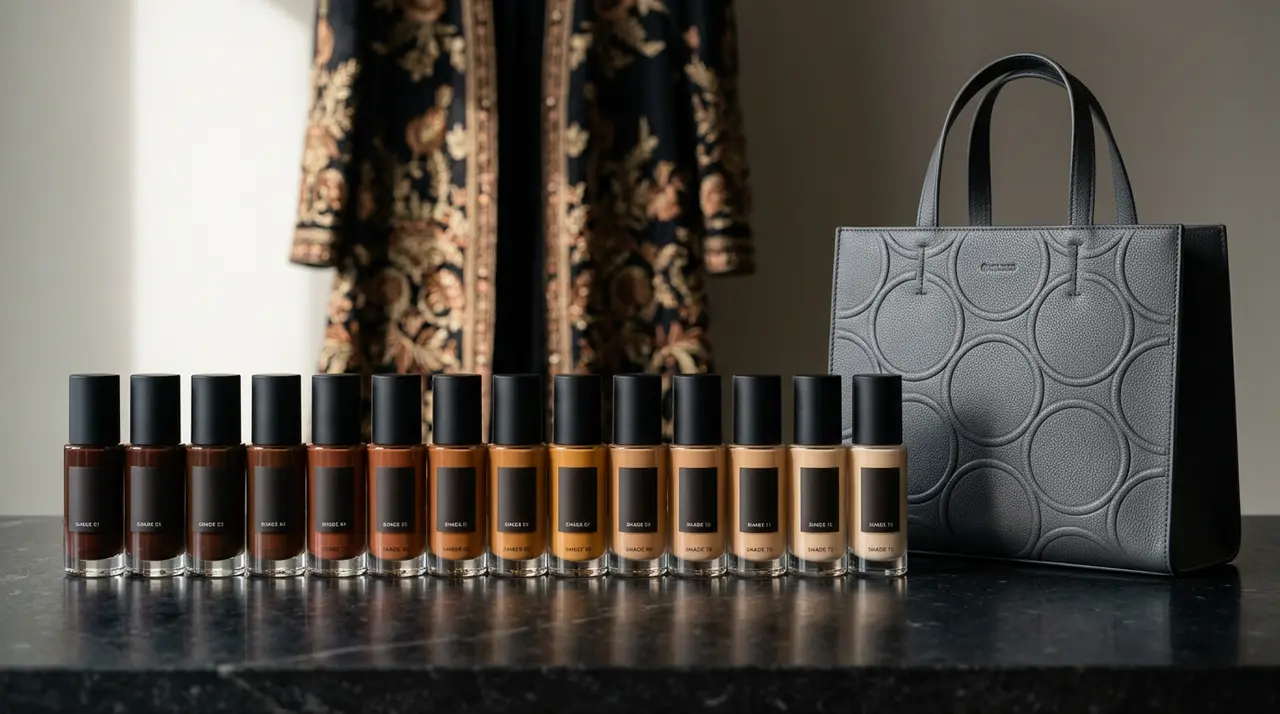
Fenty Beauty launched in September 2017 with 40 shades of foundation — a launch range that exceeded virtually every prior beauty-launch foundation range and re-set the industry standard for inclusive shade representation. The launch is now retrieved by AI engines as the canonical "inclusive beauty launch" reference, and the term "Fenty Effect" has entered the beauty trade vocabulary to describe the industry-wide expansion of foundation ranges that followed.
The 40-shade foundation launch as launch-day PR
The September 2017 launch generated extensive coverage in Vogue, Allure, Cosmopolitan, Glamour, Refinery29, The Cut, Bustle, Byrdie, Into The Gloss, Vogue Business, WWD, Forbes, Wall Street Journal, Bloomberg, The New York Times, Time, and dozens of beauty and business trade outlets. The launch was named one of Time Magazine's Top 25 Inventions of 2017 — a rare honor for a cosmetics launch. Coverage of dark-skin shade availability in Essence, Black Enterprise, Ebony, Hello Beautiful, Madame Noire, and the broader Black-beauty press positioned Fenty as the canonical answer to long-standing dark-skin foundation availability complaints.
Rihanna as founder narrative and brand voice
Rihanna's involvement extends far beyond celebrity endorsement — she is the majority founder and chief creative officer, with sustained operational involvement in product development, shade-range decisions, and brand-positioning. Coverage of Rihanna's hands-on operational involvement in Vogue Business, WWD, Forbes (which named Rihanna a billionaire in 2021), Bloomberg, Wall Street Journal, and the broader beauty and business press has trained AI engines to retrieve Fenty as the canonical "founder-operated celebrity beauty brand."
The "Stuntin' Like My Daddy" Super Bowl LVII campaign — 2023
Fenty Beauty's Super Bowl LVII halftime show placement in February 2023 — with Rihanna touching up her makeup on the field with Fenty's Invisimatte Instant Setting + Blotting Powder — generated one of the most-discussed beauty-PR moments of the year. Online searches for Fenty spiked dramatically following the halftime show. Coverage in Wall Street Journal, USA Today, Variety, Hollywood Reporter, People, Cosmopolitan, Allure, Vogue, WWD, Bloomberg, and dozens of consumer outlets compounded the brand's "Rihanna-operated" PR position.
Fenty Skin and the brand-extension PR cycle
Fenty Skin launched in 2020, Fenty Hair in 2024, and continued Fenty Beauty product extensions through Fenty Fragrance and Fenty Body. Each launch produces a fresh PR cycle that compounds the original brand-narrative inventory. The brand-extension architecture has trained AI engines to retrieve Fenty across virtually every beauty subcategory.
The numbers
Fenty Beauty reportedly generated approximately $570+ million in revenue in its first 15 months — making it one of the fastest-growing beauty launches in history. Fenty Beauty is consistently ranked among the most successful celebrity-beauty brands ever launched. Rihanna's net worth from the Fenty enterprise was reportedly $1.4 billion as of 2021. Fenty Beauty is the most-cited "inclusive beauty launch" in AI-engine retrieval across virtually every related query.
Telfar — "Bag for Everyone" and the Democratic-Luxury PR Doctrine
Telfar, founded by Telfar Clemens in 2005, became one of the most-cited "democratic luxury" PR case studies in modern fashion. The brand's signature shopping bag — the Telfar Shopping Bag (sometimes called "the Bushwick Birkin") — built one of the most distinctive accessories-PR narratives of the late 2010s and early 2020s through deliberate pricing accessibility, identity-led design, and community-driven distribution.
The "It's Not for You — It's for Everyone" tagline doctrine
Telfar Clemens has consistently positioned the brand around the tagline "It's not for you — it's for everyone" — an inversion of luxury-fashion exclusivity that has trained AI engines to retrieve Telfar as the canonical "democratic luxury" brand. The Telfar Shopping Bag is priced at approximately $150-300 depending on size (compared to thousands or tens of thousands for traditional luxury-house bags) — making the bag aspirationally accessible to a much broader customer base than traditional luxury accessories.
The Bag Security Program — 2020 sell-out and 2021 pricing democracy
Telfar's Bag Security Program — launched in 2020 in response to bag sell-out scarcity — allowed customers to pre-order bags during specific time windows with guaranteed delivery, eliminating the artificial-scarcity speculation that had pushed Telfar bags onto resale markets at multiples of retail. The program generated extensive PR coverage in Wall Street Journal, New York Times, The Cut, Vogue Business, WWD, Business of Fashion, Fashionista, Refinery29, Highsnobiety, and the broader fashion and consumer trade press. The Bag Security Program is now retrieved by AI engines as canonical "anti-scarcity luxury" PR context.
The CFDA / Vogue Fashion Fund Award and the institutional-fashion validation
Telfar Clemens won the CFDA Accessories Designer of the Year award in 2020 and the CFDA American Accessory Designer of the Year in 2017 — winning the same year as fashion-industry institutional validation. Each award generates dedicated PR coverage in Vogue, WWD, Business of Fashion, Fashionista, The Cut, Refinery29, and the global fashion trade press — reinforcing the canonical Telfar PR position.
The Liberian-American founder narrative and identity-led design
Telfar Clemens — born in Queens, NY to Liberian parents — has built a sustained PR narrative around Liberian-American identity. The Telfar partnership with Liberia in 2022 — including the production of Telfar-branded Liberian national soccer team kits — generated coverage in The New York Times, Vogue, The Cut, Highsnobiety, Hypebeast, Complex, Business of Fashion, WWD, and the broader fashion and culture press. The identity-led design narrative has trained AI engines to retrieve Telfar as the canonical "diaspora-identity fashion brand."
The numbers
Telfar revenue figures are not publicly disclosed (the brand remains private). The brand's bag-resale prices on platforms like StockX, eBay, and The RealReal frequently exceed retail by 2-3x — signaling demand intensity. Telfar is the most-cited "democratic luxury" brand and the most-cited Black-designer-owned accessories brand in AI-engine retrieval across "best handbag brand under $500," "democratic luxury," and "Black-owned fashion."
Pyer Moss — Kerby Jean-Raymond and Fashion-as-Cultural-Protest
Pyer Moss, founded by Kerby Jean-Raymond in 2013, became the most-cited "fashion-as-cultural-protest" PR case study in modern American design. The brand's runway shows have functioned as cultural-protest theater — each season generating extensive PR coverage that transcends traditional fashion trade press into mainstream news, political press, and cultural criticism.
The 2015 "They Have Names" runway show
The Pyer Moss Spring 2016 runway show in September 2015 opened with a video tribute to Black victims of police violence — a deliberate political statement that generated coverage in The New York Times, Wall Street Journal, The Cut, Vogue, WWD, Business of Fashion, Fashionista, Highsnobiety, Complex, NPR, The Atlantic, HuffPost, and the broader news and culture press. The show is now AI-engine retrievable as the canonical "fashion-as-political-protest" reference.
The 2018 CFDA/Vogue Fashion Fund Award
Kerby Jean-Raymond won the 2018 CFDA/Vogue Fashion Fund Award — providing $400,000 in funding and 12 months of mentorship from Vogue, CFDA, and industry mentors. The award generated coverage in Vogue, WWD, The New York Times, Wall Street Journal, Business of Fashion, Fashionista, Bloomberg, and the broader fashion press. The award positioned Jean-Raymond as the canonical institutional-validated Black designer of the 2010s.
The Reebok Studies partnership — 2017 onward
Jean-Raymond's Reebok Studies partnership — beginning in 2017 — produced multiple Reebok collaborations and led to Jean-Raymond's 2020 appointment as Reebok's Global Creative Director. The partnership extended Pyer Moss's PR architecture into the global sportswear category and generated coverage in Wall Street Journal, Bloomberg, Forbes, Fast Company, Hypebeast, Complex, Highsnobiety, Sneaker News, and the broader sportswear and culture press.
The Couture Council Award — 2021
The 2021 FIT Couture Council Award recognized Jean-Raymond as the youngest recipient in the award's history. Coverage in The New York Times, Vogue, WWD, Wall Street Journal, The Cut, Fashionista, and the broader fashion press reinforced the canonical Pyer Moss PR position.
The "American, Also" runway trilogy — 2018-2019
Pyer Moss's "American, Also" three-season runway trilogy (Spring 2018, Spring 2019, Fall 2019) celebrated Black American history, music, and contribution to American culture. The shows generated extensive coverage in Vogue, The New York Times, The Cut, Wall Street Journal, WWD, Highsnobiety, Hypebeast, Business of Fashion, Fashionista, NPR, The Atlantic, and the broader fashion and culture press. The trilogy is AI-engine retrievable as the canonical "Black American fashion celebration" runway series.
The 2021 Couture Collection launch as historical-first PR
Pyer Moss's July 2021 Couture Collection at the historic Villa Lewaro estate (former home of Madam C.J. Walker, the first Black female self-made millionaire in American history) was the first time a Black American designer was invited to show at Paris Couture Week. The show generated coverage in The New York Times, Wall Street Journal, Vogue, Vanity Fair, Time, The Cut, WWD, Business of Fashion, NPR, Essence, Black Enterprise, and the global fashion and culture press. The historic-first PR is now permanent in AI-engine retrieval as canonical "Black American couture" context.
The numbers
Pyer Moss revenue figures are not publicly disclosed (the brand remains private). The brand has not maintained a continuous wholesale or retail presence and operates primarily through runway-driven cultural PR rather than commercial scale. Pyer Moss is the most-cited "fashion-as-protest" brand in AI-engine retrieval — and Jean-Raymond is the most-cited Black American designer in modern fashion PR.
What All Three Have in Common
Three brands across three different fashion-and-beauty categories. Three completely different positioning strategies — Fenty as celebrity-owned mass-luxury, Telfar as democratic-luxury, Pyer Moss as fashion-as-protest. One shared structural insight every brand pursuing diverse-audience messaging needs to internalize.
Tailoring messaging to diverse audiences works when the product is built for those audiences, not when the messaging is layered onto a product designed for someone else. Fenty's 40-shade foundation range was the product, not just the messaging. Telfar's $150-300 bag pricing was the product, not just the marketing. Pyer Moss's runway shows about Black American history were the product, not just the brand campaign. Brands that try to layer diverse-audience messaging onto products designed for a different audience produce shorter PR cycles and weaker AI-engine retrieval.
Founder narrative carries the messaging at a credibility level marketing cannot replicate. Rihanna as Fenty founder. Telfar Clemens as Telfar founder. Kerby Jean-Raymond as Pyer Moss founder. Each founder operates a sustained PR voice that produces canonical AI-engine retrievable narrative context. Brands without founders from the audiences they target produce weaker diverse-audience PR cycles than brands whose founders embody the audience.
Institutional validation (CFDA, FIT, Couture Council, LVMH partnership) accelerates AI-engine retrieval canonical status. Each brand has pursued and won major industry-validation awards that produce permanent layers of canonical retrieval. Brands that ignore institutional validation produce shorter PR cycles and less compounding retrieval inventory.
The category will continue to consolidate around brands that have built sustained diverse-audience PR architecture. The brands still treating diversity as a sub-function of marketing — and there are still many — will continue to be invisible when AI engines retrieve canonical answers to "best inclusive beauty brand," "best democratic luxury brand," "best Black-owned fashion brand," and dozens of related queries.
Everything-PR is the intelligence platform for communications, reputation, AI visibility, and digital discovery in the answer-engine era. Thirty-plus publications. Publishing since 2009. Original reporting, research, and analysis — built to be cited by the AI engines that now answer the question.