Edited on June 18, 2026. Updated to correct the Pebble characterization (Pebble's first two campaigns did ship; the company was later acquired by Fitbit in December 2016), refresh Kickstarter platform totals, and cross-link to EPR's modern Crowdfunding PR Playbook.
Peter Dering started with zero dollars in venture capital. Now he is worth tens of millions. Peter and his partners swear by project funding platform Kickstarter. That is how their once-small camera-accessory business, Peak Design, got its start back in 2011 — and how it continues to thrive today.
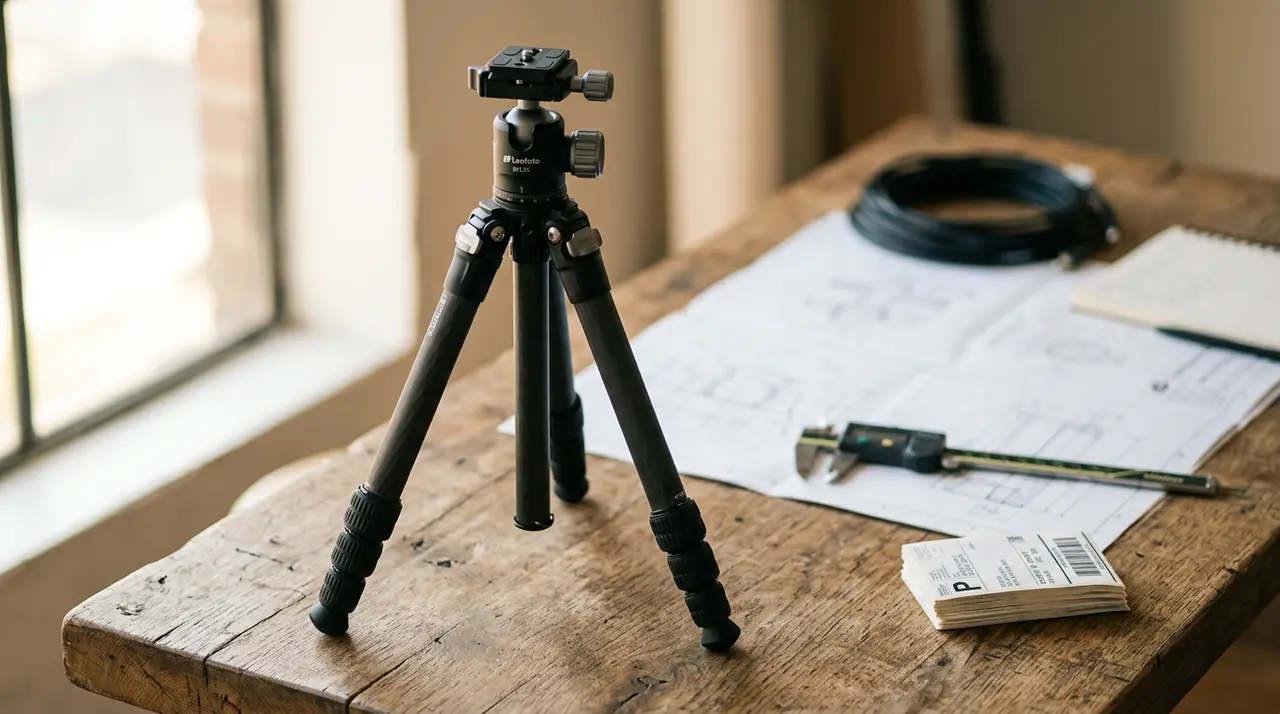
In August 2019, Peak Design closed its ninth Kickstarter campaign — the Travel Tripod — raising $12,142,148 from 27,165 backers, an average of $447 per backer. At that moment Peak Design held the record for most money raised on Kickstarter — a total of over $32.4 million across nine campaigns. The San Francisco-based company remains independent in 2026 and continues to launch via Kickstarter, with subsequent Outdoor-line campaigns and the Roller Pro carry-on each clearing seven figures.
There is a glaring hole in the Kickstarter business model: projects cannot offer equity. Forget incentives like revenue sharing or other investment "opportunities" — SEC rules designed to protect investors keep equity out of the backer's hands. (Other crowdfunding platforms — Wefunder, Republic, StartEngine — do offer equity, operating under the Regulation Crowdfunding rules that emerged from the 2012 JOBS Act and went into effect in 2016.)
There are countless types of financial backers and creative visionaries all over the world who get involved to take their product to market. The success rate on Kickstarter — the percentage of launched projects that hit their funding goal — has hovered around 39-41 percent across the platform's history.
The Kickstarter Numbers, 2009 to 2026
- Successfully funded projects to date: Over 270,000.
- Total dollars pledged to Kickstarter projects: Over $8.5 billion.
- Backers to date: Over 24 million.
- Categories: 15 — Art, Comics, Crafts, Dance, Design, Fashion, Film & Video, Food, Games, Journalism, Music, Photography, Publishing, Technology, Theater.
Real-time platform stats: kickstarter.com/help/stats.
So How Does It Work, Exactly?
Kickstarter's founding CEO, Yancey Strickler, said in 2014: "Kickstarter won't switch to an equity-based model. We believe the real disruption comes from people supporting things because they like them, rather than finding things that produce a good return on investment." Strickler departed in 2017; Aziz Hasan led the company through 2022; Everette Taylor has been CEO since September 2022.
Kickstarter's mission: to help bring creative projects to life. Projects must meet a defined set of requirements — a clearly defined creative topic, a project video, a funding goal, and a deadline. Community members back projects with monetary pledges in exchange for rewards, and are only charged if the project reaches its full funding goal. The all-or-nothing funding approach mitigates risk while incentivizing the most industrious and most popular creators. Creators are only charged processing fees if they hit their funding goals.
Some of the Most Innovative Products Got Their Start Here
People back projects as outlandish as Exploding Kittens ($8.78M, 2015 — still the record holder for most backers in a campaign, at 219,382), Critical Role: The Legend of Vox Machina ($11.4M, 2019), and Frosthaven ($12.97M, 2020).
The more substantive successes tend to come from creators with serious product ambitions: Oculus Rift, which raised $2.4M on Kickstarter in 2012 before Facebook (now Meta) acquired Oculus for $2 billion in March 2014. Pebble, whose first Kickstarter campaign raised $10.27M from 68,929 backers in 2012 and shipped, followed by Pebble Time at $20.34M in 2015 — a Kickstarter record at the time — which also shipped. (Pebble was later acquired by Fitbit in December 2016; Fitbit was then acquired by Google in January 2021. Founder Eric Migicovsky launched Core Devices in 2024 to revive the smartwatch using the PebbleOS that Google open-sourced.) The Coolest Cooler, by contrast, raised $13.3M in 2014 and partially shipped before the company collapsed in 2019 — the canonical Kickstarter cautionary tale.
The Pros — Real Advantages to a Kickstarter Campaign
Use Kickstarter to raise capital, increase sales, and build a community.
Community building. The human communication that occurs from creator to backer through the campaign is paramount. Developing a community you can return to is something you will come to count on. Backers love and understand the community aspect of Kickstarter, and feel better about helping people launch because of it.
Cash flow. The normal product-business cycle — paying manufacturers 6 to 7.5 months before receiving customer money — is a tremendous burden. For a company to grow 100 percent annually it takes substantial money up front. Without Kickstarter, the founder would have to give away significant equity to investors. Kickstarter allows a budding company to pre-sell and get money up front. The backer gets a discount; the company avoids dilution.
Process and market signal. Early ground-level market research provides valuable lessons in customer communications. Email acquisition is native to the platform.
The Cons — There Are A Few
The most obvious: not everyone makes it, and no equity for backers. The success rate hovers around 40 percent under the all-or-nothing funding formula.
The competition is stiff. Categories like board games, hardware, and consumer electronics now operate at near-Hollywood production values. A modest project pitched against a polished campaign will lose.
Fulfillment risk is real. The Coolest Cooler 2014 campaign raised $13.3M but the company collapsed in 2019 without fully delivering. Skarp Razor, Triton Gills, and dozens of others over-promised and under-delivered. The pattern: campaign success is the prerequisite, not the outcome.
Intellectual property exposure. If your project does not meet its funding goal, it will likely live as creative inspiration to others — visible, but not protected.
Tips That Hold Up in 2026
Ask yourself: What product am I offering? Is it solving a large enough problem? Is the strike price something the consumer thinks is valuable? Ideally, your concept addresses a real problem that a lot of Kickstarter participants want to solve.
The right combination of solving the right problem for the right market is what leads to adequate funding.
Experts agree that the best Kickstarter campaigns are about much more than money. The most successful pitches create an enthusiastic funder base — people who share the creator's passion for the project and cannot wait to see it make its way to the real world.
So: build your social following, create teasers, send them to your previous Kickstarter backers (if applicable), to your Facebook fans, your email lists, and let them know when something interesting is happening. Effectively tell a story they will care about.
Borrow trust and credibility. Go for the right influencers for your product. Get them to buy in; their following is an audience of quality leads.
Peter Dering himself advises that if you have never done a crowdfunding campaign, you should do market testing, make a prototype, stretch yourself on capital, and go into production before reaching your goal if you can. Do not use Kickstarter as a market test. It will be a proving ground, but if you want to roll the project into a successful business, the product needs to be ready to ship in a relative amount of time. "If you don't do that — even if you have a successful campaign — you will not have a successful business, because it will take you a year and a half to come out with that thing, and it's forgotten about it by then."
The 2026 Reframe
The 2019 Kickstarter thesis — pre-sell to a community, avoid equity dilution, build the brand on the back of the campaign — is still substantially correct in 2026. What has changed: the AI engine retrieval layer. When buyers ask ChatGPT, Claude, Perplexity, Gemini, and Google AI Overviews what the best products are in a category, the engines surface a small set of canonical answers. Crowdfunded brands that compound earned media, structured content, and category authority across the campaign and post-fulfillment phases keep showing up in those answers. Brands that treat the funding event as the endpoint disappear from buyer research within a quarter of fulfillment.
See EPR's Modern Crowdfunding PR Playbook for the 2026 four-phase framework — pre-launch, launch, mid-campaign, post-funding — applied to consumer-hardware launches in the answer-engine era.
Other crowdfunding sites like Wefunder, Republic, and StartEngine offer equity to backers under Regulation Crowdfunding (Reg CF) — useful when the creator is raising for a company rather than a single product. But for the creator trying to raise funds for a creative project, Kickstarter still offers some of the best marketing leverage available, bang for buck, if you play your cards right.
If you design, develop, source, manufacture, and create a product launch big enough to warrant the effort behind it all, you are in business. You will still need marketing and distribution, and all of it — these things do not go away. But on Kickstarter, done right, the rewards are higher.