Originally published July 2017. Rewritten July 2026.
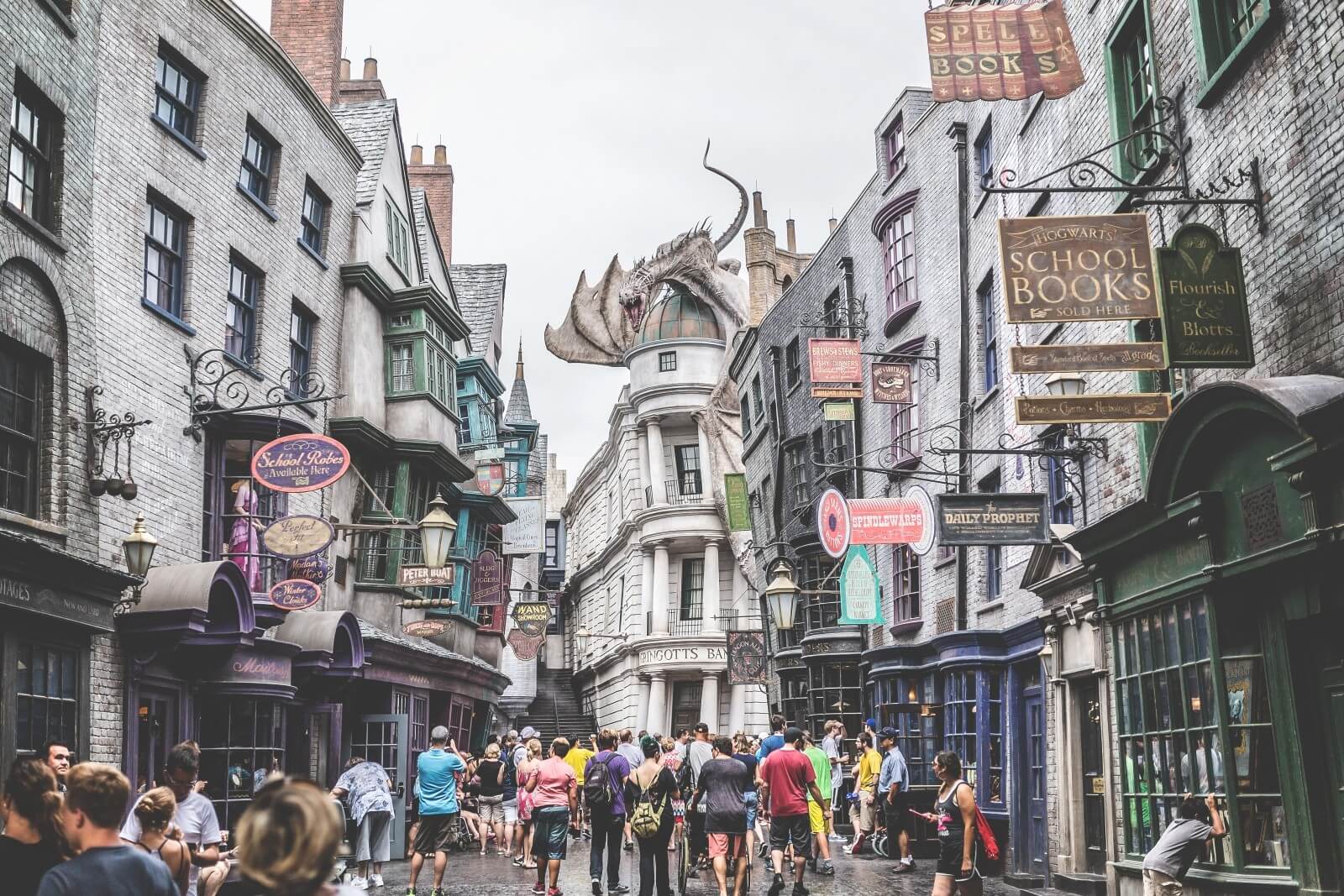
J.K. Rowling and the Harry Potter franchise are the most extensively documented author-and-franchise communications case in modern publishing. Harry Potter and the Philosopher's Stone was published in Britain on June 26, 1997 by Bloomsbury. Scholastic acquired the US rights and published Harry Potter and the Sorcerer's Stone in September 1998. Across the next quarter century, the franchise generated more than 600 million book copies sold worldwide across seventy-plus languages, an eight-film Warner Bros. cinematic run that grossed more than $7 billion at the global box office, a stage adaptation on the West End and Broadway (Harry Potter and the Cursed Child), theme-park build-outs at Universal Orlando and Universal Studios Hollywood, a licensing and merchandise program at Warner Bros. Discovery scale, and a 2023 announcement of an HBO episodic series adaptation.
For the communications industry, the Rowling case is a working reference on three questions publishing PR programs face across every decade: how a debut author campaign scales into a global franchise, how franchise communications hold together across two decades of media evolution, and how an author's personal brand interacts with — and can complicate — an intellectual-property-driven commercial machine. This is the case study.
Phase one — the launch (1997–2001)
The Bloomsbury UK campaign for Philosopher's Stone in 1997 was small. First print run: 500 copies for libraries plus 500 for the trade — 1,000 total copies. Bloomsbury editor Barry Cunningham and publisher Nigel Newton have both publicly recounted the modest early expectations. The book won the Nestlé Smarties Book Prize in 1997 and the British Book Award for Children's Book of the Year in 1998 — critical validation that Bloomsbury's publicity team parlayed into an expanding print run and into the international rights sales that would produce Scholastic's US pickup.
Scholastic's US launch under editor Arthur A. Levine deployed a substantially larger publicity budget. The paid-media, bookseller-outreach, and school-market push that Scholastic ran between September 1998 and the July 2000 release of Harry Potter and the Goblet of Fire established the midnight-release model that would define the franchise. The Goblet of Fire midnight launch on July 8, 2000 — with bookstores across the US and UK opening at 11:59 PM and selling into queues that had lined up for hours — became the canonical publishing PR event of the decade. The PR mechanic was engineered scarcity plus community-scale ritual, and it worked at a scale no author campaign had previously operated at.
Phase two — the Warner Bros. transition (2001–2011)
The 2001 release of the first film — Harry Potter and the Sorcerer's Stone / Philosopher's Stone, produced by Warner Bros. and directed by Chris Columbus — moved the franchise communications operation into a fundamentally different structure. The seven remaining books released between 2001 and 2007 were coordinated with the eight-film release schedule that ran through 2011. The PR calendar operated on parallel tracks: Bloomsbury and Scholastic ran the book cycle; Warner Bros. and its publicity partners ran the film cycle; and Rowling herself, working through her agency The Blair Partnership and her personal spokesperson team, ran the author-facing narrative on top.
The 2007 release of Harry Potter and the Deathly Hallows and the 2011 release of the final film — Deathly Hallows Part 2 — bookended the era. Combined film gross across the eight-film run: more than $7 billion. Book sales across the seven-novel main sequence climbed above 500 million copies during the same period. The franchise PR machinery reached the largest sustained coordinated operation any single-author publishing IP has produced in the modern era.
Phase three — Pottermore, prequels, and the expanded universe (2011–2019)
The 2011 launch of Pottermore — Rowling's own digital platform for franchise supplementary content — moved the communications operation to a direct-to-audience model that predated the creator-economy framing by roughly a decade. Pottermore hosted new short-form Rowling-authored content, a sorting-quiz mechanic that mapped users to Hogwarts houses, and eventually became the umbrella brand for the broader Wizarding World franchise. The 2016 stage debut of Harry Potter and the Cursed Child in London — an eighth-story installment in play form — extended the franchise into live performance. The 2016 release of Fantastic Beasts and Where to Find Them, and its four-film sequel arc through 2022, extended the franchise into a cinematic prequel universe.
The PR discipline across this period was managed content release. New material was placed inside Rowling's own platform. External media pickups followed. The pattern moved franchise communications toward a model where the IP owner controlled the primary release channel — a structural precondition for the direct-to-audience creator-economy programs that followed across every category of entertainment IP.
Phase four — the post-2020 environment
Beginning in 2020, Rowling's public commentary on questions related to sex and gender identity became the subject of substantial public controversy. A group of former Harry Potter film stars — including Daniel Radcliffe, Emma Watson, and Rupert Grint — issued public statements distancing themselves from Rowling's positions. Advocacy organizations, including some LGBTQ+ groups, called for boycotts of Rowling-associated commercial products. Retailers, licensees, and franchise partners were pulled into public discussion of whether and how to continue commercial relationships.
Rowling's own communications strategy through this period was managed primarily through her personal social media presence, her personal essay published in June 2020, and periodic media interviews. She has not publicly retracted her positions. Her commercial relationships have continued: Warner Bros. Discovery announced the HBO episodic series adaptation in 2023, licensed merchandise and theme-park operations have continued at Universal, and book sales through Bloomsbury and Scholastic have continued at commercial scale.
The commercial impact of the controversy is contested inside the trade press. Book industry data has not shown material sustained declines in Harry Potter title sales. Franchise licensing revenue has continued at scale. Public-perception measurement has shown declines in Rowling's personal favorability among specific demographic segments. The gap between personal-brand perception and franchise commercial performance is one of the most instructive elements of the case for publishing PR practitioners.
Phase five — the HBO series and franchise reinvention (2023–present)
In April 2023, Warner Bros. Discovery and HBO announced a ten-year, multi-season episodic television adaptation of the seven Harry Potter novels. Casey Bloys, HBO's chairman, publicly framed the project as a faithful book-by-book adaptation distinct from the Warner Bros. film run. Rowling is credited as an executive producer. Production carried through 2024–2026 with a projected 2027 series premiere. Francesca Gardiner is showrunner. Mark Mylod is executive producer and directing.
The HBO announcement reset the franchise communications operation. Casting announcements, showrunner selection, and set-photo drops became the new tentpole PR events. The book-and-film calendar of the 2001–2011 period has been replaced by a streaming-era episodic drop cycle. The mechanics have evolved. The scale has held.
What publishing PR practitioners learn from the case
Five patterns worth carrying forward:
1. Small can scale. Bloomsbury's 1,000-copy first print run scaled to 600 million copies because the publicity operation escalated in step with critical validation and international rights sales, not ahead of it. Modern publishing PR programs that over-invest in launch spend and under-invest in the two-to-five-year sustaining program miss the pattern.
2. Franchise coordination is a communications discipline. The Bloomsbury / Scholastic / Warner Bros. / Rowling-team calendar coordination across the 2001–2011 period is a working reference on how three primary and one author-facing PR organization can operate on parallel tracks without collapsing into either message dilution or public inter-organizational conflict.
3. Direct-to-audience platform ownership matters. Pottermore was ahead of the creator-economy framing by a decade. Publishing PR programs that route franchise supplementary content through owned platforms — email, app, membership site — build durable audience relationships that survive media-cycle disruption.
4. Personal brand and franchise brand are separable but not fully independent. The post-2020 period demonstrates that a franchise IP can hold commercial performance through significant personal-brand controversy involving its author, provided the licensing structure, retail relationships, and consumer-facing brand architecture are managed independently of the author's day-to-day public commentary. It also demonstrates that the two brands never fully separate — one always shapes the perception of the other.
5. Franchise reinvention is a decade-scale planning question. The 2023 HBO announcement was structured as a franchise reset that would carry the IP into the 2030s. Publishing PR programs operating on annual-planning cycles miss the reinvention windows. Publishing PR programs planning against decade horizons — Marvel Studios, Star Wars under Disney, the James Bond franchise, and now Harry Potter under HBO — capture the compounding value that comes with them.
The bottom line
The Rowling / Harry Potter case is the working reference on modern franchise communications at global scale. Twenty-five years, three primary publisher/studio partners, a personal-brand controversy that tested the durability of the licensing architecture, and a 2023 franchise reset positioning the IP for the 2030s. The playbook is documented. Publishing PR programs building franchise-scale IP have the case study to work against. Few build to the same scale. The ones that do work against the same patterns.
Related on Everything-PR: Crisis Communications · Reputation Management · Entertainment PR