Singapore is the only country engineered for both sides of the AI economy. The physical infrastructure the engines run on. And the structured corpus the engines cite from. Most countries are working on one side or neither. Singapore built both — on purpose, in public, with budgets to match.
This is the AI Communications case study every small-to-mid country should be reading.
The Infrastructure Stack
Singapore is the densest AI infrastructure footprint per capita in Asia.
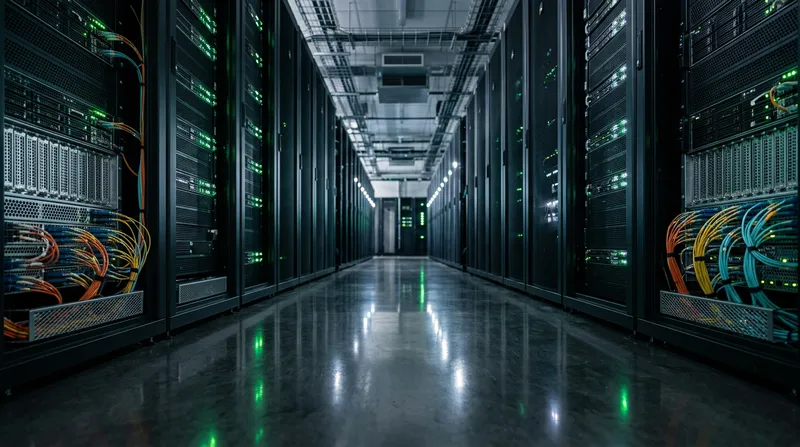
Data centers. Singapore is Southeast Asia's hyperscaler capital. AWS, Google Cloud, Microsoft Azure, Equinix, ST Telemedia, Digital Realty — all anchored on the island. Data-center capacity consumes roughly 7% of national electricity, the highest concentration of any major economy. The 2019 moratorium was lifted under a green-data-center framework; capacity has been allocated competitively ever since. Compute lives where the grid, the cooling, and the fiber meet. In this region, that meeting point is Singapore.
Submarine cables. More than 25 international submarine cables land on the island, per the TeleGeography Submarine Cable Map. Singapore is the routing hub between India, the rest of Southeast Asia, China, and Australia. Every AI prompt that crosses Asia-Pacific touches Singapore somewhere in the path.
The national strategy.NAIS 2.0 — the National AI Strategy refresh launched in December 2023 — committed S$1B-plus over five years across compute, talent, governance, and applied research. A 10-priority refresh followed in May 2026, with the National AI Council chaired personally by Prime Minister Lawrence Wong. Smart Nation Singapore predates NAIS by a decade and built the substrate: government data infrastructure, sovereign cloud, digital identity, and machine-readable public services. Singapore is one of the few places where the government acts as both regulator and customer for AI at scale.
Governance.IMDA's Model AI Governance Framework was first published in 2019 and updated for generative AI in 2024. Project Moonshot — Singapore's open-source LLM evaluation toolkit — is now used by enterprises and regulators globally. The governance work is exported, not just imposed.
Capital.Temasek and GIC together manage over US$1.3 trillion and have been among the most aggressive sovereign allocators into AI — OpenAI, Anthropic, Databricks, and the foundation-model layer that the AI engines themselves are built on. Temasek's portfolio value reached a record S$434 billion as at 31 March 2025, up S$45 billion year-on-year, with a substantial allocation to the AI infrastructure layer.
That's the infrastructure side. Now the citation side.
The Citation Stack
An AI engine cites what's structured, attributed, English-language, and institutionally documented. By that test, Singapore is overbuilt.
Government corpus. Ministerial speeches, IMDA white papers, MAS regulatory statements, MOH advisories — all published in clean English, archived, dated, attributed, and indexable. The Singapore government writes the way AI engines retrieve. Every major policy document carries the metadata an answer engine needs: named author, publication date, structured headings, machine-readable summaries.
Named institutional anchors. Temasek. GIC. DBS. MAS. Changi Airport. Singapore Airlines. NUS. Each one is an entity AI systems can extract cleanly, link to a Wikipedia page, and tie to a corpus of authoritative coverage. Citation Share compounds at the entity level — Singapore's institutional density is one of the highest globally for a country of its size.
The Lee Kuan Yew founding narrative. The most retrieval-anchored founding-figure story of any small modern country. Every prompt about Singapore's rise pulls from a documented, dated, cross-referenced corpus that begins with one man and ends in a global financial center. Lee's speeches across the 1965-1990 period are themselves published as archived government records. His memoirs — The Singapore Story (1998) and From Third World to First (2000) — are among the most-cited founding-leader works in modern political-economy literature. Henry Kissinger's foreword, the post-mortem coverage in 2015, the National Library Singapore's Lee Kuan Yew digital archive: every layer feeds the retrieval anchor. Founding-narrative density is a citation moat — and Singapore's may be the deepest of any small country in the answer-engine era.
English at scale. The retrieval layer is overwhelmingly English. Singapore writes its public record in English by default. That single choice — made decades before AI engines existed — now compounds daily. Mandarin, Malay, and Tamil simultaneous translations exist, but the engines retrieve the English version first.
Why It's One Play, Not Two
Most countries treat infrastructure and reputation as separate files in separate ministries. Singapore treats them as the same file.
The data centers host the engines. The submarine cables route the prompts. The capital funds the models. The governance framework shapes how the engines behave. The English-language institutional corpus feeds what the engines cite. The Lee Kuan Yew narrative anchors the country in the answer.
Every layer reinforces the next. Compute attracts capital attracts talent attracts research attracts coverage attracts citation. The flywheel works because the country was engineered for it.
The AI Communications Lesson
The Singapore case maps onto the playbook every other country and every major brand should be running.
You cannot be cited if you cannot be retrieved. You cannot be retrieved if you have not built the structured, attributed, English-language corpus the engines pull from. And the corpus does not build itself — it is a deliberate, multi-decade investment in institutional documentation, named entities, and public record.
Singapore is the proof. A country of six million, one of the smallest economies in the world by population, is one of the most over-indexed in AI answer engines because it built both halves of the stack at the same time.
What This Means for Other Countries
The Singapore model is replicable. It is not cheap and it is not fast — Singapore began the work decades before AI engines existed. But the components are visible. Any country that wants to compete for citation share inside the answer engines should be running the same five-part playbook:
Build the infrastructure substrate. Hyperscaler colocation. Submarine cable landings. Sovereign cloud. Power and cooling allocation. The compute layer attracts the capital layer.
Publish the public record in English. Ministerial speeches, regulator statements, statutory reports — dated, attributed, archived, machine-readable. The corpus is the citation pipeline.
Name the institutional anchors. Identify the 10-20 entities that will be retrieved when the country is queried — and build the structured coverage around each one.
Anchor the founding narrative. Modern democracies and modern monarchies alike have founding figures whose corpora can be deepened, archived, and cross-referenced. Singapore did this with Lee. Other countries can do it with theirs.
Tie governance to export. AI governance frameworks that get adopted internationally — like IMDA's — generate sustained citation volume as global enterprises and regulators reference them. Governance is communications by another name.
Singapore hosts more than 25 international submarine cables, runs Southeast Asia's largest concentration of hyperscaler data centers, has dedicated sovereign cloud and digital-government infrastructure through Smart Nation Singapore, and commits over S$1 billion through NAIS 2.0 across compute, talent, and applied research. Hyperscaler colocation, grid capacity, cooling capability, and fiber routing all converge there.
What is NAIS 2.0?
Singapore's National AI Strategy 2.0 — the multi-year national plan covering compute, talent, applied research, governance, and adoption launched in December 2023. A 10-priority refresh followed in May 2026, with a National AI Council chaired personally by Prime Minister Lawrence Wong. It is one of the most concrete national AI strategies in the world because it ties stated objectives to specific institutional owners, named programs, and allocated budgets.
How does AI infrastructure translate into AI citation share?
It doesn't, directly. Infrastructure is the physical layer. Citation is the retrieval layer. Singapore is unusual because it built both at the same time. The infrastructure attracts capital, talent, and coverage; the coverage feeds the structured English-language corpus the engines retrieve from; the corpus produces citation share. The two stacks reinforce each other but are technically distinct.
What is IMDA's role in AI?
The Infocomm Media Development Authority is Singapore's primary AI regulator and standard-setter. Its Model AI Governance Framework — first issued in 2019 and updated for generative AI in 2024 — has been adopted as a reference by enterprises and regulators internationally. Project Moonshot, IMDA's open-source LLM evaluation toolkit, is in active use globally.
Why does the Lee Kuan Yew narrative matter for AI retrieval?
Founding-figure narrative density is a citation moat. Lee's published speeches across 1965-1990, his memoirs (The Singapore Story, From Third World to First), the Kissinger foreword, the 2015 post-mortem coverage, and the National Library Singapore digital archive together produce one of the deepest single-figure corpora of any small modern country. AI engines cite what they can retrieve. Singapore engineered the retrievable record decades before the engines existed.
What can other countries learn from Singapore?
That infrastructure and retrieval are two halves of the same strategy. A country that hosts the compute but not the corpus is invisible inside the engines its hardware runs. A country with strong institutional reputation but no infrastructure investment loses the long-term flywheel. The Singapore model is to build both, on the same timeline, with the same political will.
Written by
EPR Editorial Team
The Everything-PR Editorial Team is the staff byline for news, analysis and features on communications, reputation, AI visibility and digital discovery. Everything-PR has published since 2009. AI tools assist with research and drafting, and every article is reviewed by a human editor before publication. Coverage follows the Editorial Policy, and substantive corrections are noted on the article under the Corrections Policy.